Talent Architecture for an AI-First, Inclusive Engineering Org

The real transformation isn’t just AI in the stack – it’s how organisations redesign career architecture to make that technology usable, fair, and sustainable.
Why “technology-first” must mean “people-enabled”
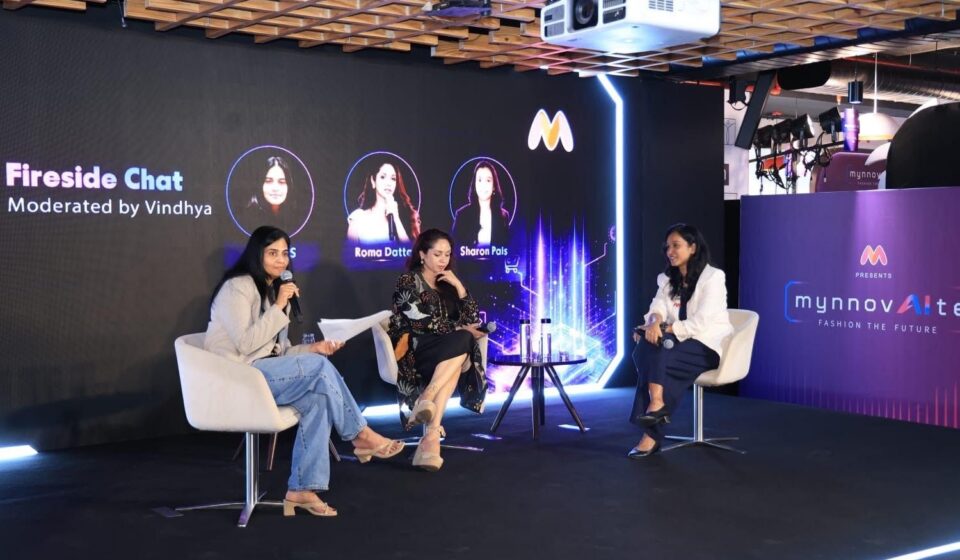
I recently read a detailed case study of a large e‑commerce platform that explicitly treats technology as a core business capability while running structured programs to broaden women’s participation across engineering, product and data. The signal there is important: embedding AI across product and operations elevates the need for deliberate career systems, not just reactive hiring drives.
Context in a sentence
The company’s approach pairs AI adoption with returnships, leadership pathways, mentorship and careful measurement – treating inclusion and capability development as system-level interventions rather than one-off HR initiatives.
What this means for enterprise architecture and teams
Treat talent as part of the architecture. When AI moves from experiments to production, the organisation surface area grows: MLOps pipelines, model governance, data access, audit trails, explainability tools, and human‑in‑the‑loop workflows all require cross‑functional ownership. That technical complexity amplifies the impact of who sits at the controls.
Practical implications and trade-offs
- Speed vs. Stability: Rapidly shipping features with AI models without aligned upskilling creates operational risk. Product velocity must be paired with guardrails – automated model testing, bias checks, and rollback mechanisms – and that requires engineers competent in both ML and systems thinking.
- Centralised controls vs. Federated autonomy: A central ML platform accelerates reuse and governance, but decentralised product teams accelerate contextual innovation. The right balance is a shared services platform that enforces standards (data contracts, lineage, monitoring) while enabling product teams to own outcomes.
- Capability debt vs. Training investment: Reskilling is not a checklist. Returnships and mentorships succeed only if they include live, meaningful ownership – short, high‑impact projects; pairing with experienced engineers; and a measurable ramp-to-autonomy plan. Otherwise, you pay twice: once in training costs and again in corrective technical debt.
Design patterns for inclusive, AI‑ready organisations
- Onboarding as feature: Design returnships with progressive ownership (sandbox → supervised tasks → product impact) and measurable SLAs (time‑to‑first‑deploy, contribution scores).
- “Sponsorship pipelines”: Convert sponsorship into system events – mapped to promotion ladders, cross‑functional rotations, and measurable visibility metrics.
- Instrument everything: Build dashboards for not just performance metrics but diversity outcomes – internal mobility rates, conversion from returnship to full‑time, time‑to-productivity, and model auditing coverage tied to teams.
- Responsible AI by default: Integrate bias testing, explainability, and privacy checks into CI/CD for models. Humans must retain the final product judgement; make that artefactable (audit logs, decisions rationale).
A short note for Indian regional ecosystems
There’s a strong, direct parallel for regional talent pools – including in Northeast India. Industry‑academia partnerships, structured returnship models, and mentorship networks can reduce friction for professionals returning after career breaks and help retain locally trained talent. I’ve seen state committees and university boards respond well when programme design mirrors real product work rather than simulated exercises.
Takeaways
- Building AI into products requires equal investment in career architectures – learning, sponsorship, and measurable pathways.
- Operationalising inclusion needs the same engineering rigor as deploying a distributed system: standards, instrumentation, and automated guardrails.
- Returnships and women‑in‑tech platforms scale when they combine capability building with genuine product ownership and clear routes to sustained employment.
- Treat measurement as a first‑class concern: representation alone is insufficient; track mobility, conversion, sentiment, and model governance coverage.
Closing thought
Technology scales what people build – but it magnifies who we leave behind unless we design both our systems and our career pathways with equal intent.
About the Author: Sanjeev Sarma is the Founder Director and Chief Software Architect at Webx Technologies. With a core focus on Generative AI integration, Cloud-Native Scalability, and Enterprise Software Architecture, he has spent over two decades driving digital transformation across Northeast India and beyond. Beyond his corporate leadership, Sanjeev is deeply invested in shaping the future of the IT industry. He serves as an Industry Expert on the Board of Studies for Assam Don Bosco University’s School of Technology, advises state technology committees, and actively mentors emerging tech startups at STPI. He brings a unique, dual perspective of high-level enterprise execution and future-ready academic curriculum development.