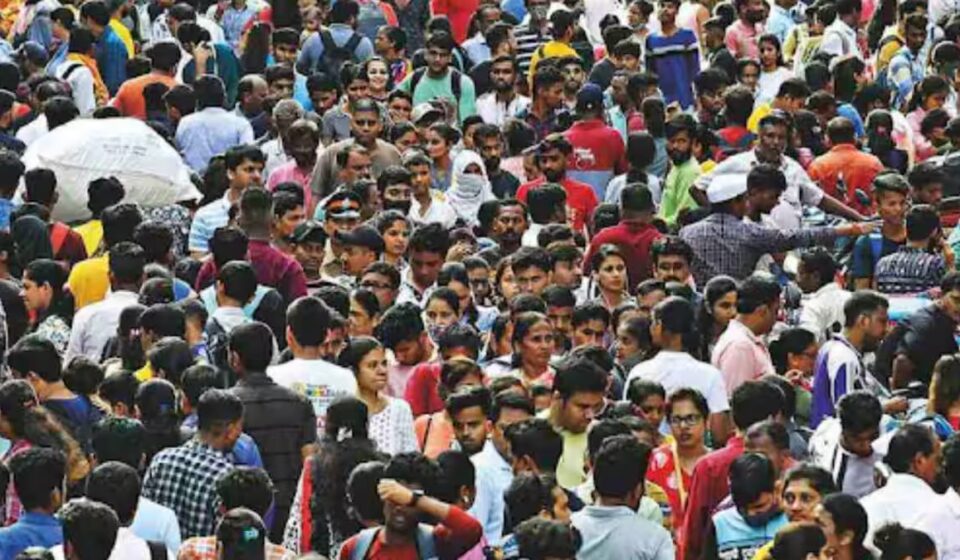

India now has a rare demographic advantage: roughly 68% of its population — about 996 million people, or nearly 1 billion — are of working age (15–64). With an estimated population of 1.46 billion and a median age of 29.2 years, the country is positioned to boost growth through manufacturing, services and domestic consumption. But that opportunity is finite; demographers say India’s dependency ratio will hit a historic low around 2041, leaving roughly 15 years to convert this large cohort into a productive workforce before ageing accelerates.
The advantage is uneven. Southern and western states that invested early in female literacy, health and family planning now have fertility rates well below replacement. Kerala and Tamil Nadu record total fertility rates near 1.4–1.5, and Kerala already has about one in five residents aged 60 or above. Those states face a shifting challenge: smaller cohorts of school-age children, a shrinking pool of young workers and growing pressure on industries to retain labour.
By contrast, several northern states remain youthful. Bihar, Uttar Pradesh and Madhya Pradesh continue to add large numbers of young people: Bihar’s median age is still below 23 and its fertility rate sits around 2.8–3.0. These states are expected to supply much of India’s labour-force growth through mid-century. The result is a geographic mismatch: industrial centres in the South and West will need young workers even as large numbers of job seekers emerge from the North.
Gender compounds the gap. Data from the Ministry of Statistics and Programme Implementation show female labour force participation at roughly 32.7%–33.9% nationally. Rural female participation is higher (about 38.2%), but urban female participation is only around 25% compared with more than 75% for urban men. Barriers such as safety concerns, unequal unpaid household work, limited childcare and a shortage of part-time or flexible formal jobs keep many women out of paid employment. Economic modelling cited in the source suggests closing the gap toward global benchmarks (around 47% female employment) could lift GDP growth by 1.5–2 percentage points annually.
Closing the window will require three broad moves. First, build interstate skill and migration corridors so young people from Bihar and Uttar Pradesh can access vocational training and jobs in manufacturing hubs like Tamil Nadu, Gujarat and Maharashtra, alongside better housing, transport and social protections for migrants. Second, expand urban care infrastructure — safe public transport, affordable childcare and neighbourhood creches — and strengthen workplace protections to raise women’s workforce participation. Third, create millions of productive jobs each year by shifting away from low-productivity informal work toward labour-intensive manufacturing, green-technology assembly and export-oriented processing; the aim in the source is to absorb about 10 million new entrants annually.
India enters its ninth decade with a potentially transformative demographic dividend, but it must bridge regional imbalances, boost female employment and generate large-scale, good-quality jobs quickly if that advantage is to be realised rather than lost.
Original Source: https://www.firstpost.com/india/india-at-80-a-young-nation-faces-an-ageing-south-and-a-job-hungry-north-14038205.html
Category: India
Tags:
Publish Date: 2026-08-14 15:49:00