Architecting AI-First, Compliant Wealthtech Platforms for Global Distribution

Platformization, not just productization: why the latest wealthtech round matters for architects
Context
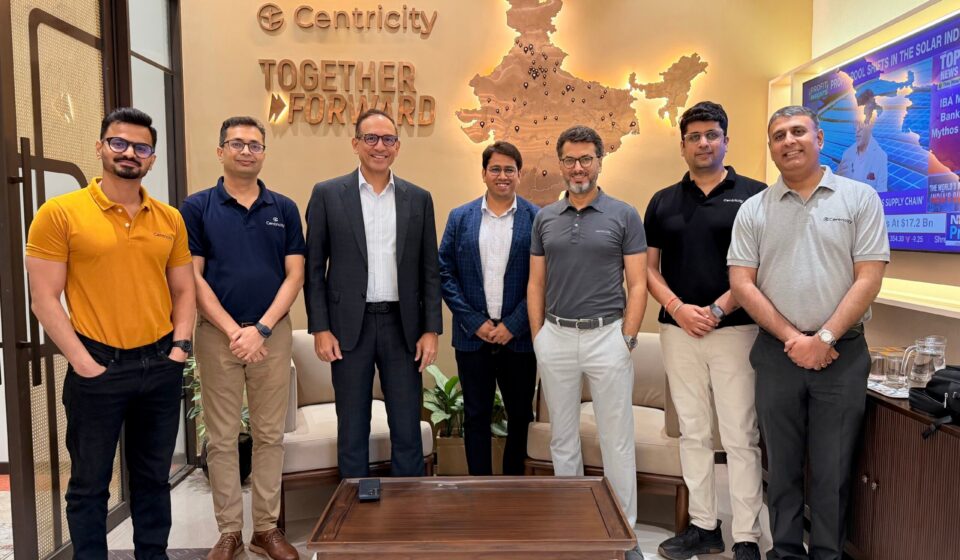
I recently read about a sizeable capital infusion into a Gurugram-based wealthtech platform – a ₹280 Cr round led by an institutional investor, intended mainly to strengthen the company’s technology stack and expand its partner-driven B2B2C distribution and global private-client services. The firm is scaling fast: multi-vertical distribution, NRI-focused offerings routed via GIFT City and DIFC, and an aggressive roadmap that includes generative-AI capabilities.
Why this funding round is more than a headline
Capital in wealthtech today buys two things: optionality and obligations. Optionality – the ability to build modular, data-rich services (risk analytics, consolidated reporting, advisor enablement) that can be composed by partners and clients. Obligations – the need to manage multi-jurisdictional compliance, custody integrations, and ongoing operational costs (including venture-debt servicing). For enterprise architects and CTOs this moment is a signal: wealth platforms must be designed as durable, composable systems of trust rather than monolithic apps.
Architectural implications and trade-offs
-
API-first, partner-centric architecture: B2B2C distribution demands clean API contracts, versioning policies, and partner sandboxes. Prioritise a gateway + federated identity approach so advisors and family offices can onboard with minimal friction while preserving security boundaries.
-
Data composability and lineage: Portfolio consolidation across custodians and international products is a data integration challenge. Adopt event-driven ingestion, canonical data models, and a strong data-catalog/service-mesh so downstream analytics and compliance teams can trace every position to its source.
-
Generative AI: building explanation-aware models is different from shipping chat features. Generative modules should be wrapped with model governance – clear lineage, confidence scores, adverse-behaviour detection, and human-in-the-loop escalation for investment advice. Treat LLM outputs as augmentations to regulated workflows, not as final advice.
-
Regulatory-first, multi-jurisdiction design: GIFT City and DIFC footprints introduce cross-border data transfer and custody considerations. Encryption-at-rest, end-to-end TLS, granular consent management, and geo-fenced data stores should be built from day one. Assume regulators will audit lineage and access logs.
-
Operational costs and debt servicing: venture debt accelerates runway but tightens operating budgets. Architects should design cost-aware systems – serverless or autoscaling compute for bursty workloads (report generation, risk re-runs), and strong telemetry to identify cost hot-spots before they become business problems.
-
Observability and resilience: wealth systems are latency-sensitive and audit-heavy. Invest in distributed tracing, real-time SLO monitoring, and automated playbooks for incident response. Failure modes must fail-safe – e.g., read-only reporting when a downstream custodian is unavailable.
A pragmatic Bharat angle
This wave of platform funding is an opportunity to democratize sophisticated wealth services across India, not only metro HNIs. For regional advisors and family offices (including those in the Northeast), a fast, API-enabled distribution model reduces manual reconciliation work and brings institutional-grade analytics to smaller portfolios – if the platform invests in low-friction onboarding, vernacular UX, and mobile-first workflows.
Takeaways – what CTOs, founders and investors should prioritise
- Design for composability: APIs, sandboxes, and partner SLAs win distribution.
- Build model governance before you ship generative features.
- Make data contracts and lineage non-negotiable – they are your regulatory armor.
- Architect for cost visibility; plan for debt servicing scenarios.
- Invest in resilience and traceability: logs, traces, and immutable audit trails.
- Localise onboarding and UX to broaden the partner base beyond major metros.
Closing thought
As wealthtech evolves from single-app innovation to platform orchestration, the real competitive moat will be the architecture of trust: composable data, auditable models, and partner-grade APIs. Funding accelerates product timelines – but long-term differentiation will come from the engineering choices that make trust scalable.
About the Author: Sanjeev Sarma is the Founder Director and Chief Software Architect at Webx Technologies. With a core focus on Generative AI integration, Cloud-Native Scalability, and Enterprise Software Architecture, he has spent over two decades driving digital transformation across Northeast India and beyond. Beyond his corporate leadership, Sanjeev is deeply invested in shaping the future of the IT industry. He serves as an Industry Expert on the Board of Studies for Assam Don Bosco University’s School of Technology, advises state technology committees, and actively mentors emerging tech startups at STPI. He brings a unique, dual perspective of high-level enterprise execution and future-ready academic curriculum development.