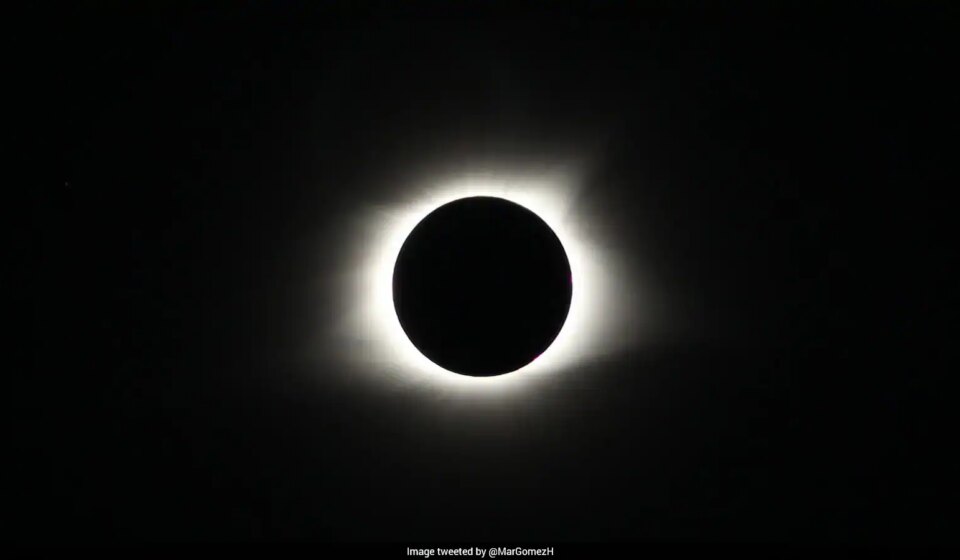

A total solar eclipse will sweep across parts of the Northern Hemisphere on August 12, 2026, plunging locations inside the narrow “path of totality” into brief daytime darkness as the Moon passes directly between Earth and the Sun. For observers within that path the Sun will be completely blocked for up to about 2 minutes and 18 seconds; elsewhere the event will appear as a partial eclipse. Daylight will dim, temperatures may fall, and some bright stars and planets could become visible during totality.
The eclipse will be visible either partially or completely across wide regions including much of Western Europe, Greenland, Iceland, northwestern Africa and small parts of the United States. The event carries special significance for mainland Europe: it will be the first total solar eclipse visible there since 1999. According to NASA, roughly 980 million people worldwide will be able to see at least a partial eclipse, and about 15 million people will lie directly in the path of totality.
Spain offers some of the best viewing opportunities, with cities such as León, Valladolid, Zaragoza, Teruel and Valencia falling inside the path of totality. Madrid and Barcelona will be just outside that path but are expected to see more than 99% of the Sun covered. The path also crosses parts of Greenland, Iceland and other regions along its route.
In India the eclipse will occur during local night and will not be visible. On Indian Standard Time the event is expected to begin around 9:04 pm on August 12, with the peak near 11:16 pm on the same night, by which time the Sun will be below the horizon across the country. Indian skywatchers can still follow the phenomenon via live streams from major space agencies, including NASA and the European Space Agency.
India will next have an opportunity to witness a total solar eclipse on the ground on March 20, 2034, when a separate path of totality is expected to cross parts of India and neighboring countries. Until then, observers in India will need to rely on broadcasts and recordings to experience total solar eclipses that occur elsewhere.
Original Source: https://www.ndtv.com/science/total-solar-eclipse-on-august-12-why-the-rare-celestial-event-wont-be-visible-in-india-11896177#publisher=newsstand
Category:
Tags:
Publish Date: 2026-08-12 21:05:00