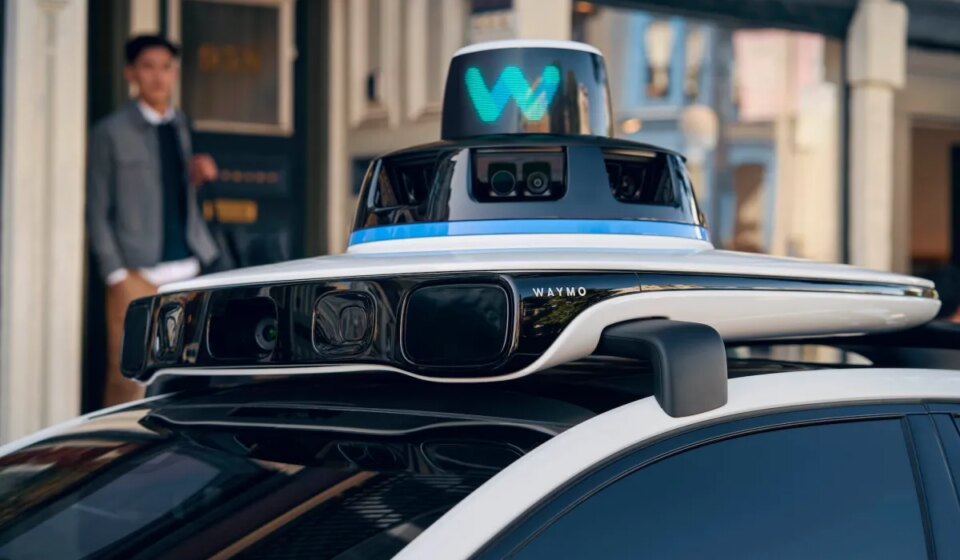
Resilient Autonomy: Designing Robotaxi Systems for Weather and Scale

At the curb, the UX is simple: open an app, tap “hail,” and a car appears without a human driver. That small moment masks an enormous systems problem: how do you scale safe, reliable autonomy from controlled testbeds into messy, weather-soaked public streets? Recent moves by a leading robotaxi operator to drop waitlists in new markets – and the earlier decision to pause operations during heavy rain – make that question urgent for every architect and policymaker thinking about autonomous systems at scale.
What happened (brief signal)
A major robotaxi operator removed its initial waitlist in Dallas and opened its service broadly after a phased rollout and a period of testing. The deployment included third‑party depot and fleet operations partnerships and – importantly – temporary service pauses when vehicles encountered heavy rain and flooded roads during early operations.
Why this matters for enterprise architects and founders
Scaling autonomy is not primarily a sensor or perception problem – it’s an operational design problem. Moving from demonstration fleets to full public availability forces you to reconcile three often-conflicting axes: safety, availability, and cost.
-
The “rare-event” problem and model uncertainty
Heavy rain and flooded roads are classic out-of-distribution events for perception and planning models. No matter how many kilometres you collect in dry conditions, models trained on those data will misbehave when sensors are occluded, LiDAR returns scatter, or lane markings vanish in standing water. Architecturally, that argues for explicit uncertainty estimation in perception pipelines, graceful degradation modes, and a safety envelope that can trigger conservative behaviours – including an automated service pause. From a systems perspective, this requires telemetry that flags OOD inputs in real time and a policy engine that maps uncertainty metrics to operational decisions. -
Simulation, digital twins and scenario coverage
You can’t rely on incremental field testing alone. High-fidelity simulation and digital twins become the primary lever to generate edge cases (flash floods, debris, unusual road geometry). Enterprises should invest in scenario-driven testing frameworks that can be parameterized by local weather, topography, and traffic patterns – and be integrated into CI/CD for model updates. -
Edge vs cloud trade-offs
Low-latency decisioning (obstacle avoidance, emergency braking) must remain on-vehicle; large-scale model training, fleet analytics, and map stitching belong in the cloud. Designing clean interfaces – versioned model artifacts, deterministic rollback, and secure OTA update channels – is essential to keep innovation velocity without compromising safety. -
Fleet economics and third‑party ops
Partnerships for depot operations, charging, and maintenance are pragmatic – they reduce capital intensity and accelerate scale. But they introduce supply-chain and operational dependencies that need orchestration layers: status-of-health APIs, SLA-driven maintenance scheduling, and standardized telemetry contracts. Treat the depot as part of the extended system architecture, not just a cost centre. -
Trust, transparency and regulatory posture
A clear, real-time channel to tell riders when service is paused (and why) is as much an engineering requirement as it is PR. Regulators and citizens will expect auditable logs of decisions and clear escalation paths for failures. Design for explainability: store decision rationale and uncertainty scores alongside trip logs for post-mortem and compliance.
A pragmatic bridge to India (where it fits)
The operational lessons are directly relevant to regions like Northeast India, which face intense monsoon-related flooding, narrow rural roads, and limited high‑resolution mapping. Any operator or local startup exploring autonomy or advanced driver-assistance there should prioritise:
- Localised datasets (monsoon season, unmarked roads, temporary bridges).
- Integration with public weather and flood alert APIs as an operational input.
- Frugal sensing strategies and maintenance playbooks suited to rough roads and limited charging infrastructure.
Takeaways for CTOs and founders
- Treat safety as an architectural invariant: build uncertainty-aware perception pipelines and automated fail-safe modes.
- Invest early in scenario-centric simulation and digital twins; they buy coverage that road testing cannot.
- Design clean edge/cloud contracts and robust OTA/versioning for model deployments.
- Make depot and charging partners first-class components in your operational model.
- Build transparent rider-facing communications and auditable decision logs for trust and compliance.
- In flood-prone geographies, couple autonomy pilots with local weather/flood DPI and resilient, low-cost maintenance workflows.
Closing thought
Deploying autonomy at scale is less about proving that algorithms work in the lab and more about engineering resilient socio-technical systems that can say “no” gracefully when the world behaves differently than expected. The future of mobility will be won by teams that treat uncertainty as a design input, not an afterthought.
About the Author: Sanjeev Sarma is the Founder Director and Chief Software Architect at Webx Technologies. With a core focus on Generative AI integration, Cloud-Native Scalability, and Enterprise Software Architecture, he has spent over two decades driving digital transformation across Northeast India and beyond. Beyond his corporate leadership, Sanjeev is deeply invested in shaping the future of the IT industry. He serves as an Industry Expert on the Board of Studies for Assam Don Bosco University’s School of Technology, advises state technology committees, and actively mentors emerging tech startups at STPI. He brings a unique, dual perspective of high-level enterprise execution and future-ready academic curriculum development.