Grid-First Strategy: Standardising V2G Architecture for Energy Sovereignty

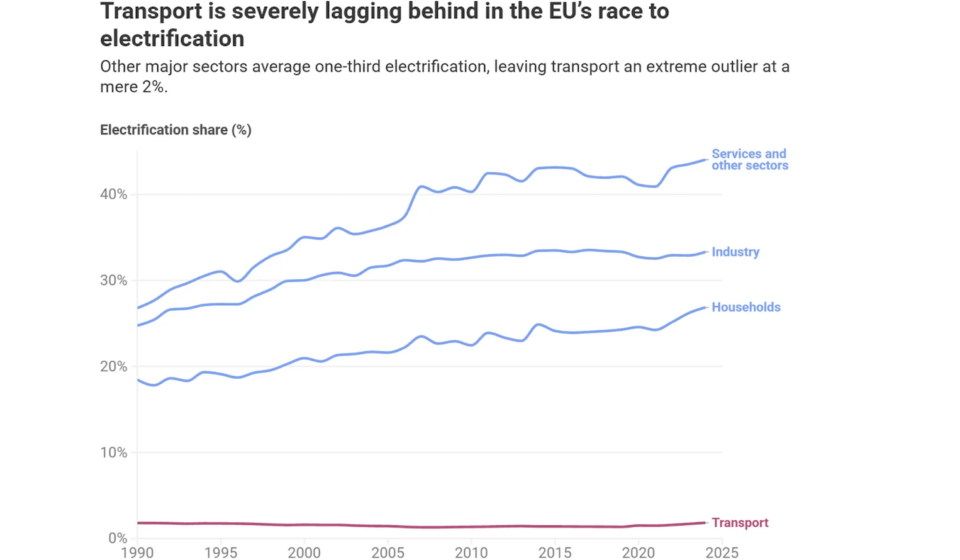
We worry about battery chemistry, range anxiety and subsidies – but the hard constraint on a fast, durable electrification is often the grid itself. Recent European policy moves that treat electric vehicles as distributed batteries are a useful provocation for architects and policy makers everywhere: the problem isn’t only vehicle technology, it’s how we integrate millions of new distributed energy resources into an already stressed network.
A short signal
I recently read a policy discussion that frames EVs as “batteries on wheels” and highlights grid bottlenecks and vehicle-to-grid (V2G) technology as a strategic lever. The package recommends standardising bidirectional converters, scaling charging infrastructure (including at ports), and pairing electrification targets with other market and regulatory reforms.
Why the grid matters more than the car
From an enterprise-architect perspective, think of the electricity system as a legacy monolith being asked to host a cloud-native platform overnight. You can pour in more generation (the cloud equivalent of capacity), but without network re-architecture – observability, orchestration, and clear APIs – that capacity will be unusable or expensive. EVs change two things simultaneously: they add large, predictable loads (charging) and a massively distributed potential storage layer (V2G). Without harmonised protocols and economic signals, operators are forced into blunt instruments: curtailment, expensive upgrades, or geographic limits on electrification.
Architectural implications and trade-offs
- Interoperability is non-negotiable. Mandating bidirectional capability in on-board converters is not just a hardware ask – it’s an API story. How do vehicles advertise state-of-charge, availability windows, and degradation characteristics? Who controls the dispatch? Standards must define data models, security, and fail-safe behaviours to avoid cascading grid events.
- Incentives and marketplace design will determine uptake. Technical capability without a functioning market (dynamic tariffs, aggregator roles, settlement systems) yields little real-world flexibility. Architects need to design systems that allow multiple commercial models: utility-led orchestration, third-party aggregators, or peer-to-peer flexibility markets.
- Visibility and control = resilience. Grid operators need near-real-time telemetry and the ability to coordinate distributed resources while respecting privacy and ownership. This raises classic trade-offs: speed vs. stability (fast inverter responses can destabilize if miscoordinated); centralised control vs. distributed autonomy; and vendor diversity vs. standard conformity.
- Long-term tech debt: retrofitting bidirectional capability into millions of EVs, chargers, and substations will be more expensive than designing it in. Policy clarity now reduces future retrofit costs and avoids stranded assets.
Operational patterns CTOs and utilities should adopt
- Treat the grid as a platform: define clear interfaces for DER (Distributed Energy Resource) registration, status, and control.
- Adopt layered control: local fast-control (vehicle/charger), regional orchestration (aggregator), and system-level planning (TSO/DSO). Each layer must have well-defined responsibilities and failure modes.
- Design for identity and data sovereignty: vehicle telemetry contains personal data. Identity frameworks and privacy-preserving telemetry are essential for public trust.
A pragmatic Bharat/Northeast perspective
This isn’t only a European conversation. India’s electrification push and growing EV market make these lessons relevant here – especially in regions with constrained distribution capacity. For Northeast India, where grid reinforcement is costly and terrain complicates expansion, V2G and vehicle-as-buffer ideas could be particularly valuable. However, the same caveats apply: pilots must lock in standards, settlement mechanisms, and local control patterns that respect rural grid realities and consumer behaviour.
Takeaways
- Electrification is as much a systems-integration challenge as a hardware one. Policy should prioritise standards and market design, not only vehicle counts.
- Mandating bidirectional capability early reduces retrofit costs and accelerates real flexibility.
- Successful V2G requires three coordinated builds: technical interoperability, economic markets for flexibility, and robust privacy/identity frameworks.
- Treat local grid constraints as design constraints – they force smarter, not slower, architectures.
Closing thought
If we treat EVs merely as end-point products, we risk repeating the mistakes of past infrastructure rollouts. If we design them as programmable, market-enabled grid assets from day one, electrification becomes not a cost problem but a platform opportunity.
About the Author: Sanjeev Sarma is the Founder Director and Chief Software Architect at Webx Technologies. With a core focus on Generative AI integration, Cloud-Native Scalability, and Enterprise Software Architecture, he has spent over two decades driving digital transformation across Northeast India and beyond. Beyond his corporate leadership, Sanjeev is deeply invested in shaping the future of the IT industry. He serves as an Industry Expert on the Board of Studies for Assam Don Bosco University’s School of Technology, advises state technology committees, and actively mentors emerging tech startups at STPI. He brings a unique, dual perspective of high-level enterprise execution and future-ready academic curriculum development.