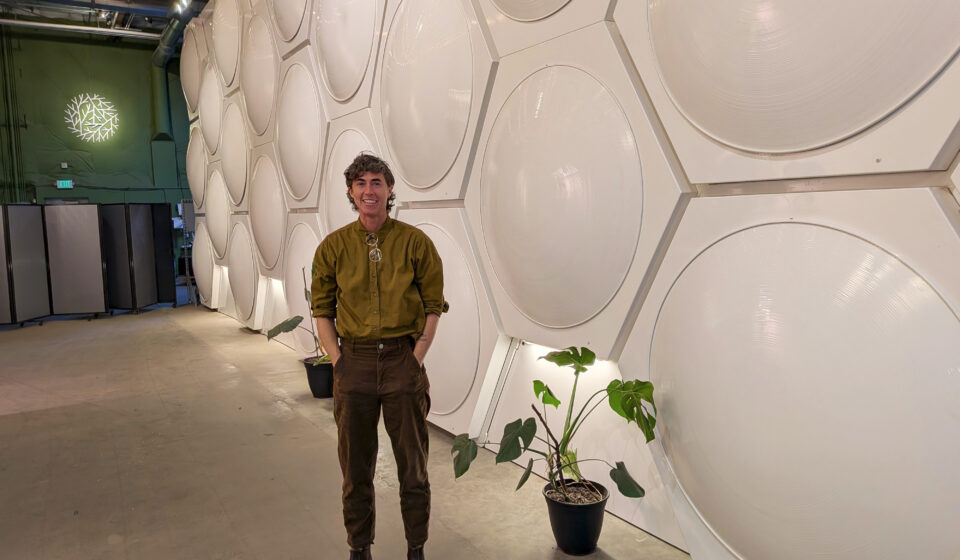
Architecting Trustworthy Platforms for Regenerative Death Care

We obsess about scaling microservices and training models – and yet some of the most consequential systems-level innovations arrive in unexpected places. The recent mainstreaming of human composting is a useful lens: it’s not merely a novel funeral option, it’s an example of how technical design, regulatory change, and social trust must be engineered together for true systemic impact.
What happened (brief)
A small team translated agricultural compost science into a commercial process for human remains, validated operational metrics (temperature/time pathogen controls), navigated legislative change, and created a consumer-facing service that returns usable soil to communities. The result is a new sector where engineering, law and community engagement are tightly coupled.
Why this matters for architects and founders
-
Multi-domain systems over single‑tech solutions. This is a classic systems problem: biology, mechanical design (vessels), material science (feedstock mix), instrumentation (temperature probes), legal frameworks, and family-facing UI/experience all matter equally. Enterprise architects should read this as a reminder: solving a problem end-to-end often means owning cross-disciplinary integration rather than shipping a single component and hoping others fill the gaps.
-
Measurable, auditable specifications build trust. The requirement to reach and hold a defined temperature for a specified period is powerful because it converts an emotive service into an auditable specification. For critical services – healthcare, financial, or environmental – architects must design observable systems with verifiable SLAs and tamper-evident telemetry. Think of sensors + immutable logs + auditor access as the modern equivalent of design-by-contract for regulated domains.
-
Regulatory change is a product problem. Legal acceptance didn’t follow the tech; the team lobbied, demonstrated safety, and created templates for legislation. For product teams working in regulated markets, budget time and technical effort for legal and policy work. Treat regulation as a feature you must design for, test, and iterate with stakeholders.
-
Circularity demands new business models and partner networks. The soil output creates new value streams – donations to restoration projects, consumer take‑aways, carbon accounting. This requires partner APIs, provenance tracking, and supply‑chain coordination. Enterprises building circular products need the same capabilities: standardized data exchange, partner onboarding flows, and shared metrics for environmental claims.
Practical architectural implications
- Instrumentation & observability: design hardware + software stacks that produce tamper-resistant telemetry. Use signed timestamps, role-based audit views, and periodic third‑party verifications.
- Data governance & consent: build consent flows tied to legal documents and lifecycle events; retain only what is needed and provide transparent audit trails to families and regulators.
- Modularity for scale: offer a composable platform – local facilities, logistics partners, and conservation NGOs should be pluggable via secure APIs rather than bespoke integrations.
- Compliance-as-code: encode operational constraints and legal requirements into CI/CD pipelines and operational playbooks so sites can demonstrate compliance continuously.
A note for India (where this is especially relevant)
India’s urban areas face acute land pressure and air quality concerns from large-scale cremation; cultural practices vary widely across regions. The model above suggests a template: start with pilot projects that pair soil-science labs, municipal bodies, and community leaders; validate safety metrics publicly; and design low‑cost, frugal engineering solutions using locally available biomass. Policymakers and startups should work together to build clear regulatory paths and local standards before scaling.
Key takeaways
- Solve across disciplines: technical design, law, and community engagement must be productised together.
- Build verifiability: design systems that produce auditable, tamper-evident evidence of safety and compliance.
- Treat regulation as a design constraint, not an afterthought – allocate time, people, and budget.
- Design modular partner-first architectures to enable circular economy outcomes and scalable adoption.
Closing thought
True innovation is rarely a single technological breakthrough – it’s the patient engineering of trust, standards, and operational rigor that turns a novel idea into a resilient public service.
About the Author: Sanjeev Sarma is the Founder Director and Chief Software Architect at Webx Technologies. With a core focus on Generative AI integration, Cloud-Native Scalability, and Enterprise Software Architecture, he has spent over two decades driving digital transformation across Northeast India and beyond. Beyond his corporate leadership, Sanjeev is deeply invested in shaping the future of the IT industry. He serves as an Industry Expert on the Board of Studies for Assam Don Bosco University’s School of Technology, advises state technology committees, and actively mentors emerging tech startups at STPI. He brings a unique, dual perspective of high-level enterprise execution and future-ready academic curriculum development.