Architecting Adaptive Data-Driven Governance for Transboundary Water Scarcity

When a river becomes a ledger: what the Rio Grande settlement teaches enterprise architects about resource accounting and governance
Context
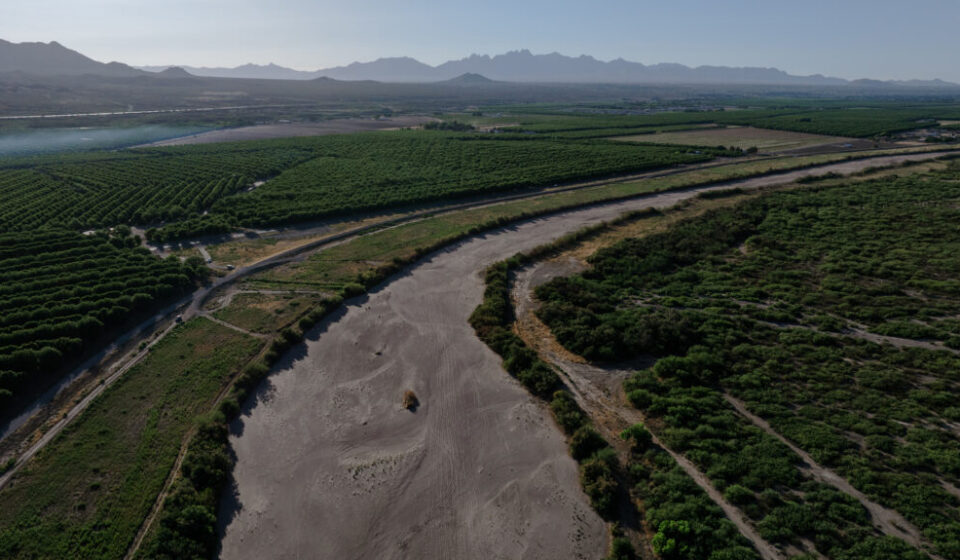
I recently read a detailed report on the Supreme Court settlement between Texas and New Mexico over Rio Grande water. The agreement turns long-standing hydrological flows and groundwater pumping into quantified obligations, sets new measurement points at the state line, and forces hard trade-offs: voluntary buybacks, potential mandatory cuts, and multi‑stakeholder negotiations under a changing climate.
Why this matters beyond water
This is not just a water-management story. It’s an object lesson in three core problems every enterprise faces when operating scarce resources under uncertainty: measurement and observability, incentive design, and governance under non‑stationary conditions.
Analysis – lessons for architects and leaders
-
Measurement is governance.
The settlement’s shift to measuring flow at the state line is equivalent to moving from coarse, lagging telemetry to high-fidelity, auditable observability. Enterprises that can’t measure usage and contention in real time cannot enforce policy fairly. For distributed systems this means investing in immutable, interoperable telemetry (think standardized meters, secure time-series, and verifiable ledgers) so that downstream SLAs have the same evidentiary weight as upstream claims. -
Markets and buybacks are only a first-order harmonizer.
New Mexico’s $150M buyback program mirrors cloud quota-buyback models: you can pay to reduce consumption elsewhere, but voluntary markets will undershoot when the underlying supply is structurally shrinking. Architects should treat such market mechanisms as temporary cushions, not long-term capacity solutions. Plan for mandatory controls (circuit breakers, throttles, priority queues) that are fair and auditable. -
Active administration beats simple priority rules.
The prior-appropriation system is like “first-come, first-served” resource allocation – predictable but inequitable under scarcity. New Mexico’s alternative administration is a better model: stakeholder-driven, dynamic policy that can be tuned to social priorities. In software terms, this is policy-based orchestration layered over enforcement primitives – think role-based quotas plus community-informed redistribution rules. -
Climate (non-stationarity) is the ultimate technical debt.
When the environment changes – less snowpack, higher evaporation – historical baselines are meaningless. That’s true for hydrology and for system capacity planning under new usage patterns (e.g., sudden AI workloads). High-reliability systems must incorporate stress-testing against non-stationary scenarios and invest in resilience: diverse supply (multi-region replication / alternative water sources), graceful degradation, and long lead-time investments. -
Equity and tiny tenants matter.
Small farmers face outsized harm from fallowing – analogous to small customers in a multi-tenant platform who suffer when priority administration favors large enterprise customers. Architects and policymakers must bake in protections for vulnerable classes when designing allocation algorithms.
A practical bridge to India (a quick, relevant parallel)
The Rio Grande experience has clear echoes in India’s inter‑state river politics and growing water stress. If Northeast India and other regions invest in digital water registries, satellite/IoT telemetry, and interoperable public data APIs (respecting data sovereignty), they can turn reactive disputes into structured negotiations. The same DPI principles we apply to finance and identity – open standards, auditable logs, and locally governed policy layers – are relevant to water governance.
Takeaways for CTOs, policymakers and founders
- Treat measurement as infrastructure: build auditable, standard telemetry before enforcing cuts.
- Use market mechanisms early, but design for mandatory, transparent enforcement mechanisms.
- Model for non‑stationarity: run scenarios that assume lower average supply and higher variability.
- Protect small stakeholders via policy rules and targeted compensation, not only market prices.
- Invest in shared data platforms and governance frameworks that enable cooperative administration.
Closing thought
When a complex socio-technical system is stressed, the smartest interventions are not purely technical or purely legal – they are engineered governance: measurement, incentives, and institutions designed to survive an uncertain future.
About the Author: Sanjeev Sarma is the Founder Director and Chief Software Architect at Webx Technologies. With a core focus on Generative AI integration, Cloud-Native Scalability, and Enterprise Software Architecture, he has spent over two decades driving digital transformation across Northeast India and beyond. Beyond his corporate leadership, Sanjeev is deeply invested in shaping the future of the IT industry. He serves as an Industry Expert on the Board of Studies for Assam Don Bosco University’s School of Technology, advises state technology committees, and actively mentors emerging tech startups at STPI. He brings a unique, dual perspective of high-level enterprise execution and future-ready academic curriculum development.