
India’s next space push is shifting from government-led, single-use rockets to privately built, reusable launch systems — and Hyderabad startup Astrobase is betting the future will be won at the engine nozzle. For decades ISRO delivered low-cost, complex missions from communications satellites to lunar and Martian probes; now private firms, aided by the 2020 opening of the sector and the creation of IN‑SPACe, are racing to make access to orbit repeatable, affordable and commercially viable. The breakthrough that made reusability central to the industry was SpaceX’s Falcon 9, which proved that recovering and reusing boosters can sharply lower launch costs and change market economics.
Reusable rockets aim to replace the expendable model in which most hardware is discarded after a single flight. By recovering and reflighting key components — especially engines and boosters — launch providers can cut manufacturing costs and increase cadence as demand for satellite internet, Earth observation, defence and communications grows. Governments and customers also want more launch options amid geopolitical uncertainty. Astrobase notes that “satellite constellations are expanding, Earth‑observation applications are becoming more critical, defence requirements are growing and customers are looking for greater diversification in launch options.”
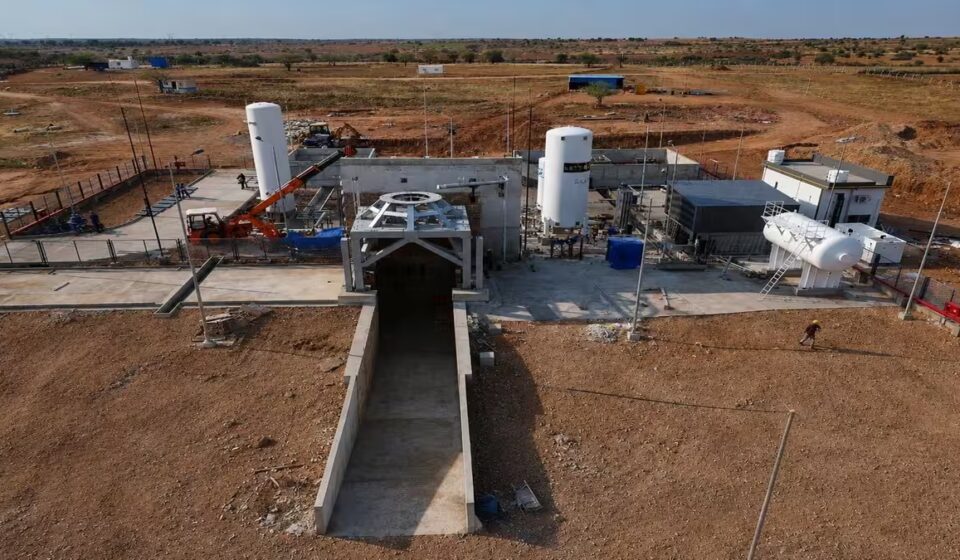
Astrobase’s core challenge is propulsion. The company is developing a high‑thrust, full‑flow staged‑combustion engine using liquid oxygen and methane — an architecture chosen for efficiency and cleaner combustion that helps repeated operations. Co‑founder and CEO Neeraj Khandelwal says, “Reusability is not achieved by recovering a stage alone. It requires the engine, structures, thermal systems, avionics and landing architecture to perform reliably across repeated missions while keeping turnaround time and launch economics commercially viable.” To build confidence before orbital flights, Astrobase plans to manufacture and test about 15 engines and is building production infrastructure it says could eventually hot‑fire one high‑thrust engine every week.
Turning one-off demonstrations into a commercial launch service will require more than engineering breakthroughs. Startups must scale precision manufacturing, expand propulsion testing facilities, secure specialised materials and suppliers, and attract skilled talent and patient capital. Clear regulations, predictable approvals and long‑term procurement commitments will also be crucial, the company says, while public institutions should enable shared infrastructure without absorbing private technology ownership.
India has advantages — a large engineering talent pool, decades of aerospace expertise and growing precision manufacturing — but matching incumbents such as SpaceX will take time: flight experience, high‑volume production and a steady mission pipeline are hard to replicate overnight. The question for India is not whether it can build a single reusable rocket, but whether it can forge an ecosystem of engine makers, suppliers, test centres, investors and engineers to sustain frequent, low‑cost launches at commercial scale.
Original Source: https://www.firstpost.com/india/india-reusable-rockets-private-space-startups-space-sector-14031714.html
Category: India
Tags:
Publish Date: 2026-07-16 09:00:00