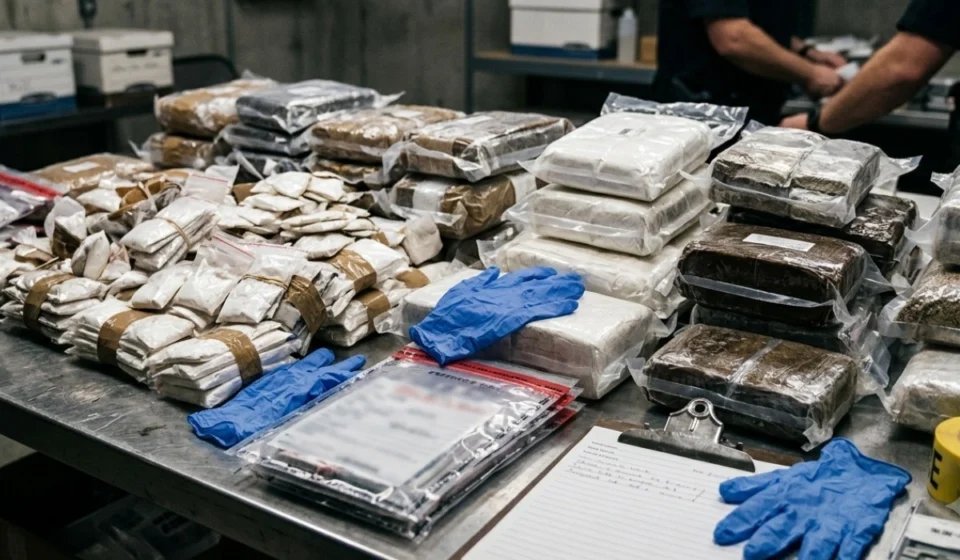

Despite an aggressive crackdown since 2021 — more than 20,000 cases registered, over 26,000 arrests and seizures valued at more than ₹3,200 crore — Assam’s drug problem is worsening rather than receding, and the state appears to be shifting from a transit corridor to a growing consumption hub. Officials point to daily seizures and dramatic operations, but analysts say the figures show activity, not strategic impact: arrest, bail and re-entry remain the norm, and the supply chain largely survives intact.
Chief Minister Himanta Biswa Sarma urged cross-party support in the Assembly for the anti-drug campaign, lamenting that lawmakers who pledge cooperation often question “tough” police action when it is taken. That political ambivalence, critics say, underlines deeper institutional weaknesses that blunt enforcement.
A senior security official, speaking anonymously, captured the problem bluntly: “Drug lords will never be out of the system.” The comment highlights a recurring critique of Assam’s strategy — enforcement overwhelmingly targets small-time peddlers and couriers while kingpins, often operating from outside the state or beyond national borders, remain untouched.
Even large seizures have not broken the networks. In 2024, Assam Police reported seizures including 174 kg of heroin, more than 21,000 kg of ganja and 33 lakh psychotropic tablets, yet traffickers continue to move consignments through the state. The reason is structural: Assam sits at the crossroads of multiple international and interstate routes, making it essential terrain for narcotics transiting the Northeast.
The Myanmar–Moreh–Zorinpui axis, routes via Imphal, Silchar and Shillong into Guwahati, and traditional corridors from Bangladesh through Kurigram, Golakganj and Mankachar remain active. Bhutan and interstate links to West Bengal, Nagaland and Meghalaya further complicate enforcement. Smugglers routinely bypass checkpoints and use alternative routes, including through Meghalaya to avoid surveillance zones such as Khanapara.
Enforcement capacity is strained by porous borders and limited manpower; long unfenced stretches along the Indo‑Myanmar frontier and thinly staffed Indo‑Bangladesh sectors leave large areas vulnerable. Delays in forensic analysis — more than 1,500 cases reportedly pending examination — allow accused persons to obtain bail and erode the impact of arrests.
Traffickers also innovate: hidden compartments, narcotics concealed in vehicle parts and constantly shifting routes have become standard tactics. Meanwhile, demand is rising locally. Guwahati neighbourhoods such as Ulubari, Hatigaon, Fatasil Ambari, Bhootnath, Six Mile and Jyotikuchi have seen increased enforcement, and police note an expanding retail network as well as high‑end consumption in resorts, discos and bars that often escapes routine checks.
Beyond policing, the crisis is socio‑economic. Unemployment in neighbouring Manipur has encouraged poppy cultivation and trafficking as livelihoods, replenishing supply chains when arrests create vacancies. Analysts argue the current approach is reactive and optics‑driven — seizures and arrests that make headlines — rather than focused on border management, economic alternatives, intelligence coordination and judicial speed.
If strategy does not shift from short‑term enforcement to systemic reform, Assam risks deeper social consequences: a rising tide of addiction, broken families and lost productivity that will outlast any headline seizure.
Original Source: https://www.guwahatiplus.com/exclusive-news/despite-record-drug-seizures-assams-drug-trade-continues-to-thrive
Category: Exclusive News
Tags:
Publish Date: 2026-07-11 16:08:00