Architecting Scale for India’s AI-Native and Fintech Series B Winners

When capital follows conviction, the architecture of scaling changes
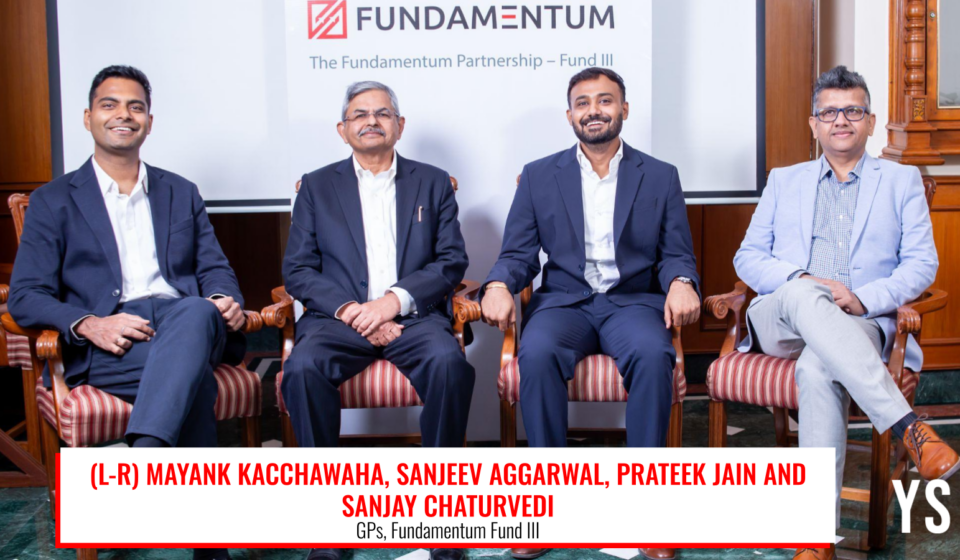
A decade ago, India’s startup narrative was dominated by seed rounds and rapid user growth. Today, we’re seeing a different inflection: larger, focused Series B vehicles aiming to fund the scaling phase where product-market fit becomes predictable but reliable scale still needs capital and architectural muscle. I recently read about Fundamentum Partnership launching its third fund with a Rs 2,200 crore target to back Series B companies – and it crystallised a few strategic implications every CTO, founder, and enterprise architect should be thinking about.
Why this matters (in two lines)
Fundamentum’s move – concentrated bets of Rs 100–150 crore at Series B – signals that investors believe the next phase of value creation in India will be about operationalising scale: payments rails, regulatory compliance, robust ML pipelines, and enterprise-grade reliability rather than just growth hacking.
What this implies for system design and strategy
- From feature experiments to platform engineering: Series B is the moment product teams must graduate from rapid experimentation to platform thinking. This means modular microservices, explicit data contracts, and idempotent APIs that allow independent teams to iterate without cascading failures. Founders must budget engineering runway not just for features but for runbooks, SRE, and disaster recovery.
- Observability and instrumentation become product requirements: At scale, business metrics and telemetry are two sides of the same coin. Investing in fine-grained tracing, business event models, and real-time analytics is no longer optional; it’s how you catch revenue-impacting regressions before customers notice.
- ML in production is an organisational problem, not just a research output: AI-native or AI-enabled bets will face the familiar gap between model prototype and model at-scale. Teams must design MLOps pipelines for continuous evaluation, data versioning, and explainability, and plan compute economics (online vs batch inference, model distillation). Trade-offs between latency, accuracy, and cost must be explicit board-level decisions.
- Security, compliance and DPI integration: Larger checks attract scrutiny. Firms scaling in India must align with evolving data localisation and regulatory expectations while also leveraging Digital Public Infrastructure (DPI) – for example, identity or payments rails – without blindly trusting external dependencies. Zero Trust, data minimisation, and privacy-preserving analytics should be baked into architecture reviews.
- Capital efficiency vs. speed-to-scale: A Rs 100–150 crore cheque buys time, but teams must convert capital into durable advantages: distribution, unit economics, and defensible data moats. Avoid architectural debt that speeds short-term launches but creates compounding ops cost later.
What founders and CTOs should do now (actionable)
- Revisit your SLAs linked to business KPIs and commit to SLOs with proper error budgets.
- Treat data as a first-class product: define ownership, lineage, and SLAs for upstream consumers.
- Build cost-aware ML stacks: prefer distillation, transfer learning, and edge/near-edge inference where possible.
- Invest in resilient integrations with DPI – design against DPI outages and plan alternative flows for critical customer journeys.
- Use the Series B window to professionalise governance: internal audit, security posture assessments, and regulatory counsel.
A Bharat nuance (why this is relevant beyond metros)
The thrust toward larger Series B funding aligns with the rise of Bharat-focused products that must operate under connectivity and device constraints. For teams building for smaller towns and the Northeast, architecture choices like offline-first UX, compact multilingual models, and distributed caching matter more than extra bells on a cloud bill. Scaling across India isn’t just horizontal growth; it’s product localisation plus infrastructure pragmatism.
Key takeaways
- Series B funding is a mandate to professionalise – not merely to grow users but to run reliably at scale.
- Prioritise observability, data contracts, and MLOps to avoid expensive rewrites later.
- Align engineering roadmaps with compliance and DPI realities; build fallback flows for critical services.
- In India, and especially in underconnected regions, architectural choices must favour robustness and frugality.
Closing thought
Capital accelerates opportunity, but it’s architectural discipline that converts that capital into enduring companies. As bets get larger, so must the maturity of the systems and teams that shoulder them.
About the Author: Sanjeev Sarma is the Founder Director and Chief Software Architect at Webx Technologies. With a core focus on Generative AI integration, Cloud-Native Scalability, and Enterprise Software Architecture, he has spent over two decades driving digital transformation across Northeast India and beyond. Beyond his corporate leadership, Sanjeev is deeply invested in shaping the future of the IT industry. He serves as an Industry Expert on the Board of Studies for Assam Don Bosco University’s School of Technology, advises state technology committees, and actively mentors emerging tech startups at STPI. He brings a unique, dual perspective of high-level enterprise execution and future-ready academic curriculum development.