Architecting Real-Time Scalable Transit Platforms for Global Event Surges

Contrarian opening: Capacity isn’t only steel and tracks – it’s orchestration
We naturally measure transit capacity in trains, buses and platform lengths. The recent reports about record ridership around major World Cup venues show a different reality: when demand surges, the single biggest limiter is not physical rolling stock but the quality of digital orchestration – ticketing, realtime schedules, cross-operator coordination and the analytics that let agencies convert latent capacity into usable trips.
Context (the signal)
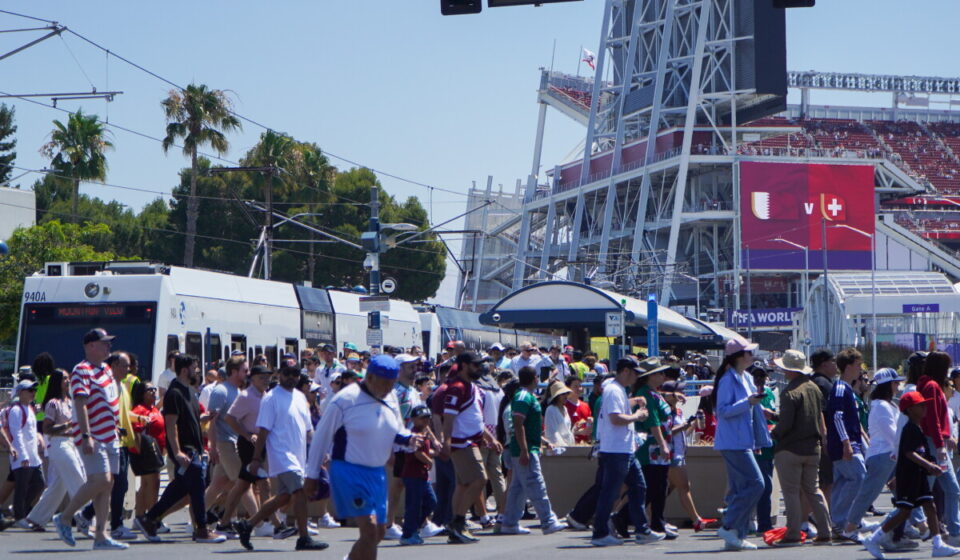
I recently read a briefing on how multiple U.S. transit agencies scaled service for World Cup matches: mobile-first ticketing, longer trains, special express services, coordinated timetables and targeted rider communications produced ridership spikes far above typical event levels. Agencies also adjusted fare policies and ran dedicated services to move hundreds of thousands of additional passengers in short windows.
Analysis – what this means for enterprise and public architecture
The operational wins here are architectural wins. Three technical and strategic shifts stand out:
-
Event-mode is an architectural pattern, not an ad-hoc reaction
Treating a tournament match the same way you treat peak-hour isn’t enough. You need an “event-mode” layer in your mobility stack: a declarative policy engine that can switch schedules, allocate extra units, change signalling priorities and publish those changes through API-first contract surfaces (GTFS-Realtime, push notifications, partner webhooks). This reduces manual coordination and the brittle spreadsheets that break under load. -
Interoperability and API-driven ecosystems unlock hidden capacity
When agencies expose standardized timetables, seat/vehicle capacity and fare bundles via APIs, third-party platforms (and each agency’s own apps) can create combo tickets, round-trip bundles and multimodal itineraries that actually get people into seats. The trade-off is clear: open APIs accelerate ridership and revenue but demand robust identity, consent and data governance models – especially when international visitors are involved. -
Speed vs. stability: test the surge, protect the core
Mobile ticketing and realtime messaging scale badly if backends aren’t designed for extreme, short-duration spikes. Architectures must separate control-plane (policy decisions, routing) from data-plane (ticket issuance, fare validation). Use event-driven queues, ephemeral caches at the edge and circuit breakers that preserve core services (e.g., gate validation) even when ancillary features degrade. -
Equity, revenue policy and friction
Decisions such as waiving surge pricing, running premium express tickets, or selling bundled event passes are as much policy as they are technical. Systems must support parallel fare logics without increasing transactional complexity for riders – and they must provide clear audit trails for revenue-sharing across operators.
Localization – practical parallels for India (and the Northeast)
These lessons are directly relevant to India’s large-scale events: religious melas, IPL finals, state-level sports meets and urban festivals create similar short-duration demand shocks. For the Northeast and other regions with digital public infrastructure (DPI) maturity growing fast, the priority is pragmatic:
- Standardize on interoperable transit data models (GTFS/GTFS-Realtime equivalents) and expose them over simple, well-documented APIs.
- Ensure ticketing supports multiple payment rails (UPI, wallets, offline modes) and low-bandwidth UX for areas with intermittent connectivity.
- Build event-mode playbooks jointly between state transport, rail and local bodies – run tabletop and load tests before real events.
Actionable takeaways for CTOs and transport leaders
- Implement an “event-mode” service layer that can orchestrate schedules, fares and communications declaratively.
- Adopt API-first data contracts (timetables, capacity, fares) and publish playbooks for third-party integrators.
- Architect for surge: edge caching for tickets, autoscaling for fare engines, and resilience patterns (circuit breakers, graceful degradation).
- Bake data governance up-front: consent, retention policies, and cross-border data flows must be auditable.
- Run cross-organizational drills with simulated demand and failure scenarios – technical capacity without operational rehearsal is fragile.
Closing thought
Large events expose a simple fact: the difference between chaos and mobility is rarely new vehicles – it’s the software that lets many moving parts behave like one organism. Designing for that orchestration will define who wins the next era of mass mobility.
About the Author: Sanjeev Sarma is the Founder Director and Chief Software Architect at Webx Technologies. With a core focus on Generative AI integration, Cloud-Native Scalability, and Enterprise Software Architecture, he has spent over two decades driving digital transformation across Northeast India and beyond. Beyond his corporate leadership, Sanjeev is deeply invested in shaping the future of the IT industry. He serves as an Industry Expert on the Board of Studies for Assam Don Bosco University’s School of Technology, advises state technology committees, and actively mentors emerging tech startups at STPI. He brings a unique, dual perspective of high-level enterprise execution and future-ready academic curriculum development.