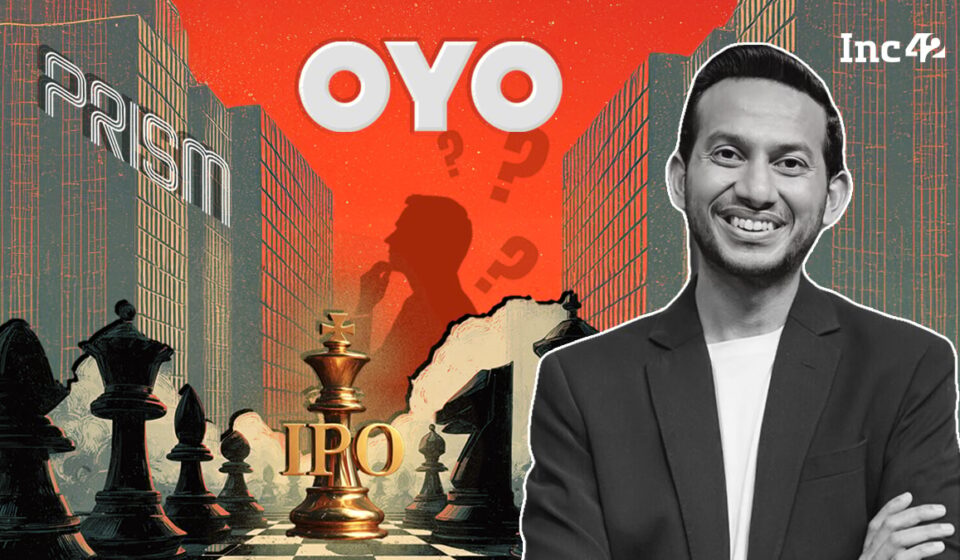
Platform Resilience and Governance for PRISM’s IPO-Scale Transition

The path from startup unicorn to listed company is less a finishing line and more a different operating regime. The recent news that PRISM – the holding company behind one of the largest hospitality platforms – has received SEBI approval to proceed with an IPO (after a confidential DRHP filed in December 2025 and shareholder approval to raise up to ₹6,650 crore) is a useful lens to examine what “platform maturity” actually demands of tech and operating architecture.
A quick signal: PRISM’s move toward a $7–8 billion valuation and a public filing is about more than capital – it forces a shift from growth-at-all-costs to enterprise-grade resiliency, auditability, and governance.
Public markets change the product roadmap
When a platform prepares to list, the invisible priorities that underpin engineering decisions change rapidly. Investors demand predictable margins, auditors demand transparent data lineage, regulators demand traceable customer treatments, and customers expect uninterrupted service. For CTOs and architects this translates into very concrete shifts:
-
From monoliths to observable microservices: Rapid scale during growth often leaves a tangled monolith or brittle service interactions. The transition to public-company discipline requires clear service boundaries, SLAs, and end-to-end observability (OpenTelemetry, centralized tracing, structured logging). This is not optional – it’s the difference between an incident and an investor-facing disclosure.
-
Data as a regulated asset: Marketplaces like hospitality are driven by inventory, pricing, and user data. Public listing raises the bar on data governance – provenance, lineage, retention policies, and consent records must be production-quality. I encourage teams to treat data governance like a product: catalog assets, assign owners, and bake audit trails into pipelines (think data mesh principles with strict access controls).
-
Real-time decisions with auditability: Dynamic pricing, instant cancellations, loyalty adjustments – these are now audit points. Architecting for real-time decisioning (event-driven streams, stateless decision services) while retaining immutable logs for replay and compliance is a practical necessity.
-
ModelOps and explainability: If generative models or ML systems fuel personalization or pricing, you need ModelOps: reproducible training, drift detection, versioned deployments, and explainability layers so that a pricing decision can be inspected end-to-end. Public scrutiny makes opaque “black boxes” a liability.
Trade-offs CTOs must wrestle with
Speed vs. Stability – aggressive product experimentation must be balanced with a robust staging and canarying process. Centralization vs. Local Autonomy – regional hotel partners require loose coupling so local operators can adapt, but platform consistency demands central controls. Innovation vs. Technical Debt – aggressive growth builds debt; IPO-readiness forces a capital allocation to refactor and harden, not just feature-build.
Operational disciplines that pay dividends
- Invest in SRE and runbooks long before the IPO roadshow. Incidents are cheaper to prevent than to explain post-facto.
- Standardize audit logs and immutable ledgers around financial events – payments, refunds, and credits – to simplify statutory reporting.
- Create a sandboxed simulation environment for pricing and marketplace changes so downstream financial impacts can be stress tested.
- Adopt multi-cloud or hybrid strategies carefully: resilience is worth the complexity, but cost engineering must be rigorous.
A note for regional markets and the Northeast
Platforms listing at scale can bring greater visibility and demand to Tier‑II and Tier‑III hospitality providers. For entrepreneurs and operators in Northeast India, this is an opportunity to plug into standardized operational APIs and revenue channels – provided digital readiness is addressed (connectivity, PMS integration, digital payments). Local skilling in ops, revenue management, and basic cloud literacy will be the linchpin for equitable participation.
Key takeaways
- IPO-readiness is architectural – not only financial.
- Treat data governance, auditability, and ModelOps as first-class engineering concerns.
- Prioritize observability, SRE, and simulation environments to preserve trust during scale.
- Regional operators should view platform maturity as both a market opportunity and a call to raise digital competence.
Closing thought
An IPO crystallizes value on a balance sheet, but the more enduring value is the robustness of the systems and processes that sustain that business day after day. Building those reliably, at scale, is the real engineering challenge – and the real competitive moat.
About the Author: Sanjeev Sarma is the Founder Director and Chief Software Architect at Webx Technologies. With a core focus on Generative AI integration, Cloud-Native Scalability, and Enterprise Software Architecture, he has spent over two decades driving digital transformation across Northeast India and beyond. Beyond his corporate leadership, Sanjeev is deeply invested in shaping the future of the IT industry. He serves as an Industry Expert on the Board of Studies for Assam Don Bosco University’s School of Technology, advises state technology committees, and actively mentors emerging tech startups at STPI. He brings a unique, dual perspective of high-level enterprise execution and future-ready academic curriculum development.