Designing Driverless-First Platforms: Resilience, Modularity, and Governance

The vehicle is new, but the debate is familiar: we are finally building machines that can drive themselves – yet we still struggle to make them behave reliably in the real world.
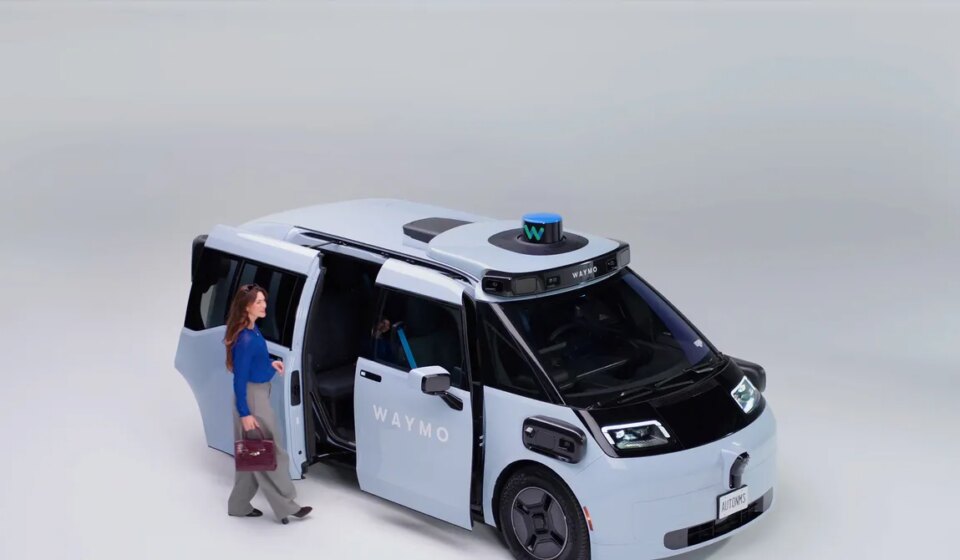
A recent report about Waymo’s purpose-built Ojai robotaxi – a Chinese-made mobility shell fitted with a US-built autonomous stack, now operating free rides in select US cities while regulators weigh fare approval – surfaces three durable tensions in autonomous systems: hardware-software separation, real-world edge cases (flooding, construction zones), and the governance implications of cross-border supply chains.
Why this matters for enterprise architects and technology leaders
What appears as a product launch is in fact an architecture problem writ large. Autonomous mobility is less about a shiny vehicle and more about distributed system design: sensor fusion at the edge, fleet-wide model learning, resilient fallback states, secure OTA pipelines, and the socio-technical systems around regulation and public trust. The Ojai story underlines several lessons any CTO, Chief Architect, or AI lead should internalize.
-
The hardware-software split is a strategic choice, not a neutral fact.
Using a third‑party mobility platform accelerates scale and lowers capital intensity, but it also externalizes supply‑chain risk and regulatory complexity. For enterprises building safety‑critical systems, the trade-off is clear: faster time-to-scale versus tighter control over the entire stack. Architectures must therefore include vendor risk as a first-class concern – firmware provenance, secure boot chains, and contractual SLAs for component traceability. -
Resilience is operational, not only technical.
Waymo’s suspensions in flood-prone areas and construction-laden highways remind us that edge conditions break models more often than we expect. The answer isn’t only better models; it’s layered resilience: sensor diversity (camera + lidar + radar), degenerative-mode policies (safe-stop behaviours), real-time observability, and human-in-the-loop escalation paths. Enterprises should design incident playbooks that combine automated mitigation, remote operator interventions, and clear communication with regulators and users. -
Simulation and coverage-driven testing must be the engineering backbone.
No fleet can be validated on public roads alone. Scenario-driven simulation, adversarial testing for corner cases (e.g., water reflections, temporary signage), and systematic coverage metrics are necessary to reduce surprises. Treat tests as first-class products: instrument them, version them, and measure “unknown unknown” exposure over time. -
Data governance and sovereignty are business architecture concerns.
When base vehicles are manufactured abroad and autonomy stacks are integrated locally, questions about telemetry, geolocation data, and firmware sourcing become unavoidable. For organisations operating across jurisdictions, the architecture must enforce data segmentation, minimize foreign-sourced telemetry, and embed compliance controls into CI/CD – not as a bolt-on audit later.
A practical lens for India (and especially the Northeast)
The lessons translate directly to India. Our monsoon season, flash floods, and fragmented road data create the very edge conditions that caused Waymo trouble. For public‑good pilots and private deployments, a few structural moves will pay dividends: invest in localized mapping and hydrology-aware simulation scenarios, build affordable sensor suites resilient to water and dust, and partner with local academic institutions for scenario generation and testing. These are opportunities for frugal innovation rather than mere import substitution.
Strategic takeaways for leaders
- Treat vendor-sourced hardware as a subsystem with its own lifecycle: version, secure, and monitor it.
- Prioritise sensor diversity and explicit fallback behaviours in safety-critical flowcharts.
- Institutionalise simulation and coverage metrics as part of release criteria.
- Bake data‑sovereignty and provenance checks into your CI/CD and fleet telemetry pipelines.
- Use local pilots to validate against real environmental risks (monsoon, poor signage, hilly terrain) before scale.
Closing thought
Autonomy is less a feature and more a discipline: an organisational design that combines engineering rigor, operational playbooks, and regulatory humility. The Ojai is another waypoint – useful for what it teaches us about building systems that must keep people safe in an unpredictable world.
About the Author: Sanjeev Sarma is the Founder Director and Chief Software Architect at Webx Technologies. With a core focus on Generative AI integration, Cloud-Native Scalability, and Enterprise Software Architecture, he has spent over two decades driving digital transformation across Northeast India and beyond. Beyond his corporate leadership, Sanjeev is deeply invested in shaping the future of the IT industry. He serves as an Industry Expert on the Board of Studies for Assam Don Bosco University’s School of Technology, advises state technology committees, and actively mentors emerging tech startups at STPI. He brings a unique, dual perspective of high-level enterprise execution and future-ready academic curriculum development.