Architecting Low-Carbon Logistics: Operational Lessons from An Post

Rethinking “all‑in on EVs”: pragmatism, measurement and systems thinking for decarbonising logistics
We often treat electric vehicles as the single lever that will decarbonise delivery and postal networks. An Post’s recent sustainability milestone – halving emissions relative to a baseline year while growing volumes – is a useful counterpoint: decarbonisation at operational scale is rarely a single-technology story. It’s an orchestration problem that requires clear measurement, targeted interventions, and pragmatic sequencing.
What happened (quick signal)
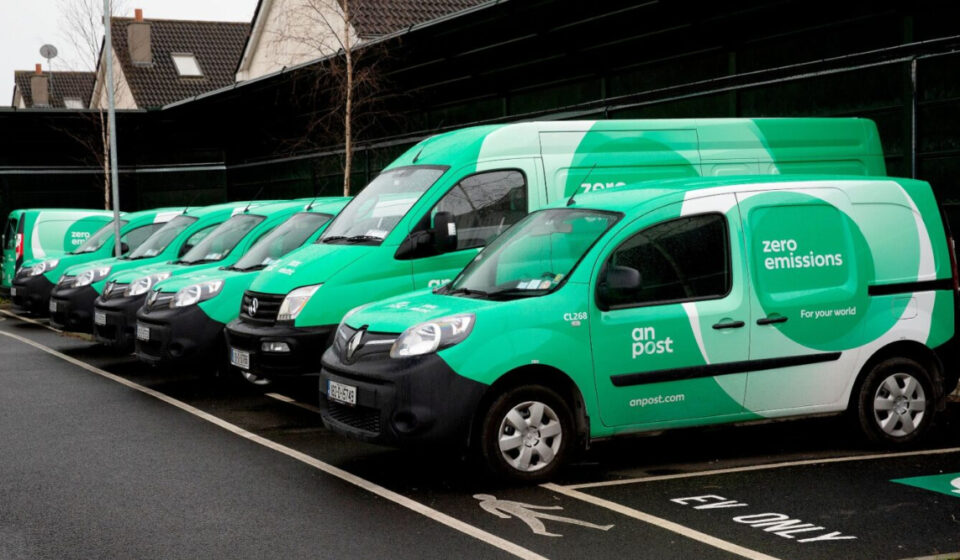
I recently reviewed An Post’s 2025 sustainability report and the associated public disclosures. The organisation accelerated a multi‑year emissions target, significantly expanded its EV fleet, switched most heavy vehicles to HVO where electrification isn’t yet feasible, and powered almost all buildings with renewables – while growing throughput and revenue.
What this means for enterprise architects and logistics leaders
-
Hybrid pathways are a strategic choice, not a compromise
Electrification is the endgame for many routes, but range limitations, charging infrastructure gaps and duty cycles make heavy‑duty electrification a multi‑year transition. Using renewable hydrotreated vegetable oil (HVO) as an interim solution can deliver large near‑term emissions reductions – but it comes with economic and supply‑chain trade‑offs (cost, feedstock sustainability, certification). For architects responsible for fleet transition, that means modelling multiple scenarios: total cost of ownership, carbon intensity per km, and the temporal profile of capital investment for chargers versus fuel infrastructure. -
Infrastructure decisions must be integrated with digital systems
Installing HVO tanks or EV chargers is only the start. Operational value comes from integrating fleet telematics, energy management, route optimisation and payroll/workforce planning. Smart charging schedules, vehicle-to-grid opportunities, and predictive maintenance require a data fabric that links vehicles, depots, energy assets and ERP systems. Prioritise modular APIs and edge‑capable telematics so you can iterate – replacing first‑generation EVs with higher‑range models without rewiring your backend. -
Measurement and governance unlock scaling
An Post’s progress was possible because targets were measurable and publicly reported. For enterprises, investing in robust measurement (scope 1–3 visibility, fuel emission factors, embodied carbon) is non‑negotiable. A credible sustainability programme must pair operational KPIs with financial metrics – e.g., cost per delivery post‑transition, capital deployment timelines, and impact on service SLAs – so boards can make trade‑offs transparently. -
Circular services are commercial levers, not just PR
Postal networks have unique reach and trusted touchpoints. Leveraging post offices and logistics platforms for reuse, repair and resale creates revenue streams while lowering lifecycle emissions. Embedding these services requires product changes (prepaid packaging, reverse‑logistics rules), digital UX adjustments, and small but critical payments/settlement flows.
A practical nod to India and Northeast realities
The lessons translate directly for India’s postal and logistics ecosystem. In congested metros, rapid EV deployment for parcels makes sense; in long, terrain‑challenged routes of the Northeast, hybrid approaches and local biofuel sourcing may be more pragmatic in the near term. Public post offices can double as micro‑renewable hubs (solar rooftop + battery) to reduce building emissions and provide charging at low marginal cost – an attractive model for low‑margin last‑mile services and for MSMEs that rely on reliable, low‑carbon logistics.
Key takeaways for CTOs and logistics founders
- Treat decarbonisation as a systems design challenge, not a vehicle procurement exercise.
- Build an interoperable data layer (telematics, energy, routing, finance) before scaling hardware investments.
- Model multiple transition paths (EV-first, biofuel-interim, hybrid) with financial and carbon outcomes.
- Invest in measurement and third‑party verification to make targets credible and fundable.
- Use post offices and depots as multi‑use assets for circular economy services and local microgrids.
- Engage regulators early – infrastructure approvals, fuel standards and incentives shape what’s economically viable.
Closing thought
Real decarbonisation in logistics will be achieved less by ideology and more by intelligent sequencing: measure honestly, invest where the marginal carbon abatement is highest, and design systems that allow you to swap technologies as better options mature.
About the Author: Sanjeev Sarma is the Founder Director and Chief Software Architect at Webx Technologies. With a core focus on Generative AI integration, Cloud-Native Scalability, and Enterprise Software Architecture, he has spent over two decades driving digital transformation across Northeast India and beyond. Beyond his corporate leadership, Sanjeev is deeply invested in shaping the future of the IT industry. He serves as an Industry Expert on the Board of Studies for Assam Don Bosco University’s School of Technology, advises state technology committees, and actively mentors emerging tech startups at STPI. He brings a unique, dual perspective of high-level enterprise execution and future-ready academic curriculum development.