Beyond the Hype: Architecting Profitable XR Glasses Platforms

Rethinking the “when” of spatial computing: why smart glasses may follow the enterprise playbook, not the consumer one
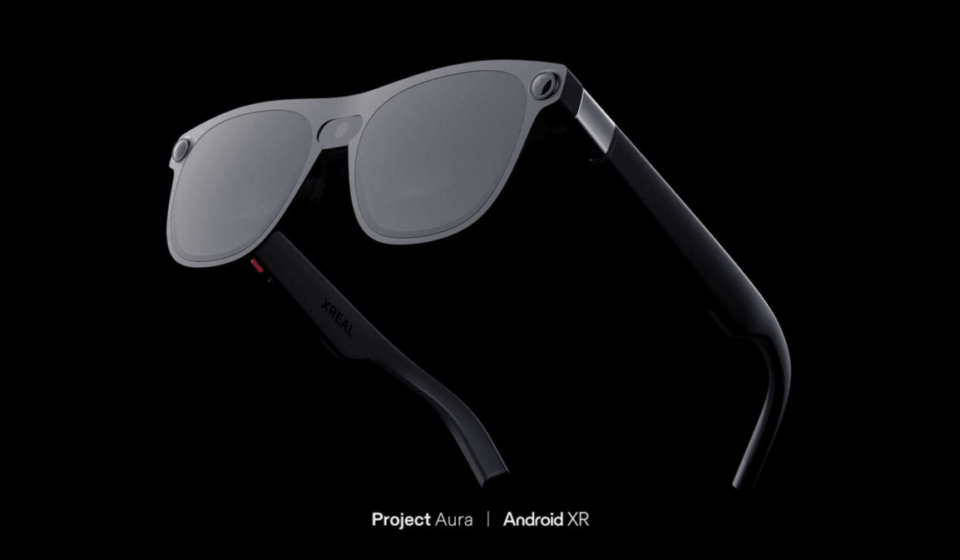
For a decade the smart-glasses narrative has been the same: hype, heavy R&D spending, and limited consumer traction. I recently read coverage of the latest developer-focused hardware demonstrations and the familiar tensions reappeared – smaller form factors, better displays, and tethered compute units. That signal is important not because of any single product, but because it illustrates a larger architectural shift: XR is becoming less about a magical consumer gadget and more about a systems engineering problem that enterprises are uniquely placed to solve.
Why this matters for architects and CTOs
Most conversations about XR treat it as a UI problem – make it lighter, prettier, and people will adopt it. In practice, adoption hinges on an interplay of six technical and operational trade-offs: device ergonomics, thermals and battery, local vs. edge compute, OS and developer platform maturity, content interoperability, and viable business models (margins and distribution). The recent wave of tethered prototypes – where a modest “puck” or edge node carries much of the compute – is telling. It signals engineering realism: constrained device envelopes will temporarily yield to hybrid architectures that split sensing/display from heavy inference and rendering.
From an enterprise-architecture standpoint this has three implications:
-
Distributed compute becomes the dominant integration pattern. Expect XR deployments to look like IoT + edge ML + streaming-render pipelines. Enterprises must plan for low-latency, secure channels between head-mounted sensors and nearby edge nodes (on-prem or carrier edge), with graceful degradation when connectivity or power is limited.
-
Software and user intent drive value, not just hardware specs. The use-case – remote expert guidance, hands-free SOPs, immersive training, or private virtual workspaces – determines whether to prioritise latency, privacy, or content authoring tools. Architectures should separate concerns: device SDKs for local sensing, standardized service APIs for content and identity, and a backend fabric that supports content lifecycle, observability and compliance.
-
Economics and lifecycle matter more than novelty. Smart-glass initiatives that survive will have clear monetisation for enterprises: reduced travel via remote assist, faster onboarding, or improved field uptime. That means tighter integration with ERP/CRM/knowledge bases, role-based access, and audit trails – not just flashy demos.
Data governance and security are non-negotiable
Wearing a camera and microphone raises privacy and regulatory flags. For enterprise rollouts, assume stricter requirements than consumer deployments: local processing for sensitive frames, tokenised access to streams, and auditable data retention policies. Zero Trust principles must extend to the device fabric: identity, attestation, secure boot, and end-to-end encrypted telemetry. These are implementation costs that must be budgeted as core infrastructure, not optional extras.
What this means for India – and Northeast enterprise contexts
There is an immediate and pragmatic case for XR in our markets. Field operations in utilities, healthcare outreach, and remote inspections in the Northeast often contend with difficult terrain and scarce specialist availability. Frugal, hybrid XR architectures (lightweight headsets connected to localized compute or even field-portable edge boxes) can reduce travel, accelerate diagnostics, and preserve privacy by keeping sensitive processing on-device or within state-controlled edges. However, success requires aligning with local DPI initiatives, ensuring low-bandwidth resilience, and choosing business models that fit capex/capability constraints of MSMEs and public agencies.
Practical takeaways for leaders
- Treat XR as distributed systems work: design for edge-first/ cloud-assisted flows, not standalone devices.
- Define measurable enterprise outcomes (MTTR, training time saved, travel cost avoided) before selecting hardware.
- Invest in device identity, attestation, and encrypted telemetry from day one.
- Build content tooling and APIs that integrate with existing enterprise systems; interoperability beats bespoke silos.
- Pilot in verticals with clear ROI and regulatory clarity (field service, healthcare, manufacturing) before consumer bets.
Closing thought
Spatial computing won’t win on novelty alone – it will win when architects stop chasing a perfect wearable and start building the resilient, secure, and economically sensible systems that make hands-free computing materially better for real work.
About the Author: Sanjeev Sarma is the Founder Director and Chief Software Architect at Webx Technologies. With a core focus on Generative AI integration, Cloud-Native Scalability, and Enterprise Software Architecture, he has spent over two decades driving digital transformation across Northeast India and beyond. Beyond his corporate leadership, Sanjeev is deeply invested in shaping the future of the IT industry. He serves as an Industry Expert on the Board of Studies for Assam Don Bosco University’s School of Technology, advises state technology committees, and actively mentors emerging tech startups at STPI. He brings a unique, dual perspective of high-level enterprise execution and future-ready academic curriculum development.