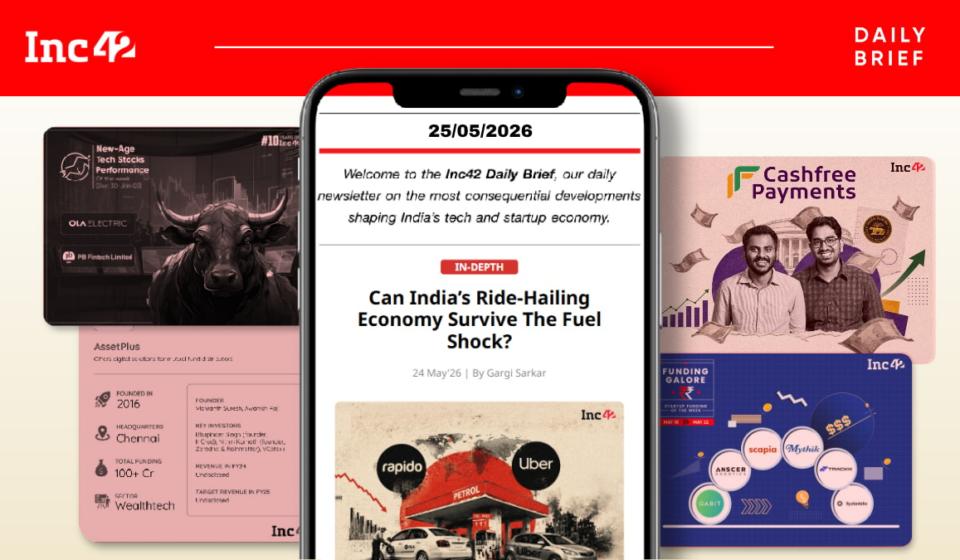
Architecting Resilient Mobility Platforms for India’s Oil Shock

The Human Cost Behind Every Fare – and the Architecture Needed to Fix It
The first casualty of a sustained oil shock is rarely a headline; it’s a driver watching margins vanish. When fuel becomes 30–40% of operating cost, the economics that underpin ride‑hailing – thin margins, hourly earnings targets, vehicle loans – start to fracture. What looks like a pricing problem quickly becomes an architectural one: the systems, contracts and public infrastructure that keep urban mobility affordable and resilient are being stress‑tested.
What’s happening (briefly)
A sustained rise in fuel costs forces three immediate responses: drivers demand higher fares, platforms face supply shortages if fares stay static, and price‑sensitive commuters shift to pooled or public options. Simultaneously, electrification and shared mobility rise in appeal – but both face bottlenecks: charging, financing, and route/occupancy optimisation.
Why this matters for enterprise architects and city planners
We tend to debate EV incentives, fuel subsidies or dynamic pricing as separate levers. In reality they are layers of an integrated system: pricing algorithms, driver financing engines, telematics, charging‑network APIs, payment rails and public transport schedules must interoperate under new constraints. Ignoring that interdependence creates systemic fragility.
Key architectural implications
-
Pricing vs. demand elasticity at scale: Dynamic pricing systems must evolve from short‑term surge logic to elasticity‑aware engines that model commuter behaviour across segments (office shuttles, gig work, night shifts). This requires richer data: mode‑shift elasticity, pooled‑ride conversion rates and loan/repayment stress signals from vehicle financing partners. Architects must design decision services that can weigh driver earnings guarantees against predicted demand decay, not just maximise immediate trip completions.
-
Platform responsibilities and business‑model redesign: If drivers can’t absorb fuel shocks, platforms will either subsidise (burn cash), shift pricing to riders, or redesign offerings (more pooled trips, subscriptions, enterprise shuttles). Each choice changes system requirements – from subscription billing, SLA enforcement for enterprise clients, to real‑time seat allocation in pooled vehicles.
-
Electrification as a systems problem: EV adoption in commercial fleets improves per‑km economics but demands a whole new stack: charging‑station orchestration, battery‑health telemetrics, energy procurement contracts and flexible financing (battery leasing, pay‑per‑use models). Integrations must be API‑first, with clear standards for interoperability between OEM telematics, charging operators and platform dispatch systems.
-
Multimodal orchestration and DPI opportunities: The long‑term solution is not only cheaper cabs – it’s seamless multimodal journeys that push price‑sensitive trips to public transit and pooled services. That requires real‑time data sharing between public transport APIs, private fleets and mobility marketplaces. Digital Public Infrastructure (open, standardised trip and fare APIs) can enable smarter last‑mile planning without compromising privacy.
-
Financial resilience for drivers: Architecture must incorporate financial products as first‑class services – earnings‑smoothing, short‑term fuel credit, dynamic loan re‑pricing – exposed through secure, consented APIs. This reduces churn and prevents a supply shock from cascading into service collapse.
A practical Bharat lens
In lower‑density regions and much of Northeast India, the dynamics differ: two‑wheelers and shared three‑wheelers dominate, and charging infrastructure is sparser. Here, frugal technical solutions – battery‑swap networks, decentralised microgrids for fast chargers, lightweight telematics – provide outsized impact. Local fleet orchestration should prioritise route clustering and shift consolidation over raw automation.
Actionable takeaways
- Treat mobility pricing as a systems design problem, not an algorithmic tweak. Bring demand elasticity models, driver finance signals and enterprise contracts into a single decision layer.
- Build EV readiness as an integration platform: charging, telematics, and financing must be pluggable services.
- Invest in multimodal APIs and privacy‑preserving data sharing with transit authorities to enable mode shifts without user friction.
- Offer drivers embedded financial products to stabilise supply – earnings guarantees, fuel credits, or flexible loan terms.
- In low‑density regions, prioritise battery‑swap, route optimisation and last‑mile pooling over full‑scale fast‑charger rollouts.
Closing thought
An oil shock is more than an economic squeeze – it’s a systems audit. How we design the digital and financial architecture of mobility today will determine whether cities become resilient, affordable and low‑carbon, or brittle and exclusionary.
About the Author: Sanjeev Sarma is the Founder Director and Chief Software Architect at Webx Technologies. With a core focus on Generative AI integration, Cloud-Native Scalability, and Enterprise Software Architecture, he has spent over two decades driving digital transformation across Northeast India and beyond. Beyond his corporate leadership, Sanjeev is deeply invested in shaping the future of the IT industry. He serves as an Industry Expert on the Board of Studies for Assam Don Bosco University’s School of Technology, advises state technology committees, and actively mentors emerging tech startups at STPI. He brings a unique, dual perspective of high-level enterprise execution and future-ready academic curriculum development.