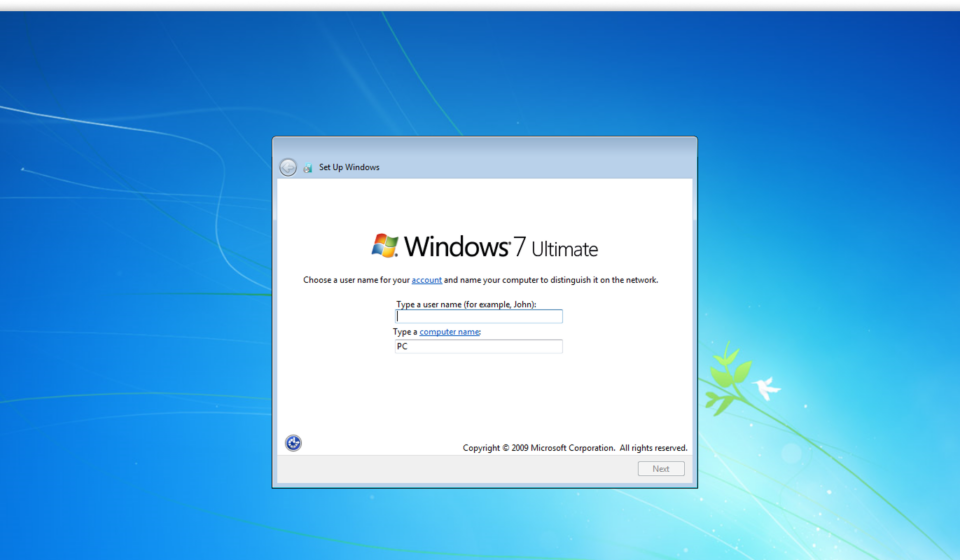

We are in a moment where nostalgia and pragmatism collide: a community has repackaged a modern Windows 10 LTSC build to look and feel like Windows 7, promising a “clean” desktop without the AI-driven bloat and forced feature churn. It’s an appealing idea – and one that surfaces several important architectural and procurement questions for enterprise leaders.
Context
Classic 7 (reported as a reskin of Windows 10 IoT Enterprise LTSC) recreates the Windows 7 user experience while relying on a Windows 10 Long-Term Servicing Channel base, which brings extended security updates and removes consumer-focused overlays and forced feature updates. Enthusiasts praise the simplicity; enterprise IT teams rightly point to licensing, driver compatibility, and support implications.
Analysis – what this really means for architecture and strategy
The popularity of a project like this is a mirror held up to a common enterprise pain: modern software stacks often trade predictability for frequent functional change. LTSC exists because many deployments – kiosks, medical devices, industrial HMI, and specialized enterprise endpoints – need stability more than feature velocity. The reskin trend adds two layers of meaning:
– User experience matters. A thin, familiar UI reduces training, support calls, and cognitive load. That’s a measurable operational win.
– Stability vs. agility trade-off. Choosing LTSC-style images sacrifices rapid feature improvements in exchange for predictable updates and longer lifecycle support.
But before an IT leader or CTO treats a reskinned LTSC image as a shortcut, consider these fundamental trade-offs and risks:
1. Licensing and compliance are non-negotiable. Enthusiast builds sometimes blur legal boundaries. For enterprises, improper licensing risks audits, fines, and operational disruption. Verify procurement channels, SAM (Software Asset Management) records, and manufacturer agreements before any deployment.
2. Security isn’t only about fewer features. Surface area may shrink, but so can visibility. Reskins and third-party imaging can obscure telemetry, update mechanics, and supply-chain provenance. Maintain rigorous patching, endpoint detection, and integrity checks even if the UI feels “simpler.”
3. Hardware and driver compatibility often reveal themselves only at scale. LTSC is conservative about feature updates, which is good – but older drivers or bespoke shell replacements may break expected behaviors. Plan thorough compatibility testing across OEM models and peripherals.
4. Operational lifecycle and total cost of ownership (TCO). A “lighter” desktop can prolong device life and postpone hardware refreshes, lowering CapEx. But hidden costs – support for non-standard images, security incident response, and licensing audits – can erode those savings.
5. Long-term strategy: migrate, modernize, or lock-in? For some classes of devices (kiosks, factory HMIs), LTSC-based, minimal images are the right long-term choice. For knowledge workers, the agility of semi-annual updates and modern security primitives may be more important. Define device classes, then map an OS lifecycle and update policy per class.
Actionable guidance for CTOs and founders
– Classify endpoints: Identify which devices need “stability-first” images and which need “feature-first” images. Treat images as a product with SLAs.
– Verify licensing and vendor support before imaging and deploying at scale.
– Bake security controls into images: EDR, secure boot policies, Windows Update ring management, and image signing must be non-optional.
– Run driver and application compatibility farms (automated testing) across your device matrix before rollout.
– Maintain an image rollback and incident playbook. Predictability comes from rehearsed recovery, not hope.
– Consider virtualization or containerization for user workloads where possible – it gives you the best of both worlds: a stable host with modern, replaceable application layers.
Relevance to India and the Northeast
This approach has pragmatic appeal in cost-sensitive geographies. In government e-governance centers, rural kiosks, or educational labs where hardware budgets are tight and connectivity intermittent, a stable LTSC-based image that reduces support overhead can be the difference between sustainable service and constant break-fix work. But procurement must follow compliance, and DPI initiatives should prioritize secure, auditable images that vendors and integrators can support long term.
Takeaways
– Simplicity is valuable, but not at the cost of compliance and security.
– Treat any third-party image as you would a third-party supplier: verify, test, and contractually require support.
– Align OS strategy to device function: stability-first for fixed appliances; agility-first for knowledge work.
Closing thought
Nostalgia can point to real operational wisdom: less can be more. But in enterprise architecture, “less” must be engineered, audited, and supported – not borrowed from a community build and hoped to work at scale.
About the Author
Sanjeev Sarma is the Founder Director of Webx Technologies Private Limited, a leading Technology Consulting firm with over two decades of experience. A seasoned technology strategist and Chief Software Architect, he specializes in Enterprise Software Architecture, Cloud-Native Applications, AI-Driven Platforms, and Mobile-First Solutions. Recognized as a “Technology Hero” by Microsoft for his pioneering work in e-Governance, Sanjeev actively advises state and central technology committees, including the Advisory Board for Software Technology Parks of India (STPI) across multiple Northeast Indian states. He is also the Managing Editor for Mahabahu.com, an international journal. Passionate about fostering innovation, he actively mentors aspiring entrepreneurs and leads transformative digital solutions for enterprises and government sectors from his base in Northeast India.