
Hook – The Contrarian
We celebrate blockbuster sequels and nostalgic revivals, but the real engine of innovation often comes from smaller teams willing to reinterpret a genre rather than simply replicate it. The news that 1047 Games is developing Empulse – described as a “spiritual successor” to Titanfall – is an instructive reminder: successful modern multiplayer games are as much architectural problems as they are creative ones.
Context (the signal)
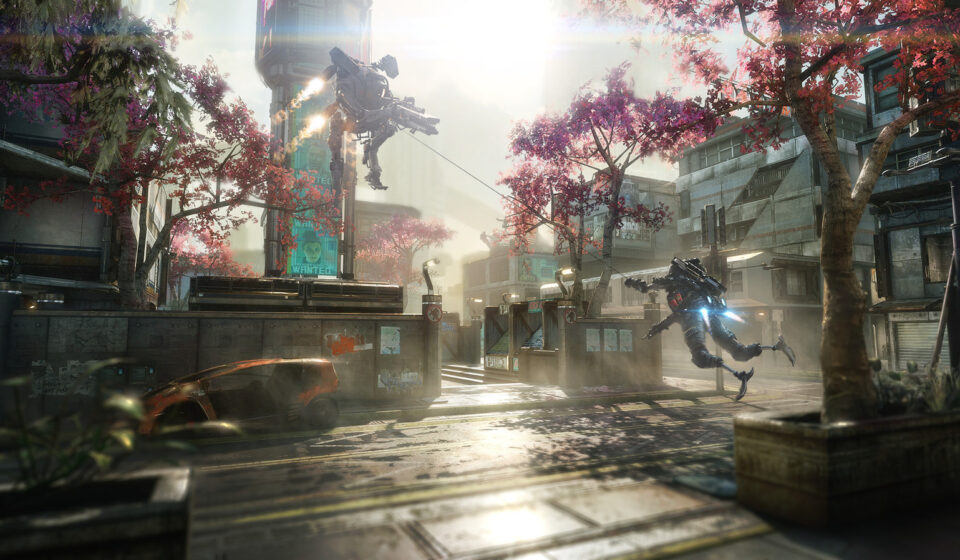
A new movement-focused shooter in pre‑alpha, Empulse reportedly blends wall‑running, grappling and mech combat into a Team Deathmatch framework. The title’s earliest footage hints at fast, vertical gameplay combined with intermittent vehicle/mech interactions – a blend that creates non‑trivial demands on networking, physics, and live operations.
Analysis – what this means for architecture and product strategy
Fast-paced, movement-driven shooters expose the fundamental trade-off of real‑time systems: speed versus authoritative consistency. When players expect ultra-responsive movement (wall runs, grapples, boost pads) alongside large, stateful entities (mechs with shields and missiles), engineers must choose between client‑side responsiveness and server‑side truth. The typical patterns are client prediction with server reconciliation, deterministic simulation for critical systems, and selective server authority for interactions that affect game balance.
From an enterprise‑grade perspective, building a title like this requires thinking beyond gameplay design into platform design:
– Networking/latency: Invest in edge matchmaking and regional servers; use UDP with robust state-snapshot strategies, and optimise delta compression for rapid state updates.
– Physics and determinism: Separate cosmetic effects from gameplay-determinant physics; run authoritative collision and damage resolution on the server to avoid exploitable divergence.
– Scalability and ops: Architect for elastic instances, containerised game servers, and telemetry pipelines that surface player experience signals (tick drops, reconciliation rates, input latency).
– Anti‑cheat and trust: Fast movement and traversal mechanics increase the attack surface for speed hacks and teleportation. A layered approach (behavioral detection, server-side checks, and secure client attestation) is essential.
– Live ops & iteration: Pre‑alpha and early access demand feature flags, staged rollouts, and rollback capability. Community feedback should drive core tuning, but only through controlled experiments to avoid destabilising the live economy or competitive integrity.
Build vs. Buy decisions matter here. Smaller studios benefit from mature multiplayer backends (matchmaking, lobby, presence) and managed cloud game server platforms to avoid re‑inventing plumbing. Yet, bespoke mechanics (unique grapple physics, mech state machines) often require custom subsystems. My advice: carve the architecture into commodity components you can buy or outsource, and reserve engineering investment for differentiated gameplay systems.
Localization – why this matters for India and the Northeast
India’s developer talent and burgeoning game‑dev ecosystem can play a strategic role in such builds. Studios across India – including in tier‑2 and Northeast cities – can contribute to network engineering, QA for high‑latency scenarios, and regional live‑ops. But to capitalise, policy and industry must ensure affordable cloud credits, low‑latency CDN/edge access, and esports infrastructure. For founders in India, focusing on these operational primitives creates exportable value beyond the creative IP.
Actionable takeaways for CTOs and Founders
– Prioritise server authority for any mechanic that affects balance; use client prediction only for feel.
– Invest early in telemetry and observability – you cannot tune what you cannot measure.
– Use feature flags and canary deployments for any competitive or monetisable change.
– Layer anti‑cheat: combine heuristics, server checks, and secure client attestation.
– Outsource non‑differentiating services (matchmaking, auth, analytics) to focus engineering on gameplay innovation.
Closing thought
Games like Empulse are a useful lens: they remind us that product leadership in realtime systems is won at the intersection of user feel, architectural discipline, and operational maturity – not merely by nostalgic design choices.
About the Author Sanjeev Sarma is the Founder Director of Webx Technologies Private Limited, a leading Technology Consulting firm with over two decades of experience. A seasoned technology strategist and Chief Software Architect, he specializes in Enterprise Software Architecture, Cloud-Native Applications, AI-Driven Platforms, and Mobile-First Solutions. Recognized as a “Technology Hero” by Microsoft for his pioneering work in e-Governance, Sanjeev actively advises state and central technology committees, including the Advisory Board for Software Technology Parks of India (STPI) across multiple Northeast Indian states. He is also the Managing Editor for Mahabahu.com, an international journal. Passionate about fostering innovation, he actively mentors aspiring entrepreneurs and leads transformative digital solutions for enterprises and government sectors from his base in Northeast India.