
US President Donald Trump arrived in Beijing on May 13, 2026, for a state visit running through May 15 to meet Chinese President Xi Jinping — the first visit by a sitting American president to China in nine years. The trip, billed as a major diplomatic moment, brings with it a high-powered US delegation of 16 business leaders, reportedly including Elon Musk and Apple’s Tim Cook, and has drawn intense global scrutiny. Trump said before departing the White House, “We’re the two superpowers. We’re the strongest nation on Earth in terms of military. China’s considered second,” and added, “We have a lot of things to discuss. I wouldn’t say Iran is one of them… because we have Iran very much under control.”
On the agenda in Beijing are talks on trade, tariffs, Taiwan, artificial intelligence and critical minerals, as well as possible cooperation in aerospace, agriculture and energy. Both sides are expected to discuss establishing a US-China Board of Trade and a Board of Investment aimed at smoothing economic ties and protecting national-security interests.
The visit comes after months of tension between Washington and Beijing over tariffs, the West Asia conflict and Taiwan. Analysts warn the summit’s tone could reshape regional alignments. Scott Kennedy of the Centre for Strategic and International Studies says China appears to be entering the meeting from a “much stronger place.” Chad Bown of the Peterson Institute told CNBC that “virtually everyone has a stake in the outcome of this meeting.” Eswar Prasad, a Cornell economist, warned that a contentious summit could prolong economic and geopolitical volatility and harm global trade and growth, urging the leaders to reach agreement on at least a subset of issues.
Asian governments are watching for signs of Washington softening on China, especially on security commitments such as arms sales to Taiwan. Experts say any perceived US concessions could unsettle US allies and strengthen Beijing’s leverage on contested fronts from the India border to the South China Sea. The Strait of Hormuz and the wider energy shock from the West Asia conflict are also key concerns for regional energy imports.
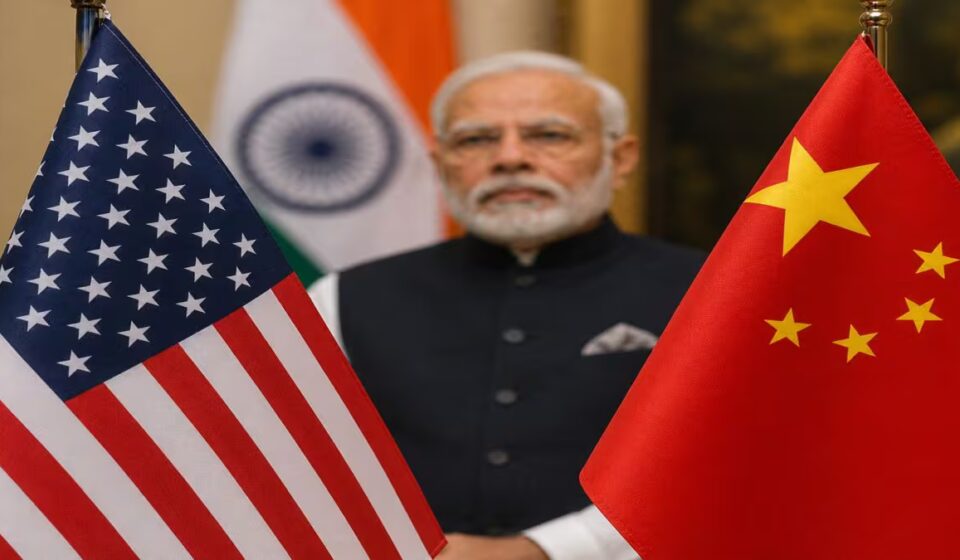
For India, the summit matters for trade and strategic balance. New Delhi benefits from US-China rivalry but fears being sidelined if closer US-China economic mechanisms emerge, or if concessions on Taiwan embolden Beijing. India also depends on secure access through the Strait of Hormuz and could be affected by shifts in tariffs, rare-earth access or energy arrangements discussed in Beijing.
With inputs from agencies.
Original Source: https://www.firstpost.com/explainers/donald-trump-xi-jinping-summit-india-concerns-analysis-14010552.html
Category: India
Tags:
Publish Date: 2026-05-13 17:40:00