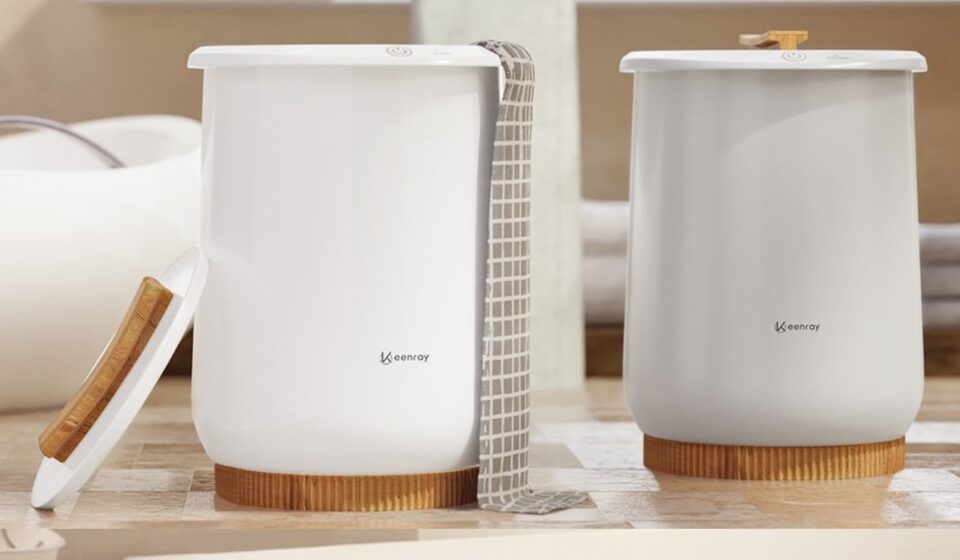

We celebrate grand technical leaps – AI models, cloud-native rewrites, multi‑cloud strategies – and rightly so. But sometimes the most instructive innovations are the quiet, physical products that win by solving a single, obvious human friction: the cold towel after a shower. Those small, well‑designed experiences reveal a lot about product thinking, go‑to‑market dynamics, and the architecture choices organisations face when they cross from “useful” to “delightful.”
Context – the signal, not the noise
I recently came across a consumer product story about a simple electrical towel warmer that warms towels and robes in minutes, sells for a modest price, and has thousands of positive user reviews praising its “life‑changing” effect on daily routines. It’s a textbook example of a low‑complexity device delivering outsized emotional value.
What this tiny gadget teaches enterprise architects and founders
1. Micro‑experiences matter. Technology teams and product leaders often prioritise headline features (performance, scalability, broader platform integration). But user loyalty frequently grows from thousands of small, delightful moments – a warm towel, a reliably fast login, a one‑click refund. Design your product roadmaps to identify and optimise these micro‑moments; they compound into real differentiation.
2. Simplicity often beats connectivity. There’s enormous pressure to “IoT‑enable” everything. Adding connectivity can be valuable, but it brings complexity: security, firmware lifecycle, privacy obligations, support overhead and higher BOM costs. For many physical products, the right choice is to perfect core functionality first and only add connectivity when it unlocks measurable new value (remote diagnostics, subscription services, energy optimisation).
3. User feedback as continuous product R&D. The value of thousands of candid reviews can’t be overstated. For hardware makers this is particularly precious: real‑world usage reveals compliance, safety issues (e.g., warnings about wet items), and feature priorities. Build feedback loops that convert reviews into engineering tickets, quality checks, and marketing signals.
4. Safety, standards and lifecycle planning are not optional. Low‑cost consumer electrics must still meet regional safety and energy standards. For organisations shipping at scale, non‑compliance creates reputational and legal risk. From my advisory work, I’ve seen startups that underestimated certification timelines suffer costly delays. Plan for testing, labeling, and clear user guidance from day one.
5. Build vs. buy – a practical rubric. If your differentiation is the core appliance function, build it. If differentiation is a platform experience (analytics, integrations), consider partnering or white‑labeling modules for device management, secure onboarding, and OTA updates. This reduces time‑to‑market and concentrates your team on what truly differentiates the product.
A note for India (and especially Northeast India)
There’s a genuine, regional relevance here. In colder pockets of Northeast India – and in households with intermittent power – a well‑insulated, energy‑efficient warmer that requires no constant connectivity is not a luxury but a pragmatic comfort. In my interactions with STPI and hardware ventures across the region, I encourage “frugal IoT” designs: achieve the user outcome with minimal dependency on continuous connectivity and design for low power and straightforward maintenance.
Actionable takeaways for CTOs and Founders
– Start with the human problem: map the micro‑moment you intend to fix and measure it.
– Resist premature connectivity: add smart features only when they deliver measurable user/business value.
– Invest in safety certification and clear user instructions early – they’re cheaper than recalls.
– Treat user reviews as product telemetry; instrument your roadmap to close the loop.
– If adding IoT, adopt secure device lifecycle practices (authenticated onboarding, signed firmware, minimal data collection).
Closing thought
Great technology is often invisible: it makes a small part of daily life better so consistently that people come to expect and love it. As architects and founders, our job is to spot those tiny frictions and decide – strategically – whether to solve them with elegant simplicity or complex connectivity.
About the Author Sanjeev Sarma is the Founder Director of Webx Technologies Private Limited, a leading Technology Consulting firm with over two decades of experience. A seasoned technology strategist and Chief Software Architect, he specializes in Enterprise Software Architecture, Cloud-Native Applications, AI-Driven Platforms, and Mobile-First Solutions. Recognized as a “Technology Hero” by Microsoft for his pioneering work in e-Governance, Sanjeev actively advises state and central technology committees, including the Advisory Board for Software Technology Parks of India (STPI) across multiple Northeast Indian states. He is also the Managing Editor for Mahabahu.com, an international journal. Passionate about fostering innovation, he actively mentors aspiring entrepreneurs and leads transformative digital solutions for enterprises and government sectors from his base in Northeast India.