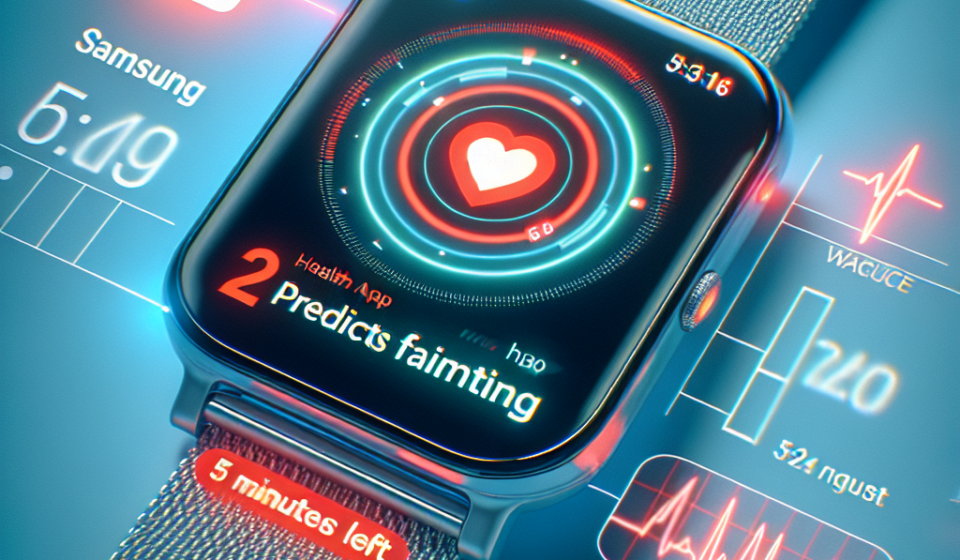

We celebrate wearables when they count our steps and monitor sleep. But the real, under-appreciated shift is when they stop being retrospective fitness gadgets and start acting as frontline preventive healthcare devices. A recent clinical collaboration between a consumer tech company and a hospital – where a smartwatch’s photoplethysmography (PPG) data and an AI model reportedly predicted vasovagal syncope up to five minutes before an event with ~84.6% accuracy (sensitivity 90%, specificity 64% in an induced-test cohort of 132 patients) – illustrates exactly that transition. The headline is seductive; the hard questions that follow are where enterprise architects, health-tech founders, and policymakers need to focus.
Why this matters architecturally and strategically
1. From telemetry to clinical decision support: Moving a consumer sensor into a clinical workflow is not merely an integration problem – it’s an architectural change in who owns decision-making. A device that warns a person “you may faint in five minutes” changes clinical triage, emergency response, and even personal liability boundaries. Systems must be designed for human-in-the-loop escalation, not autonomous diagnosis.
2. Signal quality and generalisability: Lab or induced-test performance (132 patients) is a useful first step, but not a deployment guarantee. Variations in skin tone, motion artifacts, wrist placement, comorbidities, medications, and real-world stressors can significantly change PPG quality and model performance. For architects, that means continuous monitoring of model drift, dynamic calibration, and multi-sensor fusion (PPG + accelerometer + context) to reduce false positives and negatives.
3. Trade-offs: sensitivity vs. specificity and the cost of alarms. A clinical sensitivity of 90% is commendable; a specificity of 64% means many false alarms. False positives cause alarm fatigue, erode user trust, and strain emergency services if not managed. The product strategy must balance “catch every event” against “don’t cry wolf.” This is a UX, policy and systems-design problem as much as an ML one.
4. Regulatory, legal, and data governance implications: Anything that influences medical action faces regulatory scrutiny (clinical validation, approvals, labeling), and liability concerns (who is responsible for missed warnings or false alarms?). From a system design perspective, the data pipeline must be auditable, privacy-preserving, and compliant with healthcare standards. Interoperability with EHRs (FHIR), secure consent management, and robust anonymization techniques are non-negotiable.
Actionable guidance for CTOs and founders
– Treat clinical features as product features: invest in clinical trials that reflect your target population and settings. Don’t rely on a single induced-test dataset for deployment decisions.
– Design for progressive alerts: local warnings first, then caregiver notification, then emergency escalation – with configurable thresholds to reduce alarm fatigue.
– Build an explainability layer: clinicians and users should see why an alert triggered (HRV patterns, recent context) – that improves trust and supports regulatory filings.
– Edge + cloud hybrid: do primary inference on-device to guarantee low-latency warnings and privacy, while using cloud for aggregation, model updates, and population-level monitoring.
– Partner ecosystem: collaborate with certified clinical partners and emergency responders early. Integration with existing care pathways is what turns early warnings into saved lives.
A practical note for India and similar geographies
In contexts where ambulance response times are long and fall-related injuries are a critical risk, a reliable wearable that provides even a few minutes of advance notice can be life-changing – but only if alerts are actionable and locally relevant. That means low-cost device options, multi-language alerting, offline-first behavior (where connectivity is intermittent), and caregiver networks that can receive and act on alerts. Frugal innovation combined with clinical rigor will determine whether such solutions scale in Bharat.
Takeaways
– Wearable-driven preventive care is promising, but lab accuracy is not the same as field efficacy.
– Design systems for human-in-the-loop escalation, explainability, and configurable alert policies.
– Prioritise diverse clinical validation, robust data governance, and hybrid edge-cloud architectures.
– In markets with constrained emergency resources, meaningful integration and affordability matter as much as accuracy.
Closing thought
Technology that warns a human before harm – and then hands them a clear, trustworthy action – is where prevention becomes dignity. The engineering challenge is to make those warnings precise, contextual, and responsibly integrated into the care ecosystem.
About the Author Sanjeev Sarma is the Founder Director of Webx Technologies Private Limited, a leading Technology Consulting firm with over two decades of experience. A seasoned technology strategist and Chief Software Architect, he specializes in Enterprise Software Architecture, Cloud-Native Applications, AI-Driven Platforms, and Mobile-First Solutions. Recognized as a “Technology Hero” by Microsoft for his pioneering work in e-Governance, Sanjeev actively advises state and central technology committees, including the Advisory Board for Software Technology Parks of India (STPI) across multiple Northeast Indian states. He is also the Managing Editor for Mahabahu.com, an international journal. Passionate about fostering innovation, he actively mentors aspiring entrepreneurs and leads transformative digital solutions for enterprises and government sectors from his base in Northeast India.