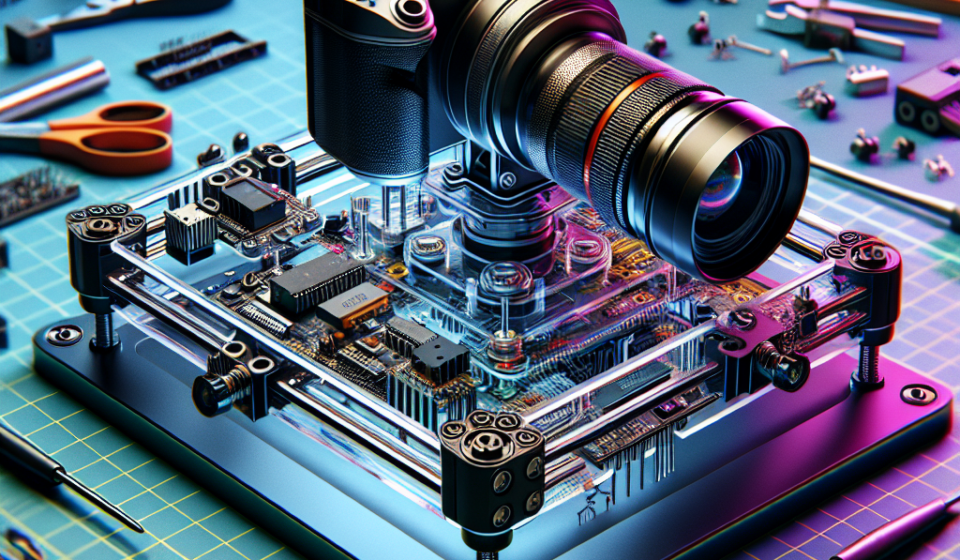

We celebrate sleek, purpose-built products – but some of the most valuable engineering lessons come from repurposing what’s already on the bench. I recently came across an interesting maker project where an engineer used common 3D‑printer hardware and an ESP32 to build a three‑axis camera slider, iterating both mechanical parts and firmware until the system moved a 1.4 kg camera smoothly. That grassroots case illustrates a set of practical truths that every CTO, product leader, and architect should internalize.
The signal
A maker reused extruded aluminum rails, bearings and off‑the‑shelf printer parts; redesigned mounting plates and gear ratios after encountering mechanical limits; rewrote driver code to tame motion under load; and exposed control via a wireless GUI on an ESP32. The project and its files were shared openly for others to learn from.
What this means strategically
1) Modularity and commodity components accelerate learning
Using pre‑existing, well‑documented modules (rails, linear bearings, stepper assemblies) buys you time in the prototyping phase. You reduce mechanical unknowns and avoid reinventing basic subsystems, so you can focus engineering energy on the differentiator (in this case, motion control firmware and user experience). For enterprise teams, this is the same rationale behind using cloud services or hardware development kits to validate core features quickly.
2) The hardware‑software feedback loop matters more than the parts
The maker’s real work was iterative: mechanical constraints drove firmware changes (gear ratios, driver code) and vice‑versa. This reinforces a key architectural lesson – when building physical products, treat firmware and mechanical design as coequal first‑class citizens. Neglecting either creates late surprises that are expensive to fix. Early integration tests and performance budgets (torque, latency, power) should be part of the MVP definition.
3) “Build fast” and “scale safely” are different currencies
Commodity parts are excellent for validation and for low‑volume, low‑cost solutions. But when moving toward production you must assess long‑term maintainability: supply chain stability, part tolerances, serviceability, and regulatory safety. Rapid prototyping creates technical debt if you don’t define the productization path up front. Decide early what you will standardize and what you will replace when volumes grow.
4) Open source and knowledge sharing compound innovation
Publishing the project files invites improvement, reduces duplicated effort, and builds trust. For product teams, open prototypes can serve as living documentation and speed internal developer onboarding. But open also means you must consider licensing, export rules, and potential IP leakage – treat open prototypes as strategic assets, not casual posts.
Contextual relevance (why this matters to Bharat and regional innovators)
Low‑cost, modular builds like this are not just hobbyist toys – they are enablers for regional creators and small businesses. Affordable camera rigs democratize storytelling, enable local documentation of culture, and lower barriers for micro‑studios across India’s tier‑2/3 cities and Northeast regions. Supporting maker labs, vocational training, and local supply chains can turn these proofs of concept into viable local industries.
Practical takeaways for CTOs and founders
– Use commodity modules to validate hypotheses fast, but set a clear productization checklist: supply chain, tolerance specs, safety approvals, and maintenance procedures.
– Invest early in firmware and driver quality; these are often the hardest to retrofit and directly impact user experience.
– Treat open‑source prototypes as part of your engineering pipeline – curate, document, and license them deliberately.
– Define performance budgets (mass, torque, latency) and integrate mechanical+software test cases into CI where possible.
– For consumer or creator tools, think about accessibility: weight limits, quick‑release mounts, smartphone support – features that expand addressable users.
Closing thought
The maker example is a small, sharp reminder: innovation often happens at the intersection of frugality and craft. When architects learn to embrace modular commodity parts without losing sight of long‑term engineering discipline, we get faster validation today and robust products tomorrow.
Author Profile
About the Author Sanjeev Sarma is the Founder Director of Webx Technologies Private Limited, a leading Technology Consulting firm with over two decades of experience. A seasoned technology strategist and Chief Software Architect, he specializes in Enterprise Software Architecture, Cloud-Native Applications, AI-Driven Platforms, and Mobile-First Solutions. Recognized as a “Technology Hero” by Microsoft for his pioneering work in e-Governance, Sanjeev actively advises state and central technology committees, including the Advisory Board for Software Technology Parks of India (STPI) across multiple Northeast Indian states. He is also the Managing Editor for Mahabahu.com, an international journal. Passionate about fostering innovation, he actively mentors aspiring entrepreneurs and leads transformative digital solutions for enterprises and government sectors from his base in Northeast India.