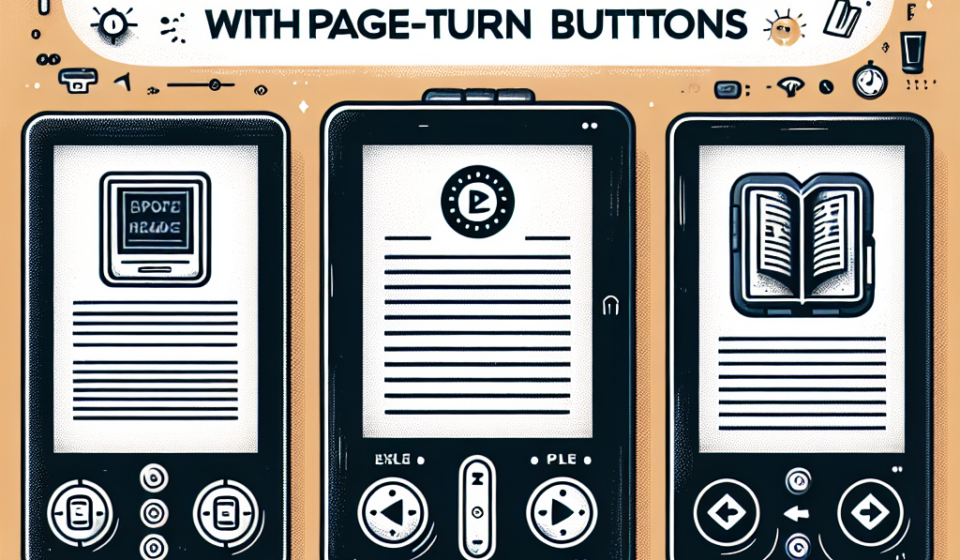

We spend a lot of time chasing the next big spec-higher-refresh displays, thinner bezels, and ever-larger app ecosystems. Yet the recent roundup of e-readers that still include physical page-turn buttons reminds us of a quieter truth: small, tactile design choices can materially change how people use a device for hours, day after day.
The signal: several modern e-readers (from Kobo, Boox, PocketBook) intentionally keep hardware page buttons, pair them with long-lasting e‑ink screens (including color variants), and trade some polish and app breadth for ergonomics, battery life, and offline friendliness. Each device exposes different choices-open Android + Play Store on one, strong file-format support and library integration on another, and water protection and extended storage on a third.
What this means for product architects, CTOs, and enterprise buyers
– UX friction is strategic debt. Touchscreens win headlines but lose in prolonged read sessions, single‑handed use, and accessibility. A physical button is low-tech, low-power, and high-impact: it reduces finger travel, prevents accidental touches, and preserves flow. For products where sustained attention matters (training manuals, policy documents, classroom reading), that tiny ergonomic choice reduces cognitive load and improves completion rates.
– Platform openness creates opportunity and risk. Devices that run Android and allow Play Store apps dramatically broaden use cases-annotation apps, internal document viewers, enterprise MDM clients-but they also introduce a support surface: security patches, app compatibility, and performance tuning on e‑ink hardware. For teams considering provisioning e‑readers at scale, the trade-off is clear: flexibility versus manageability.
– Content and format interoperability are a make-or-break. Kindle’s ecosystem excels at convenience, but closed DRM can lock organizations into a single vendor. Devices supporting EPUB, wide format compatibility, OverDrive/Libby (library lending), and local storage provide resilience-especially important for education programs and public libraries that need durable, offline-capable content workflows.
– Battery life, durability and offline-first matter more than “app count.” E‑ink devices that offer weeks of battery life, IPX water resistance, and microSD expansion are better suited for field deployments, remote learning, and travel. In many real-world scenarios, those attributes outweigh raw processing power or color fidelity.
– Cost vs. value: Think whole-life, not headline price. A seemingly cheaper touchscreen device may carry hidden costs-higher replacement rates, more frequent charging, poorer reading retention. Conversely, investing in a slightly more expensive device with better ergonomics and broader format support can reduce churn and total cost of ownership.
Actionable guidance – what to do next
– If you’re procuring devices for training, libraries, or field staff: prioritize devices that support open formats (EPUB), library lending (OverDrive/Libby), and physical page controls. Test for single‑handed operation and real-world battery life.
– If you’re a product team deciding on an e-reader product line: run a small LMVP (light‑manufactured viable product) that tests tactile controls and offline workflows with actual users for a month-measure completion, satisfaction, and error rates.
– For security and manageability: prefer devices that support MDM and have a transparent patch cadence. If choosing Android-capable readers, budget for lifecycle patching and app validation.
– For content strategy: avoid vendor lock-in. Maintain master copies in open formats, and design distribution pipelines that can publish to multiple storefronts and lending services.
A regional note (when it fits)
In geographies with intermittent connectivity and power (including many parts of India’s Northeast), these choices aren’t merely niceties; they are prerequisites. Offline access, long battery life, and robust file-format support make digital reading a practical, not aspirational, experience for learners and public libraries.
Closing thought
Technology often confuses novelty with progress. Sometimes progress is a tactile button that keeps a reader in the story rather than in the settings menu. As architects and product leaders, our job is to see which small design choices compound into lasting value-and to choose them deliberately.
About the Author Sanjeev Sarma is the Founder Director of Webx Technologies Private Limited, a leading Technology Consulting firm with over two decades of experience. A seasoned technology strategist and Chief Software Architect, he specializes in Enterprise Software Architecture, Cloud-Native Applications, AI-Driven Platforms, and Mobile-First Solutions. Recognized as a “Technology Hero” by Microsoft for his pioneering work in e-Governance, Sanjeev actively advises state and central technology committees, including the Advisory Board for Software Technology Parks of India (STPI) across multiple Northeast Indian states. He is also the Managing Editor for Mahabahu.com, an international journal. Passionate about fostering innovation, he actively mentors aspiring entrepreneurs and leads transformative digital solutions for enterprises and government sectors from his base in Northeast India.