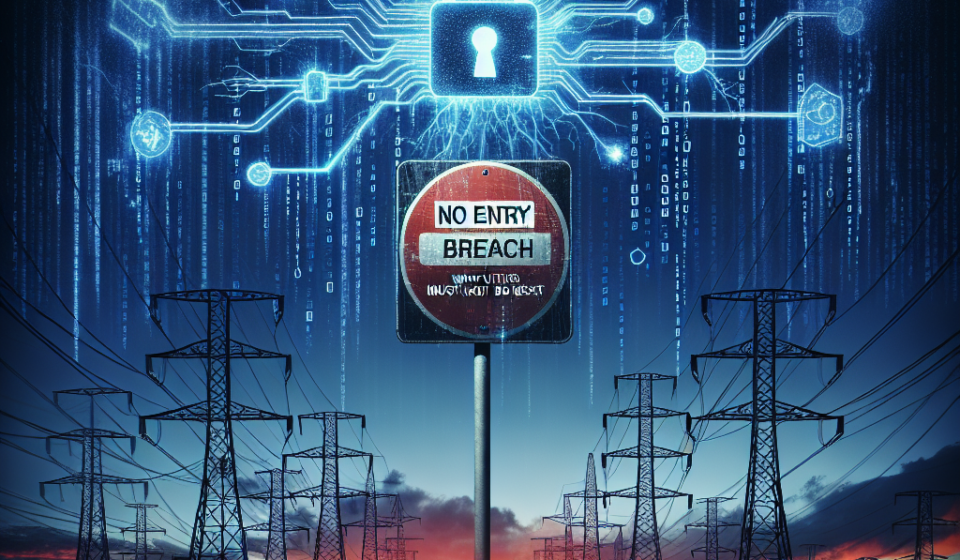

The illusion of “no material impact” is the most dangerous message a company can send after a breach.
Context
Itron recently disclosed that an unauthorized third party accessed some of its internal systems on April 13, 2026, activating its incident response plan, involving external advisors, and notifying law enforcement. The company reports containment with no observed follow-up activity and no disruption to customer systems – but the investigation remains underway.
Why this matters beyond a single vendor
Two features make this incident strategically important. First, Itron sits at the intersection of IT and operational technology (OT): its products and services are embedded in electricity grids, water distribution and gas networks. Second, the organization manages millions of endpoints and a global customer footprint – the classic surface area explosion that comes with scale and criticality.
From an enterprise-architecture and resilience perspective the lesson is simple but not easy: protecting critical infrastructure is not just about preventing initial access; it is about assuming access and designing systems that limit blast radius, accelerate detection, and enable fast, verifiable recovery.
Strategic implications for architects and CTOs
– Zero Trust is no longer optional. Network segmentation, identity-first controls, and least-privilege access must be enforced with the same rigor across corporate, cloud, and OT domains. Legacy perimeter assumptions break down when vendors and external integrations increase attack paths.
– Detection and telemetry matter more than ever. If containment is your headline, evidence is your currency. High-fidelity telemetry (endpoint detection, application logs, OT telemetry) plus a mature SIEM/SOAR pipeline lets you answer the two most critical boardroom questions after an incident: what was accessed, and what can we prove about the impact?
– Incident response planning must be live, exercised, and cross-disciplinary. Playbooks that sit in a shared drive are worthless. Tabletop exercises that include OT engineers, business continuity, legal, PR, and insurers expose the gaps that only real interruptions reveal.
– Supply-chain and third-party risk need continuous control testing. Many breaches start with a third-party credential or a forgotten integration. Vendor security posture should be treated as an operational dependency, subject to the same SLAs and audits as core services.
– Insurance is important – but it is a risk-transfer, not a defense. Insurers help with costs; they don’t restore trust. The technology leader’s job is to harden systems so that insurance is contingency, not the plan.
Practical, actionable steps I recommend
1. Assume breach: prioritize segmentation, MFA for service accounts, and ephemeral credentials.
2. Harden telemetry: ensure immutable logs are shipped off-site, kept for forensics, and monitored for anomalous access.
3. Test recovery: restore from backups to an isolated environment regularly and validate integrity.
4. OT-IT boundary: mandate explicit handshakes between OT and IT teams; treat OT like a third-party vendor with stricter controls.
5. Run cross-functional tabletop drills every 6 months, including legal and communications teams.
A regional lens – why India’s deployments should pay attention
For countries like India where smart metering and resource management programmes are scaling rapidly, the Itron episode is a cautionary signal. In many deployments across Bharat, endpoint density is high, connectivity is intermittent, and local teams may have limited forensic capability. That combination makes robust edge controls, offline resilience, and strong supply-chain governance essential. Public–private collaboration, where government programmes require verifiable security certifications and regular audits, will raise the floor for the whole ecosystem.
Takeaways
– Prevention matters, but resilience (assume breach, prepare for containment and recovery) wins the long game.
– Telemetry and evidence are strategic assets – invest in them early.
– Treat OT and vendors as first-class security domains.
– Insurance complements but does not replace operational security.
Closing thought
Cybersecurity for critical infrastructure is not a checklist; it’s an ongoing architecture of trade-offs – between openness and control, speed and assurance, cost and risk. Architects and leaders must choose deliberately.
About the Author Sanjeev Sarma is the Founder Director of Webx Technologies Private Limited, a leading Technology Consulting firm with over two decades of experience. A seasoned technology strategist and Chief Software Architect, he specializes in Enterprise Software Architecture, Cloud-Native Applications, AI-Driven Platforms, and Mobile-First Solutions. Recognized as a “Technology Hero” by Microsoft for his pioneering work in e-Governance, Sanjeev actively advises state and central technology committees, including the Advisory Board for Software Technology Parks of India (STPI) across multiple Northeast Indian states. He is also the Managing Editor for Mahabahu.com, an international journal. Passionate about fostering innovation, he actively mentors aspiring entrepreneurs and leads transformative digital solutions for enterprises and government sectors from his base in Northeast India.