
We applaud smart home appliances for adding convenience, but we rarely interrogate the architecture beneath that convenience. We celebrate sensors, AI and slick touchscreens-then shrug when a field service call or a firmware update disrupts everyday life. That gap between lab promise and field reality is the strategic issue worth unpacking.
Context
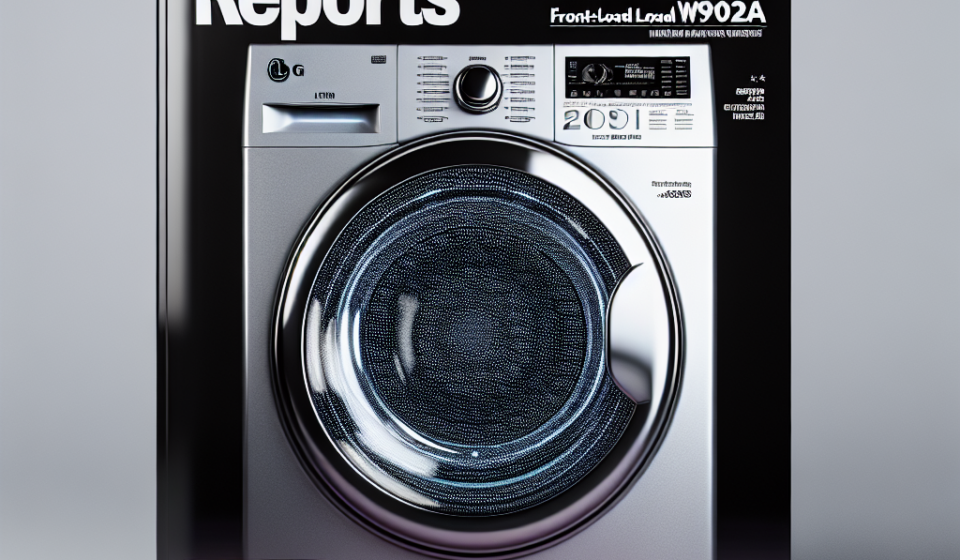
I recently read a consumer test that placed a flagship front‑load washer-packed with AI-driven wash selection, multi‑jet fast cycles and an automatic detergent dispenser-at the top of its category. At the same time, vendor site reviews and user conversations reveal mixed experiences, particularly around the automated dispensing and long‑term reliability.
What this signals for architects and founders
This is not primarily about a single washer model. It’s a textbook example of the broader shift: household appliances are now distributed cyber‑physical systems. That shift creates a new set of architectural and product trade‑offs that enterprise architects, CTOs and product leaders must recognize.
1) Feature complexity vs. operational resilience
Adding sensors and automated actuators improves outcomes in controlled tests, but each added capability increases the attack surface, failure modes and maintenance needs. The strategic question is never just “Can we automate X?” but “Can we support X at scale for three‑plus years in real homes with variable water quality, inconsistent electricity and different detergents?”
2) Lab metrics ≠ field success
Benchmarked stain removal or cycle time look great in reports. Real households, however, surface issues that benchmarks miss: local detergent chemistry, user error, partial loads, and service‑center turnaround time. Trustworthy product delivery requires in‑market telemetry and a commitment to iterate on field problems-not simply shipping firmware and moving on.
3) Data, privacy and connectivity trade‑offs
Smart features that rely on cloud models or phone notifications assume persistent connectivity and user consent. In regions with intermittent networks, “smart” should gracefully degrade to a robust offline mode. Data collection should be minimized and transparent; customers notice when devices suddenly start sending usage patterns to manufacturer clouds.
4) Serviceability and longevity matter more than prestige
A premium device that’s hard to repair or requires OEM‑only parts creates long‑term churn and hidden environmental costs. Modular design, clear diagnostics, and local service partnerships are strategic levers that materially affect product ROI and brand trust.
Practical checklist for product and technology leaders
– Validate beyond the lab: run extended field trials across diverse geographies and usage patterns.
– Instrument for observability: design telemetry focused on reliability signals (error rates, dispense failures, motor current spikes) while respecting privacy.
– Offline‑first UX: ensure core functions work without cloud access and keep OTA updates atomic and reversible.
– Data governance: collect only necessary telemetry, provide local controls, and document retention policies clearly.
– Service network & spare parts: build distribution and training for third‑party service providers; publish repair manuals where possible.
– Design for modularity and repairability to reduce long‑term TCO and environmental footprint.
– Localize: account for local detergents, water hardness, voltage fluctuations and service expectations-especially in markets like India where these variables vary widely.
– Build vs buy: buy when you need mature, certified subsystems (sensors, control boards); build when differentiators require proprietary control logic or unique UX.
A quick note on India/Northeast India relevance
In India, and parts of Northeast India, constraints such as variable grid stability, water quality differences, and fragmented service infrastructure magnify these trade‑offs. A “smart” dispenser that assumes uniform detergent chemistry or a constant cloud link is less valuable than a resilient, serviceable machine with clear offline fallbacks. For entrepreneurs, there’s a clear market opportunity: service orchestration platforms, localized maintenance networks and retrofit kits that extend the life and reliability of smart appliances.
Closing thought
We are moving from “connected gadgets” to an era where every device is a node in a socio‑technical system. The winners will be those who treat appliances as long‑lived systems engineering problems-balancing automation with reparability, intelligence with transparency, and innovation with sustained operational support.
About the Author
Sanjeev Sarma is the Founder Director of Webx Technologies Private Limited, a leading Technology Consulting firm with over two decades of experience. A seasoned technology strategist and Chief Software Architect, he specializes in Enterprise Software Architecture, Cloud-Native Applications, AI-Driven Platforms, and Mobile-First Solutions. Recognized as a “Technology Hero” by Microsoft for his pioneering work in e-Governance, Sanjeev actively advises state and central technology committees, including the Advisory Board for Software Technology Parks of India (STPI) across multiple Northeast Indian states. He is also the Managing Editor for Mahabahu.com, an international journal. Passionate about fostering innovation, he actively mentors aspiring entrepreneurs and leads transformative digital solutions for enterprises and government sectors from his base in Northeast India.