
We fetishize resolution, speed and closed‑box convenience in modern 3D printing. But a small, elegant shift – the ability to swap tools cheaply and reliably – might be more consequential for how individuals and small enterprises actually build things. The surprising lesson from a recent homebrew “simple, cheap tool changer” project is that modularity, repairability and cost-efficiency can unlock far more practical value than incremental gains in print quality.
Context
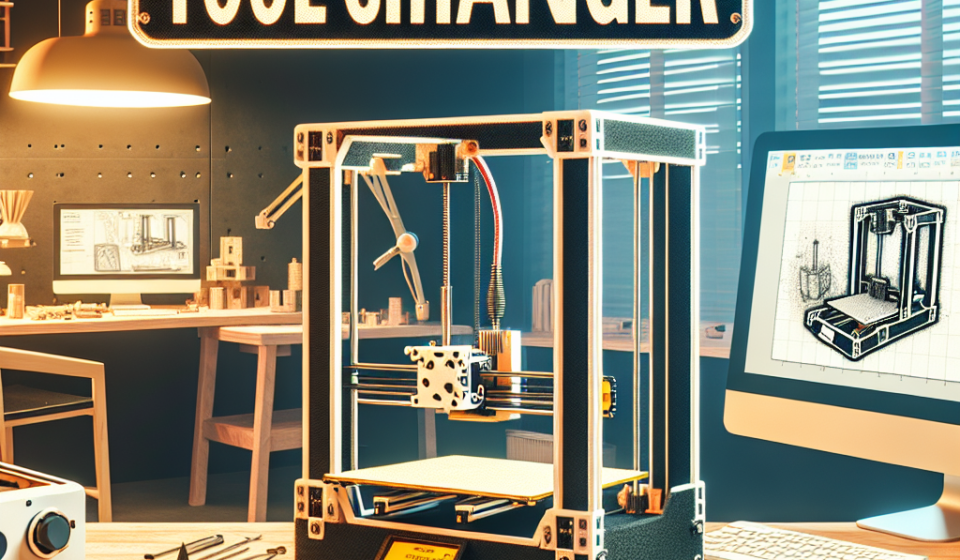
I recently came across an interesting project where a developer built a low‑cost tool changer for hobbyist 3D printers. Instead of pushing multiple filaments through one hot end, the design parks one tool and picks up another. The prototype works well enough to be useful, though it raises predictable concerns about tight tolerances, long‑term wear, and the need for periodic alignment or part replacement.
Analysis – why this matters beyond a cool hack
1. Democratization of manufacturing tools
Cheap modular tool changers move capability from capital‑intensive factories to small labs and garages. For founders and R&D teams, that means faster iteration cycles without a dramatic increase in budget. From an architectural standpoint, the shift is from monolithic toolchains to composable, replaceable subsystems – a principle that matters as much in hardware as it does in cloud software.
2. Tradeoffs: precision vs. resilience
Higher precision systems often rely on fixed, tightly integrated assemblies. The homebrew approach trades peak repeatability for flexibility and lower cost. That tradeoff is acceptable – even preferable – for many practical use cases: jigs, prototypes, fixtures, or small‑batch product runs. Enterprises should therefore differentiate where they need industrial repeatability versus where they can accept variability for agility and lower TCO.
3. Lifecycle and operational thinking
The project highlights an often‑ignored dimension of hardware architecture: maintenance as a first‑class concern. Tight tolerances imply wear; a product strategy that assumes “replace or realign” is different from the one that assumes “sealed and serviced by vendor.” For CTOs and hardware program leads, this means planning for spare parts, simple calibration procedures, remote diagnostics (where possible), and an economics model that includes periodic maintenance.
4. Standards and integration
If tool changers become common, firmware and communication protocols will need standardization. Open, stable interfaces – how the tool is queried for temperature, how it advertises capabilities, and how tool changes are negotiated during a print job – will determine whether ecosystems flourish or fragment. Firms deciding between build vs. buy should weigh the benefit of proprietary performance vs. the network effects of open standards.
5. Skill and supply chain implications
Low‑cost modularity reduces barriers to entry, but it moves the burden to the operator for alignment and spare management. This is an opportunity for local service economies: calibration services, spare‑part suppliers, and retrofit kits.
A practical Bharat lens
This is precisely the kind of frugal innovation that scales well in India – and in Northeast India specifically – where repairability, local sourcing and low CapEx matter. Maker spaces, polytechnics and MSMEs can adopt modular tool changers to diversify offerings (multi‑material parts, embedded electronics, hybrid manufacturing) without large capital outlays. For government and institutional labs, investing in shared modular equipment can deliver outsized returns in skills and productization.
Actionable takeaways for leaders
– Pilot first: run a short proof‑of‑concept in R&D to validate real‑world tolerance and maintenance costs.
– Design for replaceability: choose modular components and document simple alignment procedures.
– Invest in standards: where possible, prefer tools and firmware that expose open interfaces.
– Plan spares and training: include spare parts and a skills transfer plan in procurement.
– Partner locally: engage maker spaces and MSMEs to create a service ecosystem.
Closing thought
The hardware revolution won’t be a single leap in precision – it will be millions of small, repairable, shareable improvements that make building accessible. The humble, cheap tool changer is a reminder that engineering is often about finding the right tradeoffs, not chasing the highest spec.
About the Author Sanjeev Sarma is the Founder Director of Webx Technologies Private Limited, a leading Technology Consulting firm with over two decades of experience. A seasoned technology strategist and Chief Software Architect, he specializes in Enterprise Software Architecture, Cloud‑Native Applications, AI‑Driven Platforms, and Mobile‑First Solutions. Recognized as a “Technology Hero” by Microsoft for his pioneering work in e‑Governance, Sanjeev actively advises state and central technology committees, including the Advisory Board for Software Technology Parks of India (STPI) across multiple Northeast Indian states. He is also the Managing Editor for Mahabahu.com, an international journal. Passionate about fostering innovation, he actively mentors aspiring entrepreneurs and leads transformative digital solutions for enterprises and government sectors from his base in Northeast India.