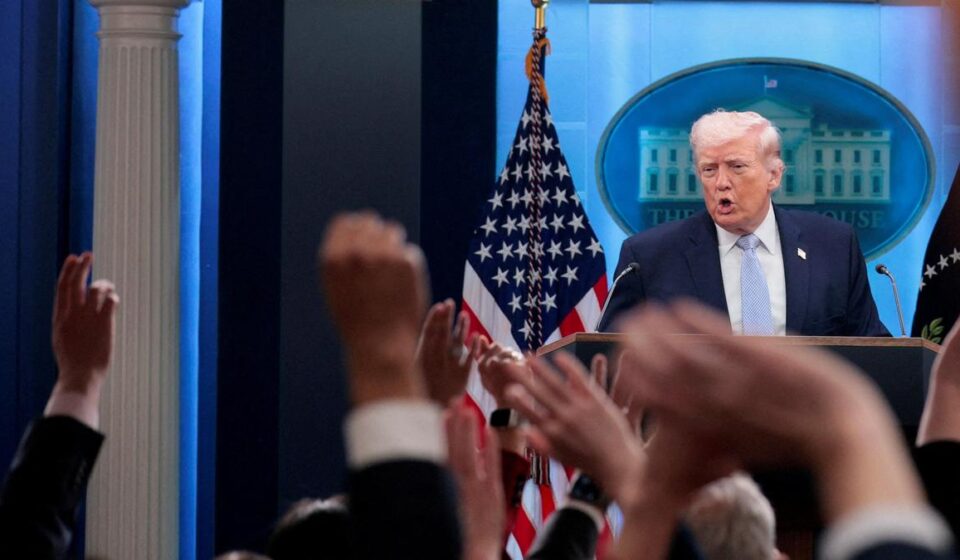

U.S. President Donald Trump announced on April 7, 2026, a temporary suspension of airstrikes against Iran for two weeks, contingent on Tehran’s agreement to reopen the strategically vital Strait of Hormuz. This decision comes as part of a potential peace negotiation based on a 10-point proposal submitted by Iran, following an escalation in the ongoing conflict involving U.S. and Israeli forces. The Strait of Hormuz is crucial for international oil and gas transportation, with roughly 20% of the world’s traffic passing through it.
Amid rising tensions, Iran stated it would cease its military operations if attacks from U.S. and Israeli forces come to a halt. The statement included a commitment to ensure safe passage through the Strait in cooperation with Iranian military forces during this truce period. Pakistan has acted as a mediator in this volatile situation and reported that all involved parties, including their allies, have agreed to an immediate ceasefire, which covers multiple fronts, including Lebanon. Islamabad has also scheduled direct talks for April 10, 2026.
Trump’s announcement occurred just before a deadline for Iran to reopen the Strait, a critical demand as hostilities escalated. Earlier, Trump had warned that a failure to reach an agreement could have catastrophic consequences, stating, “a civilization will die tonight” if Iran did not accept the terms. In his social media post, Trump emphasized his conversations with Pakistani Prime Minister Shehbaz Sharif, stating, “subject to Iran agreeing to the complete, immediate, and safe opening of the Strait of Hormuz, I agree to suspend military actions against Iran for two weeks.”
In his remarks, Trump indicated that the U.S. had met its military objectives and was on the verge of a significant peace agreement concerning Iran and broader Middle Eastern stability. He expressed optimism about the feasibility of Iran’s 10-point proposal as a basis for negotiations. Iran’s Foreign Minister, Abbas Araghchi, confirmed that Trump had agreed to consider the entirety of Iran’s demands, which include lifting sanctions, maintaining Iranian control over the Strait, and rejecting further aggression against the country.
In a statement addressing the potential ceasefire, Araghchi affirmed that Iran’s military would cease defensive operations if external attacks were halted, enabling a safe passage through the Strait. Following Trump’s announcement, Pakistani Prime Minister Sharif lauded the progress in negotiations and extended an invitation to both parties for direct discussions in Islamabad.
Israeli Prime Minister Benjamin Netanyahu welcomed the ceasefire but highlighted that it does not encompass Lebanon, asserting that the U.S. remains committed to achieving shared objectives with Israel and its allies in upcoming negotiations. Iran’s Supreme National Security Council claimed a “historic defeat” for the U.S. and Israel, insisting that Washington was compelled to accept its demands.
Trump characterized the ceasefire agreement as a major step towards global peace and suggested it could usher in a “golden age” for the region, filled with economic opportunities and reconstruction efforts. He expressed confidence that the U.S. would facilitate smooth traffic through the Strait of Hormuz, stating, “Iran wants it to happen, they’ve had enough! Likewise, so has everyone else.”
As the situation evolves, the international community watches closely, hoping that the Islamabad Talks will pave the way for a lasting resolution to this longstanding conflict.
Categories: International Relations, Middle East, U.S. Politics
Tags: Trump, Iran, Peace Talks, Strait of Hormuz, Ceasefire, Middle East Stability
Original Source: https://www.thehindu.com/news/international/trump-says-he-has-agreed-to-suspend-bombing-and-attack-of-iran-for-two-weeks/article70836115.ece
Category :
Tags:
Publish Date: 2026-04-08 11:05:00