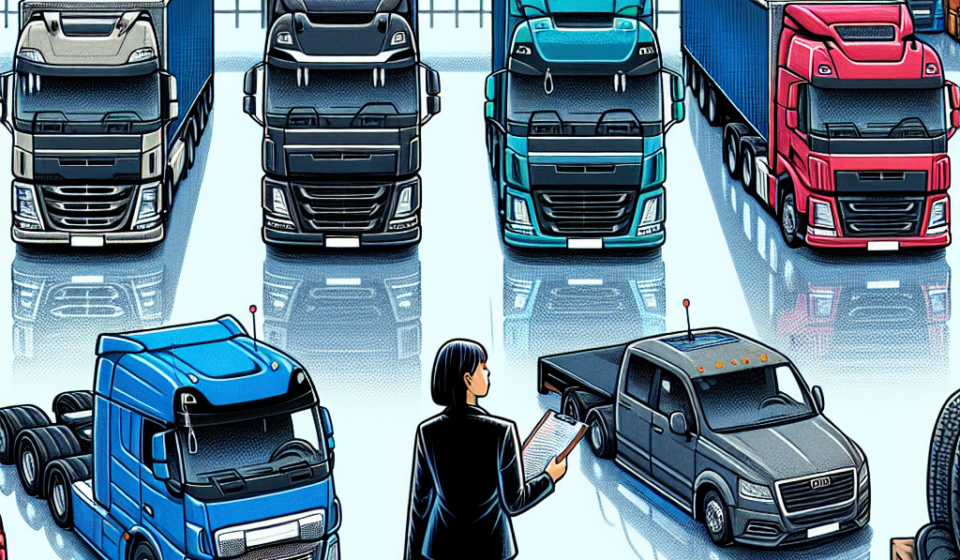

We often celebrate the headline – a new electric tractor, a design award, or a flashy factory opening – and miss the quieter architectural decision that made it possible: the deliberate orchestration of brands, joint ventures and localized manufacturing to cover every market niche while accelerating technology transition. That strategic choreography, not any single model, is what will determine who wins the next decade of commercial transport.
Signal: A recent industry piece highlights how Volvo Group operates multiple semi‑truck brands (Volvo Trucks, Renault Trucks, Mack, and joint‑ventures with Eicher and Dongfeng), and how those brands are being deployed across regions with different product mixes, manufacturing footprints, and electrification timelines (notable milestones cited include VNL production ramp in late‑2024, design accolades in 2025, Renault Trucks’ electrification orders, and Mack’s Anthem production starting January 2026).
Analysis – what this means for strategy and architecture
1. Platform thinking beats product thinking. Global OEMs are consolidating technology into shared platforms (powertrains, telematics, ADAS hardware, and software stacks) while keeping brand differentiation at the vehicle and service layer. For enterprise architects this is a reminder: design for composability. Whether you’re building fleet management software or an EV charging orchestration service, assume your customers will operate heterogeneous fleets from multiple OEMs and require standardized APIs, modular integrations, and versioned data contracts.
2. Joint ventures are a pragmatic path to scale – but they create integration debt. VECV (Volvo–Eicher) and the Dongfeng JV show how regional partners accelerate market access and localization. However, JVs often create duplicated systems (separate ERP, parts catalogs, warranty portals). CTOs must prioritize a canonical data model and a middleware layer that reconciles identity, parts, and service events across corporate boundaries.
3. Electrification is more than a vehicle change – it’s a systems problem. Orders for electric regional trucks and EV tractor launches are necessary signals, but fleet electrification’s true complexity is in charging infrastructure, depot electrification, battery lifecycle management, and route optimization under range uncertainty. Product teams must integrate telematics, energy management, and grid‑aware scheduling into the core offering rather than bolting them on.
4. Safety, software and cyber resilience will define brand trust. As features like lane‑keep, digital mirrors, and OTA updates become standard, brands will be judged on software quality, update strategies, and cyber posture. A Zero Trust approach for vehicle fleets – authenticated device identity, signed updates, and fleet‑level observability – is non‑negotiable.
Localization: the India angle (practical, not perfunctory)
The Volvo–Eicher (VECV) tie illustrates an important lesson for India: local manufacturing + global platforms can accelerate adoption while retaining cost competitiveness. For India’s heavy‑vehicle market this matters in two ways. First, modular electrified platforms that can be built locally reduce import dependency and allow for region‑tuned thermal management and battery packs. Second, JVs can be a focal point for skilling programs – upskilling technicians for high‑voltage systems, software diagnostics, and fleet energy management is an investable lever that both industry and state policy can support.
Actionable takeaways for CTOs, fleet owners and founders
– Prioritize API-first telematics: design fleet solutions to ingest data from multiple OEMs and harmonize it into a single operational model.
– Build a platform middleware layer: reconcile parts, warranties and service events across brand/JV silos to reduce operational friction.
– Treat electrification as an energy‑ops problem: couple route planning with depot power availability, time‑of‑use pricing and battery health telemetry.
– Make cybersecurity visible: include identity, attestation and OTA integrity checks in procurement criteria for any connected asset.
– Invest in local skill pipelines: partner with industry bodies and training institutes to build technicians who can maintain EV powertrains and software systems.
Closing thought
Automotive headlines will keep celebrating individual models and awards – and rightly so – but the strategic advantage will shift to organizations that think like systems architects: combining brand portfolio strategy, shared platforms, local manufacturing and software‑defined services into a repeatable, scalable operating model.
About the Author
Sanjeev Sarma is the Founder Director of Webx Technologies Private Limited, a leading Technology Consulting firm with over two decades of experience. A seasoned technology strategist and Chief Software Architect, he specializes in Enterprise Software Architecture, Cloud-Native Applications, AI-Driven Platforms, and Mobile-First Solutions. Recognized as a “Technology Hero” by Microsoft for his pioneering work in e-Governance, Sanjeev actively advises state and central technology committees, including the Advisory Board for Software Technology Parks of India (STPI) across multiple Northeast Indian states. He is also the Managing Editor for Mahabahu.com, an international journal. Passionate about fostering innovation, he actively mentors aspiring entrepreneurs and leads transformative digital solutions for enterprises and government sectors from his base in Northeast India.