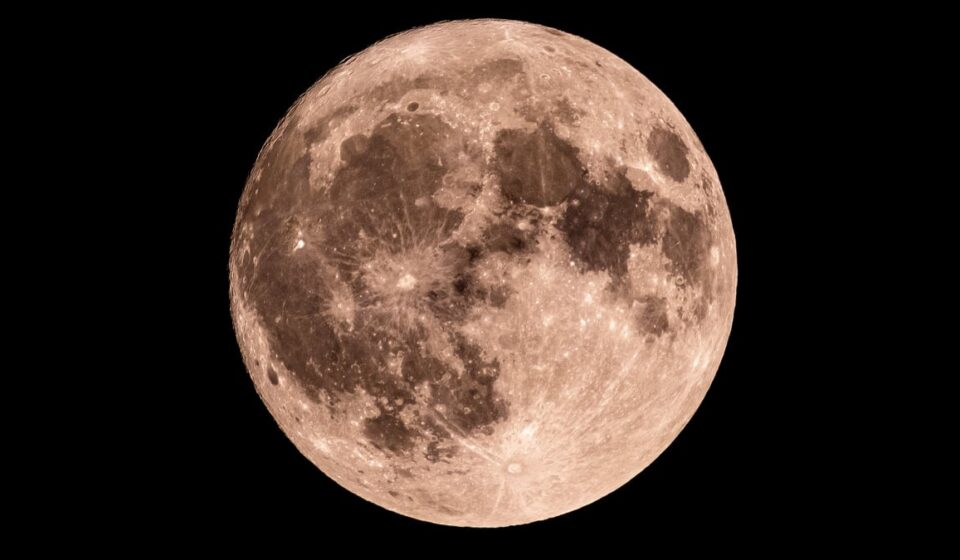

As the Moon approaches its full phase, skywatchers have a window of opportunity to explore its remarkable surface. Presently, on Sunday, March 29, the Moon is in its Waxing Gibbous phase, with an impressive 85% of its surface illuminated, according to NASA’s Daily Moon Guide. This evening, even without any telescopic aids, casual observers can catch sight of the renowned Mare Serenitatis, Mare Imbrium, and Mare Vaporum. For those equipped with binoculars, the view enhances dramatically, revealing Mare Frigoris, the Archimedes Crater, and the Clavius Crater. Telescope users are in for a treat as well, with the chance to view the stunning Caucasus Mountains, the Apollo 12 landing site, and the Linne Crater.
Mark your calendars; the next full Moon is set to grace North American skies on April 1. This lunar event is not just a visual spectacle; it’s a reminder of the Moon’s complex journey as it orbits Earth approximately every 29.5 days, transforming through eight distinct phases. The captivating cycle of the Moon-from New Moon to Full Moon-has fascinated humanity for centuries.
NASA describes the phases in detail: during a New Moon, the Moon is positioned between the Earth and the Sun, leaving the illuminated side hidden from view. As it transitions into the Waxing Crescent phase, a sliver of light emerges on the right side (for observers in the Northern Hemisphere). The First Quarter showcases half of the Moon lit, resembling a perfect half-circle. The Waxing Gibbous phase follows, where more than half is illuminated, just shy of full brightness. Eventually, the Full Moon reveals its entire face, shimmering brightly in the night sky.
Post-full Moon, the night sky changes again, starting with the Waning Gibbous phase, where light diminishes on the right side. It transitions to the Third Quarter-or Last Quarter-where again, half of the Moon is visible, but this time the left side receives illumination. Finally, the Waxing Crescent phase reappears, with a delicate sliver of light on the left before fading back into darkness as the cycle resets.
These lunar phases not only captivate observers but also hold significance in various cultural and scientific contexts. Thus, the next few nights present an excellent opportunity for enthusiasts and casual stargazers alike to engage with the lunar landscape. Whether you’re a seasoned astronomer or simply someone who likes to gaze at the night sky, witnessing the Moon’s transformation is an experience that enriches our understanding of the cosmos.
As stargazers plan their evenings in anticipation of the April 1 Full Moon, they may consider the myriad nuances of lunar observation. Engaging with this celestial body not only inspires awe but also prompts further inquiry into the mysteries of our universe, making each phase an invitation to explore.
With such rich and vibrant features visible even to the naked eye, tonight’s viewing promises an enchanting experience for all who look up.
Original Source: https://in.mashable.com/space/107714/moon-phase-today-what-the-moon-will-look-like-on-march-29
Category :
Tags:
Publish Date: 2026-03-29 09:30:00