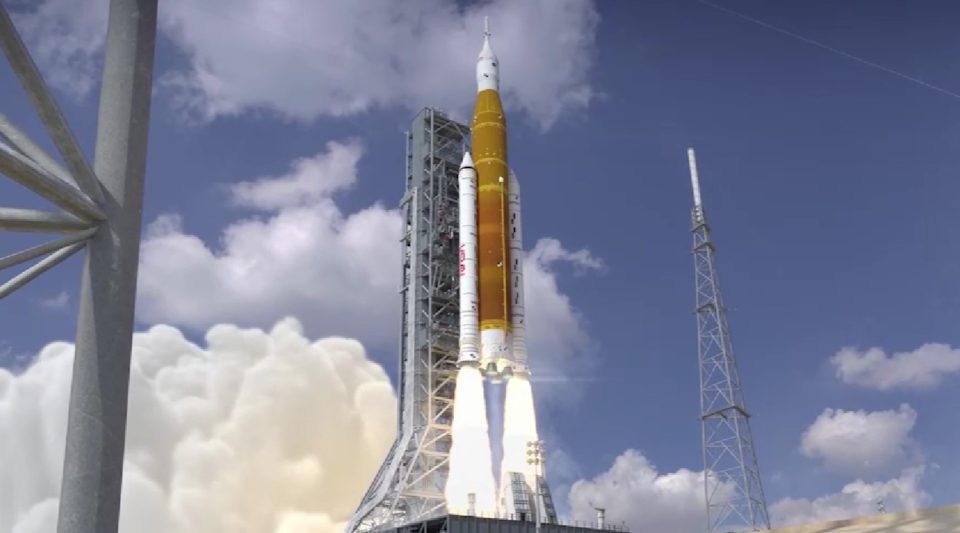

NASA will send four astronauts to orbit the Moon on Artemis II, launching from Kennedy Space Center in Florida on April 1, 2026 at 6:24 p.m. US time (April 2, 2026 at 03:54 a.m. IST). The 10-day crewed mission marks the first time humans return to the lunar vicinity since 1972 — a 54-year gap — and is billed as a critical test toward sustained lunar exploration and eventual human missions to Mars.
The Orion spacecraft will carry the crew on a roughly 1.1 million-kilometre round trip. The flight will test NASA’s new Space Launch System (SLS) heavy rocket and Orion’s systems under real mission conditions before a planned lunar landing phase later in the Artemis programme.
The mission’s crew is led by commander Reid Wiseman, a US Navy pilot. Pilot Victor Glover will fly alongside him; the mission profile identifies him as the first Black astronaut slated to travel to the Moon. Christina Hammock Koch is a mission specialist and — according to mission plans — would be the first woman to go to the Moon; she already holds the record for the longest single spaceflight by a woman at 328 days. Canadian Space Agency astronaut Jeremy Hansen will join as a mission specialist, the first non-American named to a crewed lunar mission.
The SLS rocket stands about 322 feet tall and produces about 8.8 million pounds of thrust, roughly 15% more than the Saturn V that powered Apollo missions. Orion is a modern crew capsule with a reinforced heat shield designed to survive the extreme temperatures of re-entry. After about 10 days, Orion will return to Earth at roughly 40,000 km/h; atmospheric friction will heat the vehicle to as much as 2,760°C before parachutes slow the capsule to around 30 km/h for a planned splashdown in the Pacific Ocean off California, where Navy recovery teams will recover the crew.
NASA plans to use the lunar South Pole as a research and logistics hub because of resources and terrain advantages. India’s Chandrayaan-1 first found evidence of water ice there, and Chandrayaan-3 later achieved a successful landing in the region. Frozen water in permanently shadowed craters could be processed into drinking water, split into oxygen and hydrogen for life support and fuel, and high peaks with near-constant sunlight could host solar power installations.
Artemis is a phased programme: Artemis I was an uncrewed test flight completed in November 2022, Artemis II is the upcoming crewed lunar orbit mission beginning April 1, 2026, and Artemis III aims to return humans to the lunar surface, currently planned for 2027. The programme is international in scope, with contributions from ESA, JAXA and the Canadian Space Agency, and seeks to use the Moon as a proving ground for deeper space exploration, including eventual crewed missions to Mars.
Original Source: https://thefederal.com/category/science/artemis-2-mission-marks-return-of-humans-to-moons-vicinity-after-decades-236180
Category:
Tags:
Publish Date: 2026-03-27 06:30:00