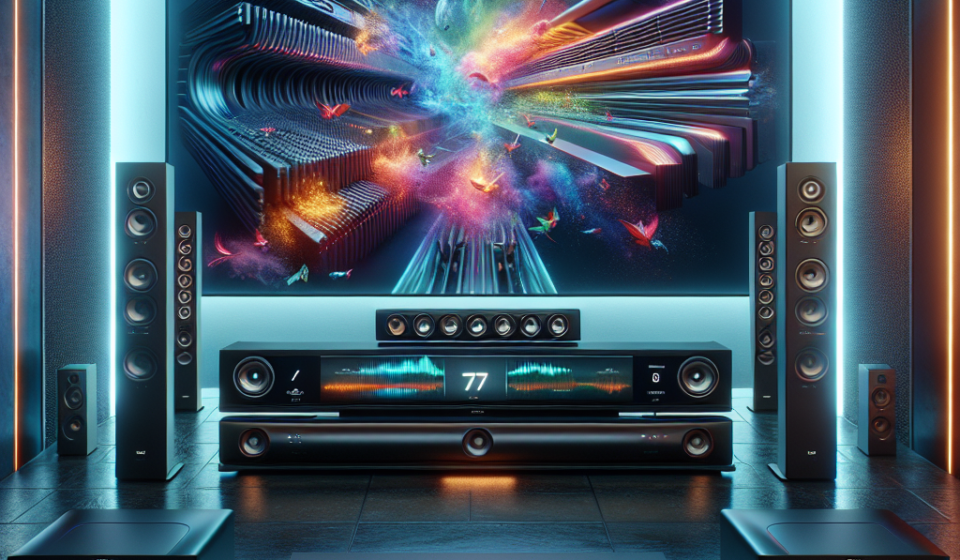

We used to measure audio product progress by driver count, cabinet size and claimed wattage. Today’s more interesting metric is how much value you can unlock after the box ships.
Context (the signal)
Sony’s recent BRAVIA Theater announcements – two new soundbars (Bar 5 and Bar 7), new wireless rear speakers and three new subwoofers (Sub 7, 8 and 9) – illustrate a subtle shift: features that were once strictly hardware-determined (deeper bass, broader channel counts) are now being extended through software and system-level interoperability. Crucially, Sony is enabling dual‑sub support via over‑the‑air updates for some existing models, while noting that other product lines won’t receive that upgrade because they run on different chipsets.
What this means for product and platform architects
The takeaway isn’t about which soundbar wins an audiophile face‑off. It’s about platform economics and architectural choices that determine product longevity, customer value and environmental impact.
1) Hardware-as-platform, not one-off devices
Designing consumer hardware today must account for a product’s software lifecycle. The ability to add dual‑sub functionality via OTA is an example of building a product as a living platform: the same unit can increase capability over time, improving customer satisfaction without forcing a full replacement. That delivers clear business advantages: higher retention, lower return/upgrade churn and an opportunity to monetize add‑on ecosystems (accessories, services, content partnerships).
2) The cost of fragmentation
Sony’s note that a different chipset in its Quad system prevents the dual‑sub upgrade is a cautionary tale. Chipset and SoC choices are sticky – once you have multiple hardware baselines, your ability to maintain feature parity erodes, testing costs explode, and customers feel unfairly treated. For engineering leaders, the trade‑off is obvious: short‑term BOM optimization vs long‑term platform coherence.
3) Software‑defined experience requires operational maturity
Enabling features via OTA isn’t just about pushing firmware. It requires secure update pipelines, robust telemetry, rollback strategies, and rigorous validation for latency-sensitive experiences (wireless subs and surround audio must stay synchronized). For manufacturers moving to this model, investment in CI/CD for firmware, automated regression for audio sync and signed-update infrastructure is non‑negotiable.
Actionable advice for CTOs and founders
– Standardize on a common hardware baseline where possible. It reduces fragmentation and makes future feature rollout feasible.
– Design modular interfaces for peripherals (wireless subwoofers, rear speakers). Define clear protocols for synchronization, discovery and firmware management.
– Invest in secure OTA infrastructure early – code signing, staged rollouts, and remote diagnostics will protect brand trust.
– Collect opt‑in telemetry to measure real‑world performance and guide software improvements, but be transparent about privacy.
– Use compatibility promises as a product and marketing differentiator – communicate upgrade paths and lifecycle commitments clearly to buyers.
– Consider sustainability and secondary markets: software upgrades that extend product usefulness reduce e‑waste and can be a regulatory and PR advantage, especially in markets like India where device longevity matters to consumers.
A note for India and similar markets
In India, where value and durability are key purchase drivers, the ability to enhance a product post‑purchase can be a powerful differentiator. Manufacturers who commit to upgradeable platforms and transparent lifecycle policies will win in both urban and tier‑2/3 segments – and they’ll help reduce the environmental cost of frequent device replacement.
Closing thought
Hardware is no longer the end of the product story – it’s the first chapter. The companies that design with coherent platforms, secure operational practices and clear lifecycle promises will convert one‑time transactions into long‑term relationships (and do so with better economics and lower environmental cost).
About the Author
Sanjeev Sarma is the Founder Director of Webx Technologies Private Limited, a leading Technology Consulting firm with over two decades of experience. A seasoned technology strategist and Chief Software Architect, he specializes in Enterprise Software Architecture, Cloud-Native Applications, AI-Driven Platforms, and Mobile-First Solutions. Recognized as a “Technology Hero” by Microsoft for his pioneering work in e-Governance, Sanjeev actively advises state and central technology committees, including the Advisory Board for Software Technology Parks of India (STPI) across multiple Northeast Indian states. He is also the Managing Editor for Mahabahu.com, an international journal. Passionate about fostering innovation, he actively mentors aspiring entrepreneurs and leads transformative digital solutions for enterprises and government sectors from his base in Northeast India.