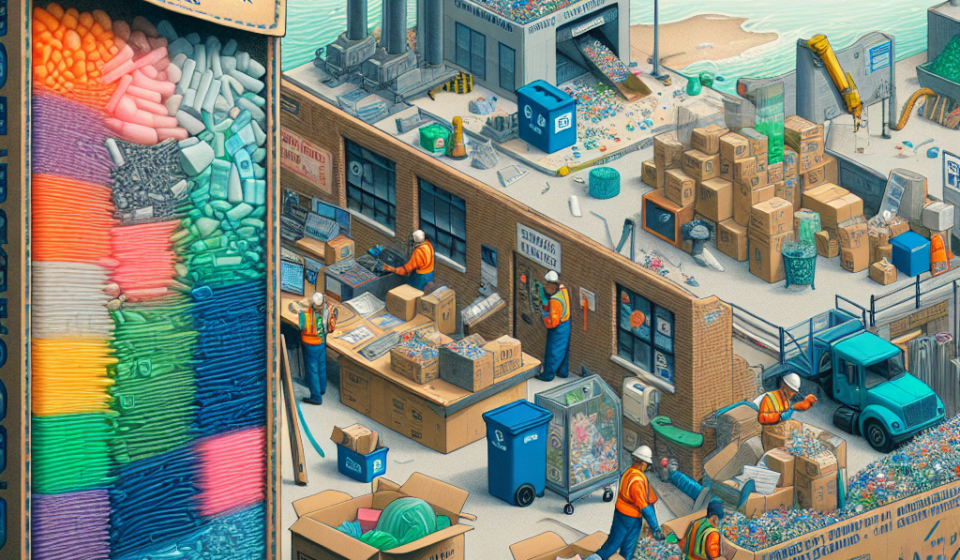

We obsess about scaling digital platforms, but we rarely interrogate the supply chains that enable a physical circular economy. The story of mail-back soft-plastic “blocks” that get consolidated, shipped to a single processor, and turned into outdoor furniture is a useful counterpoint: it shows how clever engineering can capture material today – but also how brittle that capture can be when the downstream system is immature.
The signal: a startup-grade device compacts household soft plastics into dense “blocks” that are mailed to a specialised facility for shredding and conversion into composite products. The mail-back channel is explicitly called a bridge while regional processing capacity and better routing are developed. At the same time, third‑party research warns that recycling processes – if not managed tightly – can create toxic byproducts, creating real health and regulatory risks.
Analysis – what this means for architects, founders and policy makers
1) Capture is only the first mile of a circular system. Converting waste into a usable feedstock requires more than consolidation: it needs validated quality gates, batching logic, and geographic optimisation so material moves in bulk into appropriate processors. From an architecture perspective, this is identical to designing resilient data pipelines: ingest is trivial; ensuring quality, provenance and downstream compatibility is where most failures and rework happen.
2) Traceability is a strategic necessity, not a marketing checkbox. If recycled material can leach or generate hazardous compounds when heated, buyers (manufacturers), regulators and end customers will demand provenance and lab-verified material certificates. Digital material passports, tamper-evident identifiers on blocks, and auditable batch metadata (collection date, contamination metrics, processing history) are design patterns that reduce commercial and regulatory friction.
3) Bridge strategies carry technical debt. Mail-back solves logistics and demand mismatch quickly, but it creates single points of failure (one processing plant) and hidden costs (reverse shipping, storage, rework). Organisations should treat bridge models as explicit, time-boxed programs with KPIs tied to building localised capacity and throughput. Failure to do so replaces one system-integration problem with another.
4) Trade-offs: centralisation vs decentralisation, speed vs safety. Centralised processing offers economies of scale and controlled emissions testing, but increases transport footprint and dependence on a few partners. Decentralised regional hubs reduce transport and improve resilience, but require standards, certification and capex distributed across many sites. The right answer is often hybrid: central lab certification + regional operational hubs.
Actionable recommendations for CTOs, founders and circular-economy program leads
– Design for provenance: assign unique IDs to each consolidated block and attach minimal metadata. Make that data available via APIs to partners and regulators.
– Build quality gates early: simple pre-sorting, contamination scoring and automated validation will dramatically increase the fraction of material that can be safely recycled.
– Forge ecosystem contracts: partner with regional processors, logistics providers and labs. Shift from vendor transactions to platform-level SLAs (lead time, contamination tolerance, throughput).
– Mitigate health/regulatory risks: fund independent testing, require emissions and chemical safety certificates from processors, and surface those certifications to buyers.
– Incentivise correct user behaviour: UX and incentives (return credits, convenience) must reduce “wishful recycling” contamination at source.
– Plan the exit from the bridge: set measurable goals and timelines for moving from mail-back to regional bulk flows.
A practical note for India and Northeast contexts
There’s a strong, logical bridge here. India’s informal collection networks, strong SHG/cooperative ecosystems, and dense last‑mile logistics (including India Post and local kirana networks) make regional micro-processing a pragmatic option. Rather than replicating mail-back, hybrid models that integrate formal digital traceability with informal collection and decentralised cleaning/pre-processing hubs could unlock scale and livelihoods simultaneously.
Closing thought
Physical circularity will be achieved not by one elegant device but by systems thinking: traceability, standards, aligned incentives and staged decentralisation. For architects and founders building circular platforms, the lesson is familiar – treat the end‑to‑end flow as an integrated system, not a capped feature.
About the Author
Sanjeev Sarma is the Founder Director of Webx Technologies Private Limited, a leading Technology Consulting firm with over two decades of experience. A seasoned technology strategist and Chief Software Architect, he specializes in Enterprise Software Architecture, Cloud-Native Applications, AI-Driven Platforms, and Mobile-First Solutions. Recognized as a “Technology Hero” by Microsoft for his pioneering work in e-Governance, Sanjeev actively advises state and central technology committees, including the Advisory Board for Software Technology Parks of India (STPI) across multiple Northeast Indian states. He is also the Managing Editor for Mahabahu.com, an international journal. Passionate about fostering innovation, he actively mentors aspiring entrepreneurs and leads transformative digital solutions for enterprises and government sectors from his base in Northeast India.