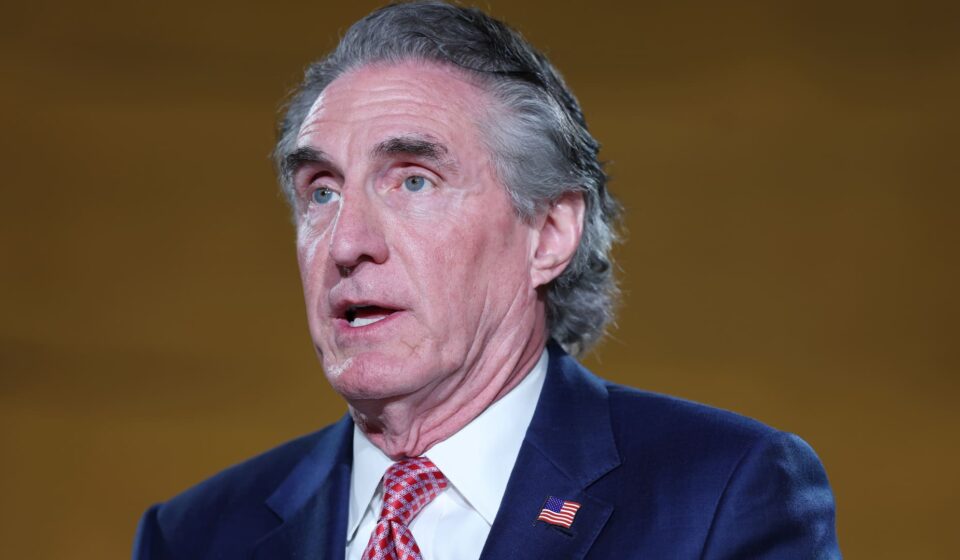

HOUSTON — Asian nations are increasingly looking to purchase U.S. energy to decrease their reliance on oil and gas imports from the Middle East, Interior Secretary Doug Burgum shared in a recent interview with CNBC. Japan, South Korea, and Taiwan are particularly vulnerable due to their dependence on energy exports transiting through the Strait of Hormuz, a vital shipping route that has faced significant disruptions as Iran intensifies its attacks on commercial vessels in the Persian Gulf.
“They want to buy more energy from the U.S.,” Burgum stated during his conversation with CNBC’s Brian Sullivan. The U.S. now stands as the largest global producer of oil and gas, a status bolstered by President Donald Trump’s energy dominance agenda, aimed at supplying allies with a stable alternative energy source. Burgum emphasized the strategic benefits of U.S. energy, pointing out that “our allies and our friends can buy from us as opposed to having to buy from countries that either wage war or fund terrorism.”
This shift comes amid escalating tensions in the region, with the U.S. and Israel’s actions against Iran prompting significant disruptions to the global oil supply. According to Takehiko Matsuo, vice minister at Japan’s Ministry of Economy, Trade and Industry, Japan relies on the Strait of Hormuz for about 90% of its oil imports. “The impact is significant,” Matsuo remarked during the S&P Global CERAWeek conference. He noted Japan’s urgent priority to find alternative energy sources, stating, “I must say it’s not easy. The United States is one of the most anticipated alternative energy sources for Asian countries.”
Additionally, Asian economies heavily depend on liquefied natural gas (LNG) exports through the Strait. Attacks on Qatar’s energy infrastructure by Iran have contributed to a global LNG supply reduction, affecting roughly 20% of the market. In this context, Burgum highlighted Alaska’s critical role in securing energy for Asia, following a recent oil and gas lease sale for the National Petroleum Reserve in Alaska. The Trump administration has also prioritized a major LNG project in Alaska, which could supply energy to Asian allies in just eight days. “Five days of the transit route are in U.S. territorial waters along the Aleutian Islands,” Burgum pointed out, asserting that this makes it “a secure supply of energy.”
As the dynamics of global energy trade evolve, Asian countries are actively seeking reliable sources from the U.S. to mitigate risks associated with geopolitical tensions and supply chain vulnerabilities. The commitment to boost energy exports from the U.S. marks a significant step in fostering stronger ties with allies and enhancing energy security in the region.
This evolving situation not only emphasizes the importance of U.S. energy in global markets but also highlights the strategic advantages enjoyed by nations looking to transition away from volatile supply routes dominated by geopolitical strife.
Original Source: https://www.cnbc.com/2026/03/23/asia-wants-more-us-oil-to-reduce-middle-east-dependence-burgum.html
Category :
Tags:
Publish Date: 2026-03-24 03:00:00