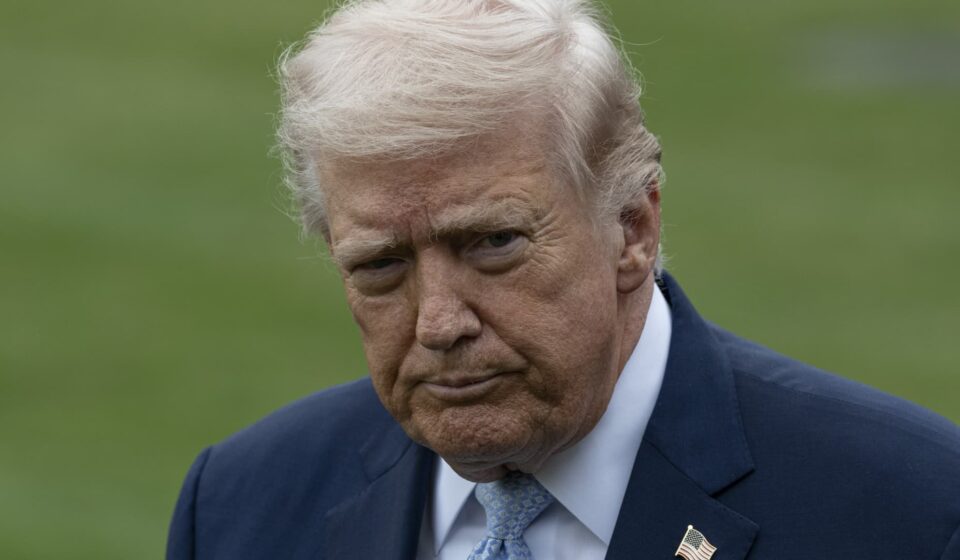

U.S. President Donald Trump addressed the press before departing the White House for Miami on March 20, 2026, as tensions escalated in the Middle East amid a four-week-long conflict. Iran has intensified its rhetoric, signaling potential repercussions for nations investing in U.S. Treasury bonds, a stark warning amid the Trump administration’s 48-hour ultimatum calling for Iran to reopen the crucial Strait of Hormuz.
In a recent social media post, Iran’s Parliament speaker, Mohammad Bagher Ghalibaf, asserted that U.S. financial entities engaging with American government bonds would be regarded as legitimate targets in addition to military installations. “U.S. Treasury bonds are soaked in Iranians’ blood. Purchase them, and you purchase a strike on your HQ and assets,” he stated, emphasizing the gravity of the threats as the ultimatum’s deadline looms.
The ultimatum, announced by President Trump, demanded Iran cease its activities regarding the Strait, a vital route for global energy transport, or risk strikes on its power generation facilities. With the deadline nearing, Israeli Prime Minister Benjamin Netanyahu expressed solidarity with the U.S. position, stating, “Whatever we do, we do together, and as far as possible, in confidence.” From the site of an Iranian missile strike in Arad, Netanyahu called for international assistance, particularly from European nations, to combat perceived Iranian aggression.
Iran has responded defiantly, warning it could entirely shut down the Strait of Hormuz and attack energy infrastructure if threatened by U.S. actions. Ghalibaf warned that any assault on Iranian power plants would result in immediate retaliatory measures targeting energy resources across the region. He articulated the seriousness of the situation, noting, “Critical infrastructure will be considered legitimate targets and irreversibly destroyed, leading to long-term surges in oil prices.”
As hostilities continued over the weekend, reports indicated that Israel was under heavy missile bombardment, prompting widespread alerts for civilians to seek shelter. At least eight locations across central Israel faced falling debris and explosive impacts according to Al Jazeera. The Israeli military reported commencing large-scale strikes focused on Iranian infrastructure in Tehran early Monday, coinciding with ongoing missile and drone attacks from Iran aimed at Israel and Gulf nations housing U.S. assets. Kuwait and the UAE confirmed their air defenses intercepted several hostile attacks, with air raid sirens blaring in Bahrain.
In a separate incident, Saudi Arabia’s defense ministry detected two ballistic missiles aimed at the Riyadh region, managing to intercept one while the other landed in a deserted area, according to official sources. Casualty figures continue to mount, with Iranian health authorities reporting at least 1,500 fatalities due to U.S. and Israeli strikes, although human rights organization HRANA suggests the number is significantly higher, indicating over 3,300 dead, including 1,406 civilians.
Since the beginning of hostilities on February 28, Iran has effectively blocked most shipping traffic through the Strait of Hormuz, amplifying fears of a deepening oil supply crisis. As a result, crude oil prices have surged, causing widespread inflationary concerns. On Monday, Brent crude prices fluctuated, ultimately rising 0.44% to $112.68 per barrel, while U.S. West Texas Intermediate was up 0.78% at $99 per barrel, reflecting the market’s anxiety amid escalating geopolitical tensions.
Original Source: https://www.cnbc.com/2026/03/23/iran-war-tensions-build-as-conflict-enters-its-fourth-week.html
Category :
Tags:
Publish Date: 2026-03-23 10:11:00