Transformative Threads: Experience the Power of Kantha as a Language of Repair and Renewal at Delhi’s Unmissable Exhibition

Long before kantha graced art galleries and design studios, it thrived in the everyday life of Bengal. In countless homes, layers of worn cotton saris and dhotis were stitched together using simple running stitches, transforming them into soft, durable quilts. Over time, these quilts transcended their utilitarian role, embodying memories, labor, and care. The ongoing exhibition, “Threads that Bind: The Kantha Project,” at Gallery Vayu in Delhi’s Lodhi Colony, explores this rich heritage through 34 contemporary artworks that reinterpret kantha for today’s audience. Scheduled to run until March 20, 2026, the showcase is orchestrated by Creative Dignity, an artisan network that emerged during the pandemic. The project unites designers, artist studios, and artisan groups across Bengal, utilizing pre-loved textiles to bridge tradition and modernity.
Amit Vijaya, co-founder of Amrich Designs and the exhibition’s curator, emphasizes the essence of kantha: “What we wanted to revisit was the essence of kantha,” he states. “Not surface embellishment, but repurposing and reuse. That’s really where it started.” While the exhibition includes works from studios such as Weavers Studio and Mahua Natural Fabrics, it consciously avoids framing kantha as merely decorative or nostalgic, instead focusing on its foundational role as an act of repair.
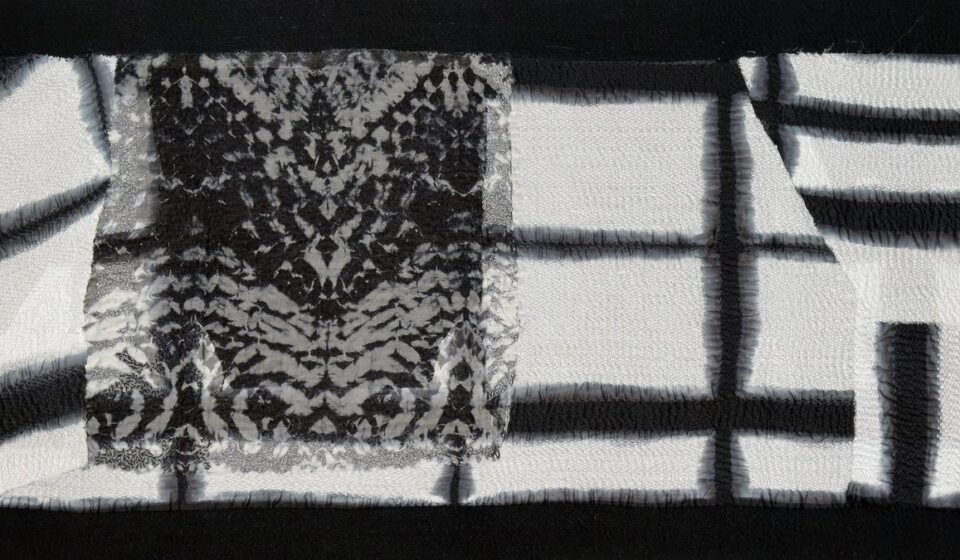
The creation of the artworks was an organic process. About three years ago, the project team began reaching out to craft communities and their networks, inviting donations of unused textiles ranging from everyday cotton saris to exquisite jamdanis. For Amit, recycling fabric is instinctive. “In 15 years, we’ve never thrown fabric away at Amrich,” he explains. During the COVID-19 pandemic, he began piecing together discarded textiles, resulting in intricate patchworks like “Fragmented,” which showcases a stark palette of black, white, and greys to symbolize a fractured world. In another piece, “Luna Blue,” kantha stitches delicately reshape the fluidity of shibori textiles, highlighting the technique’s versatility.
The creative process is anything but quick. Kanika Mukerji, founder of utsaco, collaborates with around 35 women artisans in Birbhum, with some pieces taking up to two years to complete. “One artisan worked on the center, others on the borders. That’s the nature of kantha; it evolves,” she shares. Her work “Blue Roses” demonstrates the potential of the running stitch to create rich textures, while “Ode to Indigo” features an intricate lotus motif rendered on a donated jamdani sari, showcasing multiple indigo tones.
Not all pieces position kantha at the forefront. Kanika recalls reviving a fragile “Tree of Life” artwork through layering and careful stitching, illustrating how kantha can serve as both a central and supporting element. This perspective shifts the focus from mere decoration to structural preservation, enhancing its significance.
Throughout the exhibition, kantha seamlessly merges tradition and innovation. Techniques like shibori are reinterpreted through stitchwork, creating playful yet sophisticated pieces, such as “Pinwheel Madness,” inspired by childhood memories. Each artwork presents a unique narrative, tying kantha to global practices of repair, such as Japanese boro and sashiko.
In contrast to the fast-paced world of design, “Threads that Bind” presents a thoughtful alternative. The exhibition showcases layered, well-loved textiles that emphasize the beauty in repair and the stories woven into each piece. Kantha, in this context, continues to evolve-thread by thread-reminding us of the resilience of tradition and the potential for renewal.
The exhibition runs until March 20, 2026, at Gallery Vayu, 14, Main Market Lodhi Road, New Delhi, open daily from 11 a.m. to 7 p.m.
Original Source: https://www.thehindu.com/entertainment/art/an-exhibition-in-delhi-reimagines-kantha-as-a-language-of-repair-and-renewal/article70752828.ece
Category : Art
Tags:
Publish Date: 2026-03-17 13:07:00