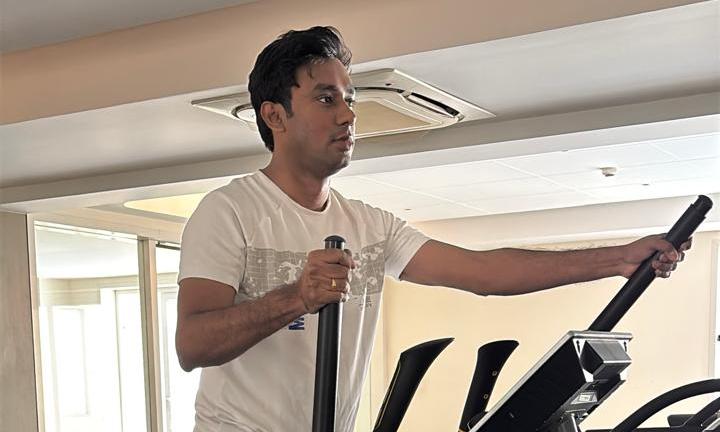

In the hectic corridors of Yashoda Hospitals, where emergencies set the pace, Dr Viswesvaran Balasubramanian-senior consultant in interventional pulmonology and sleep medicine-treats personal fitness as a scientific, non-negotiable part of his life rather than an optional luxury. He says the goal is to restore the balance between modern sedentary lifestyles and the way the human body was built to move, making exercise a practical tool for endurance and clarity, not merely appearance.
Dr Viswesvaran frames his approach around human physiology: “Human physiology is designed for movement,” he says, arguing that the musculoskeletal, cardiovascular and metabolic systems evolved for regular activity and now suffer from a mismatch with desk-bound or clinic-heavy work. Exercise, in his view, repairs that mismatch by returning the body to more natural patterns of use.
His training philosophy draws on biomechanics and fundamental movement patterns. Rather than isolated gym machines, he focuses on squatting, pushing, pulling, running and rotational movements-actions he calls central to human function. A typical week blends resistance training, martial arts and endurance work so strength, coordination and cardiovascular fitness develop together.
Strength sessions preserve muscle mass and metabolic health; combat sports and endurance activities build cardiovascular capacity and coordination. Together these practices, he says, improve what he terms neuromuscular efficiency-the ability to move with power and precision-helpful for both physical resilience and injury prevention.
Nutrition follows the same scientific logic. “Meals prioritise protein, fibre and whole foods,” Dr Viswesvaran explains, noting protein’s role in maintaining lean muscle and fibre’s effect on slowing digestion and stabilising blood glucose to avoid energy crashes during long clinical shifts. He keeps most meals simple and cooked at home to reduce decision fatigue: “Keeping food consistent removes decision fatigue.”
Behavioral science informs his scheduling. He trains at a fixed time each evening after work so exercise becomes automatic rather than reliant on willpower: “I train at a fixed time in the evening after work,” he says. Time constraints are met pragmatically-treat training as an essential appointment and accept short sessions on busy days to preserve consistency.
For clinicians and other professionals who prioritise caring for others, Dr Viswesvaran presents fitness as quiet resilience: sustainable, biology-aligned habits that build strength, sharpen the mind and support long-term endurance. His message is practical-consistent, simple routines rooted in movement science and nutrition can fit into demanding careers and deliver measurable benefits.
Original Source: https://www.deccanchronicle.com/lifestyle/health-and-well-being/how-i-keep-healthy-where-medicine-meets-movement-1943205
Category:
Tags:
Publish Date: 2026-03-11 23:42:00