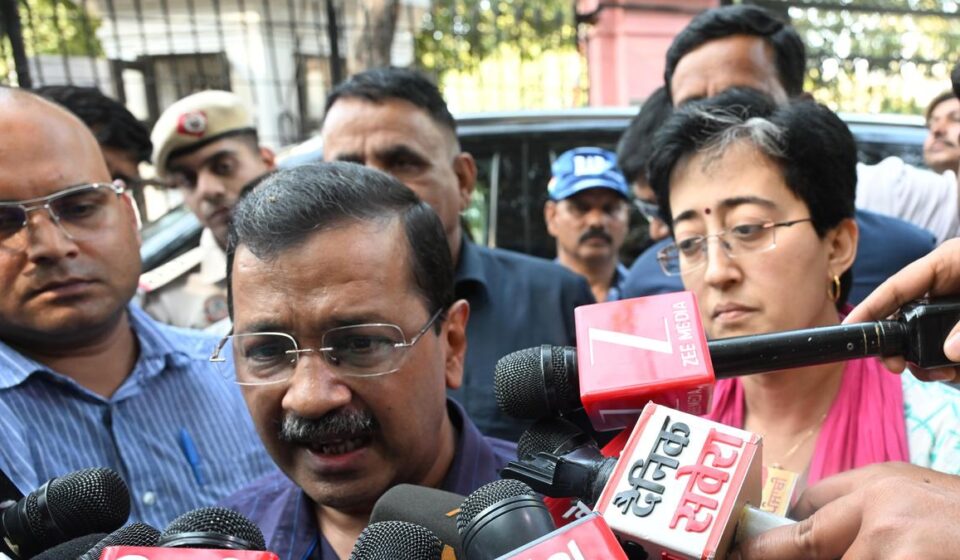

A heated exchange erupted on Friday over the contentious “phansi-ghar” (execution room) issue, as Arvind Kejriwal, the leader of the Aam Aadmi Party (AAP), accused the Bharatiya Janata Party (BJP) government of disrespecting the memory of those who lost their lives at British hands. This intense confrontation unfolded following Kejriwal’s testimony before the Delhi Assembly’s Committee of Privileges regarding the phansi-ghar matter.
Kejriwal’s allegations came as he addressed the media after his appearance, where he asserted that the BJP’s actions amounted to an insult towards the martyrs whose sacrifices were crucial in India’s fight for independence. He emphasized that the BJP’s rhetoric was not only misleading to the public but also an affront to the legacy of these historical figures.
In response, a BJP MLA and the Assembly Speaker retaliated, arguing that it was in fact AAP that had engaged in misleading the public. They accused the party of tarnishing the memory of those who fought for India’s freedom. This back-and-forth revealed deep-seated tensions in the political arena, with both parties ardently defending their positions.
The “phansi-ghar” issue has become a flashpoint in recent discussions, highlighting broader concerns regarding historical recognition and the politics of memory. As both sides continue to volley accusations, the implications of these exchanges may impact public perception and political alliances leading up to upcoming elections.
Kejriwal’s statements reflect a larger narrative within the AAP, which has consistently positioned itself as a champion of social justice and historical remembrance. This incident not only showcases the AAP’s ongoing conflict with the BJP but also underscores the importance of how historical events are interpreted and memorialized in contemporary politics.
As the situation unfolds, both parties remain firm in their stances, indicating that this issue will likely remain at the forefront of political discourse in Delhi. The escalating war of words over the phansi-ghar represents a critical moment for both the AAP and the BJP, as they navigate the sensitive terrain of India’s colonial past and its legacy in current political dynamics.
This ongoing saga is not just a dispute over historical facts but a significant episode that could shape future electoral strategies and public sentiment in the capital. As the parties prepare for further confrontations, Delhi’s political landscape remains charged, reflecting the complex interplay between historical interpretation and modern governance.
With these developments, the Delhi Assembly is set to experience heightened scrutiny and debate over how the state’s history is portrayed and understood, impacting both the political arena and its constituents. As the situation continues to evolve, it will be essential for voters to consider how such dialogues influence their perspectives on leadership and accountability in the government.
Original Source: https://www.thehindu.com/news/cities/Delhi/phansi-gharcase-kejriwal-appears-before-house-panel/article70713556.ece
Category : Delhi
Tags:
Publish Date: 2026-03-07 01:54:00