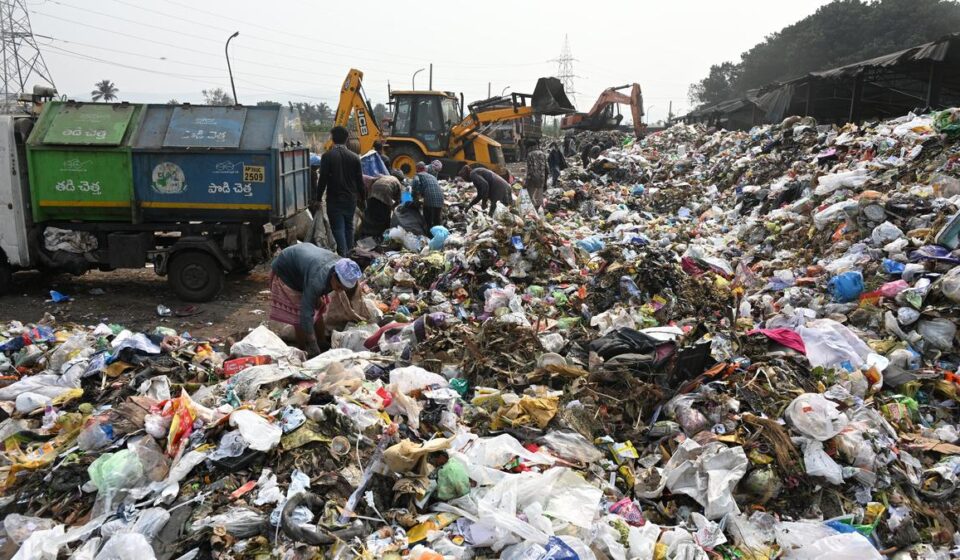

Clean Andhra Pradesh (CLAP) vehicles are actively unloading waste at the Garbage Transfer Station (GTS) in Gajuwaka, Visakhapatnam, while heavy-duty trucks work diligently to clear the accumulated refuse for transport to the Kapuluppada dumping yard. Instead of the serene sounds of nature and fresh morning air typically associated with a pleasant daybreak, the residents of Ward 76 in Gajuwaka face a stark reality. Mornings here are often overshadowed by the unpleasant odor of garbage billowing from trucks lining up at the GTS, run by the Greater Visakhapatnam Municipal Corporation (GVMC).
While officially categorized as a transfer station, many locals assert it’s little more than a dumping site. Encompassing nine acres, this facility handles hundreds of tonnes of waste each day before it is sent off to Kapuluppada, the city’s primary dumping ground. The ongoing waste management practices at the GTS have raised concerns among residents about air quality and public health.
Commonly referred to as the ‘City of Destiny’, Visakhapatnam is facing a pressing issue that contradicts its promising moniker. The GTS’s operations have become a source of contention, prompting discussions about the need for improved waste management strategies. The large influx of refuse not only affects the neighborhood’s aesthetics but also poses potential health risks due to exposure to decomposing materials.
Community members are increasingly vocal about their dissatisfaction, emphasizing that addressing waste management is vital for overall quality of life. “We are tired of waking up to the stench daily,” expressed one local resident, highlighting the emotional toll that this situation has imposed on families. “This is not just a nuisance; it’s a public health issue that needs urgent attention.”
Despite these challenges, the GVMC has emphasized its commitment to managing waste more effectively. Initiatives under the Clean Andhra Pradesh campaign aim to enhance the city’s sanitation infrastructure, but residents are calling for quicker action and transparency. They want more communication from local authorities about the plans to improve waste collection and disposal processes.
As Visakhapatnam continues to grow, effective waste management will remain a critical issue. The situation at the GTS has the potential to become a pivotal point in discussions surrounding urban development and sustainability in the region. With support from community members and active local governance, there is hope for a cleaner, healthier environment in the near future.
Efforts to engage residents in waste reduction strategies are necessary, and educational campaigns about recycling and composting could foster greater community involvement. A shift in public perception surrounding waste management can play a significant role in transforming the landscape of waste disposal in Visakhapatnam.
As the “City of Destiny” navigates the complexities of urban growth, addressing the concerns surrounding the GTS will be vital for maintaining the quality of life its residents deserve. Strides toward a cleaner city depend on collective action and a steadfast commitment to reimagining waste management solutions. Continuing to highlight these pressing issues will drive accountability and inspire change that aligns with the community’s aspirations for a better, more sustainable living environment.
Original Source: https://www.thehindu.com/news/cities/Visakhapatnam/trapped-in-toxicity-visakhapatnam-residents-struggle-for-breath-of-fresh-air/article70707520.ece
Category : Visakhapatnam
Tags:
Publish Date: 2026-03-06 21:44:00