
The ongoing conflict in Iran is shaking Dubai’s image as a premier global wealth center, prompting many expatriates to reconsider their presence in the emirate. The recent turmoil has raised alarm among family offices and wealth managers, who are now reassessing their ties to the Middle East. Over the past decade, Dubai has successfully positioned itself as a safe haven for the wealthy, with its millionaire population more than doubling since 2014 to over 81,000, according to Henley & Partners. The luxury real estate market has thrived, with sales of properties above $10 million skyrocketing from 30 in 2020 to 500 last year.
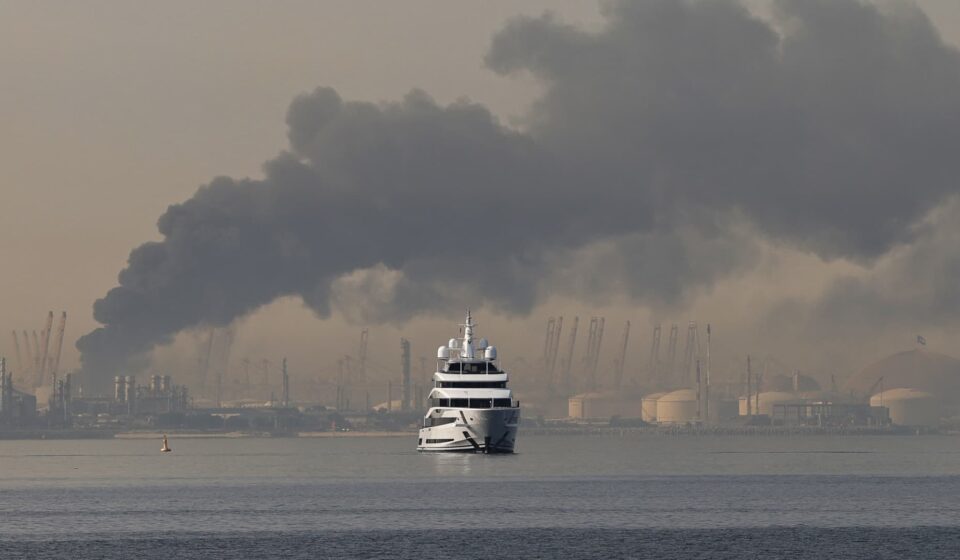
However, this reputation for safety has been severely compromised. In the past week alone, dire incidents such as an explosion at the Fairmont The Palm Hotel, damage to the iconic Burj Al Arab from debris from an Iranian drone, and a missile strike impacting Dubai airport have contributed to a climate of fear. On Tuesday, a drone strike targeted the U.S. Consulate in Dubai, igniting a nearby fire. “The U.S.-Israel war on Iran is upending the crucial aura of security in Dubai,” noted Jim Krane, a fellow at Rice University’s Baker Institute. “The city’s economic model hinges on the stability provided by expatriate residents.”
In response to growing concerns, the UAE government has sought to reassure investors, with the National Emergency Crisis and Disasters Management Authority declaring the situation “under control.” However, Dubai’s police force warned social media influencers against disseminating information that could incite panic. Other wealth centers in the region, including Abu Dhabi and Riyadh, also feel the impact, yet Dubai’s reliance on expatriate capital makes it particularly vulnerable to shifts in investor confidence. Krane emphasized that Dubai could collapse if its international residents decided to leave en masse.
Currently, Dubai hosts 237 centimillionaires and at least 20 billionaires, with the affluent arriving primarily from Britain, China, India, and Europe. The ruling Maktoum family’s efforts to diversify the economy away from oil have included the establishment of favorable tax regimes and special economic zones, making Dubai appealing to the ultra-wealthy. However, demand for private jets has surged as some affluent individuals express intentions to exit. Ameerh Naran, CEO of Vimana Private Jets, reported receiving over 100 inquiries in one night, the highest since the pandemic began. He added that most travelers remained focused on business rather than escape.
Despite the escalating exodus, many affluent families and professionals continue to perceive their business interests in Dubai as strong. Hasnain Malik, leading emerging markets strategy at Tellimer, stated that the city’s attractive tax and regulatory frameworks remain intact. Henley & Partners indicated that Dubai has shown resilience during previous crises, emphasizing the necessity of geographical diversification for internationally mobile families.
The long-term effects of the current situation may weigh heavily on Dubai’s real estate market, which has experienced rapid price increases, further inflated by lucrative residency options tied to property purchases. Yet even before the Iranian conflict intensified, experts had cautioned about potential market corrections. UBS has noted that Dubai ranks fifth among major cities for bubble risk, and Fitch Ratings anticipates downward pressures on housing prices as expatriate departures mount. “The implications for real estate values will largely depend on the scope and length of the conflict,” said Fitch’s Anton Lopatin.
As Dubai grapples with these threats, its future as a financial Oasis hangs in the balance. With a precarious equilibrium now in play, the emirate’s ability to attract and retain wealth will be tested like never before.
Original Source: https://www.cnbc.com/2026/03/05/iran-war-dubai-rich.html
Category :
Tags:
Publish Date: 2026-03-05 21:11:00