
We spend launch week arguing about specs and sticker price, but the quieter, more consequential shift is happening in software – and in how device makers convert a one-time sale into ongoing platform advantage.
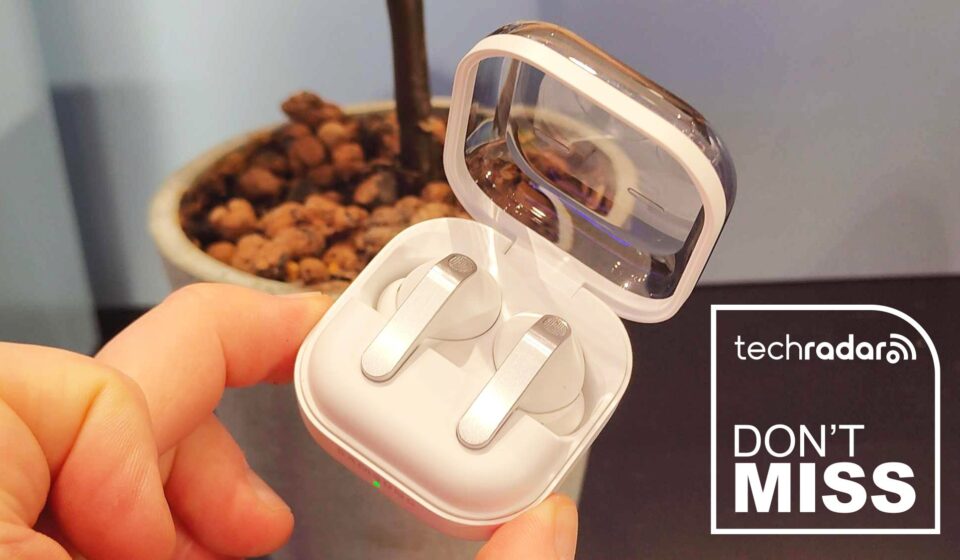
Context: A recent hands-on review of Samsung’s Galaxy Buds4 Pro (published alongside the S26 phone launches) highlights modest hardware changes – larger drivers, refined ANC and ambient modes – plus software-led features such as head gestures and live translation. Samsung is also using pre-order discounts and carrier-financing to accelerate adoption and pair earbuds with its broader device ecosystem.
What this really signals for product and enterprise architects
1) Hardware is now the baseline; software is the moat
Manufacturers have reached diminishing returns on raw audio hardware in the mass market. The marginal user-perceptible gain from a slightly larger driver is small compared with what new on-device or cloud-assisted software can deliver: personalized EQ, live translation, gesture UX, adaptive noise profiles tied to context. For product teams, that means your differentiation strategy should assume hardware parity and invest where updates can continue delivering value over the product lifecycle.
2) Monetisation and lock‑in are becoming ecosystem plays
Pre-order discounts and carrier financing are not just promotions – they’re customer acquisition tactics designed to expedite pairing users into an ecosystem (phone + buds + services). For platform owners, the question is how to convert that early trial into long-term engagement: premium audio features behind subscriptions, contextual services tied to phones, or cross-sell into adjacent devices. Architecture must therefore include telemetry, secure update channels, and modular service hooks that allow future revenue models without fragmenting the product experience.
3) UX trade-offs are architectural decisions
A design choice like “Ambient mode that lets in more sound” is not cosmetic – it reflects trade-offs between safety, situational awareness, and noise suppression. Those trade-offs should be encoded into the product’s configuration model, exposeable to enterprise policies or accessibility profiles. From a systems point of view, treat such modes as policy-controlled features, not hardcoded defaults.
4) Privacy, latency and the real cost of “live translation”
Live translation is an attention-grabber, especially for multilingual markets. But it raises three technical requirements: low-latency inference (ideally on-device), robust models for low-resource languages, and explicit user-consent flows for audio data. Enterprises should evaluate whether to “buy” language services from cloud vendors or “build” specialized, on-device models – a classic speed vs. control trade-off. For regions with intermittent connectivity, offline-first models are not a luxury; they are essential.
A concrete Bharat lens (relevant)
India’s multilingual reality turns live translation from a novelty into a potential inclusion tool. For users across Northeast India and other linguistically diverse regions, earbuds that offer accurate, low-latency translation between regional languages and Hindi/English can enable commerce, health consultations, and education in ways a mono-lingual product cannot. However, this requires investment in localized datasets, bias mitigation, and offline model compression – opportunities where local startups and government-sponsored DPI initiatives could play a role.
Actionable guidance for CTOs and founders
– Treat earbuds and similar peripherals as extension platforms: define clear APIs, secure telemetry contracts, and a roadmap for feature monetization.
– Prioritize privacy-first, on-device ML for voice features when latency, trust, or connectivity matter.
– Build language and accessibility as first-class features if you operate in linguistically diverse markets – partner with local universities and community groups for dataset creation.
– Model promotions (pre-orders, carrier tie-ins) as acquisition funnels and instrument them to measure retention and ARPU change, not just units sold.
– Factor product longevity and e‑waste into release cadence decisions; software updates that extend useful life can be a competitive advantage and a sustainability win.
Closing thought
We should stop treating earbuds and other “accessories” as disposable commodity items – they are increasingly distributed compute endpoints and service touchpoints. The companies that architect them as durable platforms, with thoughtful privacy, localization and extensibility baked in, will earn not just the sale but the ongoing relationship.
About the Author
Sanjeev Sarma is the Founder Director of Webx Technologies Private Limited, a leading Technology Consulting firm with over two decades of experience. A seasoned technology strategist and Chief Software Architect, he specializes in Enterprise Software Architecture, Cloud-Native Applications, AI-Driven Platforms, and Mobile-First Solutions. Recognized as a “Technology Hero” by Microsoft for his pioneering work in e-Governance, Sanjeev actively advises state and central technology committees, including the Advisory Board for Software Technology Parks of India (STPI) across multiple Northeast Indian states. He is also the Managing Editor for Mahabahu.com, an international journal. Passionate about fostering innovation, he actively mentors aspiring entrepreneurs and leads transformative digital solutions for enterprises and government sectors from his base in Northeast India.