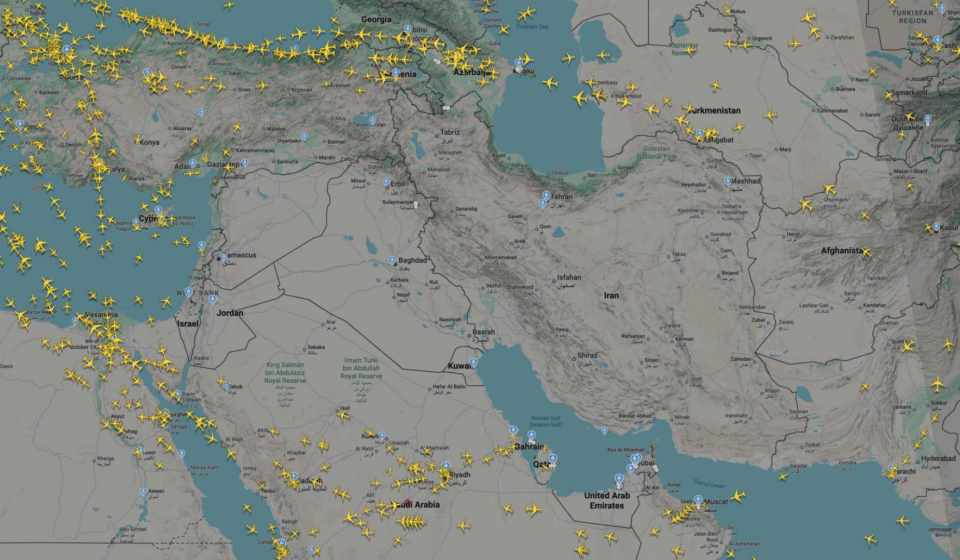

Air traffic in the Middle East faced significant disruptions on February 28, 2026, as hundreds of flights were canceled or diverted due to closed airspace following a U.S. and Israeli military operation in Iran. According to data from aviation analytics firm Cirium, a staggering 868 flights were canceled, prompting major airlines to temporarily halt operations in the region.
Qatar Airways announced an immediate suspension of all flights, while Emirates, based in Dubai, confirmed a complete stoppage of services at Dubai International Airport, one of the busiest airports worldwide. In a company statement, Emirates extended apologies to affected customers, emphasizing their commitment to passenger safety and security while assisting with rebooking and refunds.
The airspace closure impacted not only Iran but also extended over Iraq, Kuwait, Bahrain, and Qatar, as reported by Flightradar24. Air India followed suit by halting all flights to the Middle East on Saturday and further canceled Sunday flights between India, Europe, and the United States, showcasing the widespread ramifications of the airspace restrictions. Additionally, Abu Dhabi-based Etihad canceled departures through Sunday afternoon, exacerbating travel complications.
The Lufthansa Group responded by suspending flights to destinations including Israel, Lebanon, Jordan, Iraq, and Tehran until March 7. They are also rerouting some flights to evade the affected airspace. In a notable incident, an American Airlines flight from Philadelphia to Doha had to turn back near Spain, causing further delays for travelers. Flights from the U.S. initially intended for Dubai also witnessed diversions to various European airports.
United Airlines announced the cancellation of Tel Aviv flights through March 6 and Dubai services until March 4. Despite the disruptions, Tel Aviv routes remain among the airline’s most lucrative, further complicating the impact of these flight cancellations. Delta Air Lines has likewise canceled its Tel Aviv service through at least Sunday.
This series of airline cancellations and rerouted flights highlights the ongoing security concerns that have periodically caused disruptions in Middle Eastern air travel. The closure of essential airspace forces airlines to adjust their routes, often resulting in longer and more fuel-intensive journeys.
The situation has led to questions about the broader implications of military conflicts on commercial aviation, as operators across the region grapple with logistical challenges and passenger safety. As the situation develops, airlines are urged to communicate directly with passengers regarding changes to their travel plans.
In a rapidly changing environment, air carriers and passengers alike are finding themselves navigating the complex realities of an evolving geopolitical landscape, with significant implications for international travel and commerce in the Middle East. While airlines strive to manage the chaos, the priority remains returning to normalcy as quickly and safely as possible.
As this story unfolds, updates and ongoing developments will be closely monitored.
Original Source: https://www.cnbc.com/2026/02/28/airspace-closure-middle-east-flights-us-strikes.html
Category :
Tags:
Publish Date: 2026-03-01 01:50:00