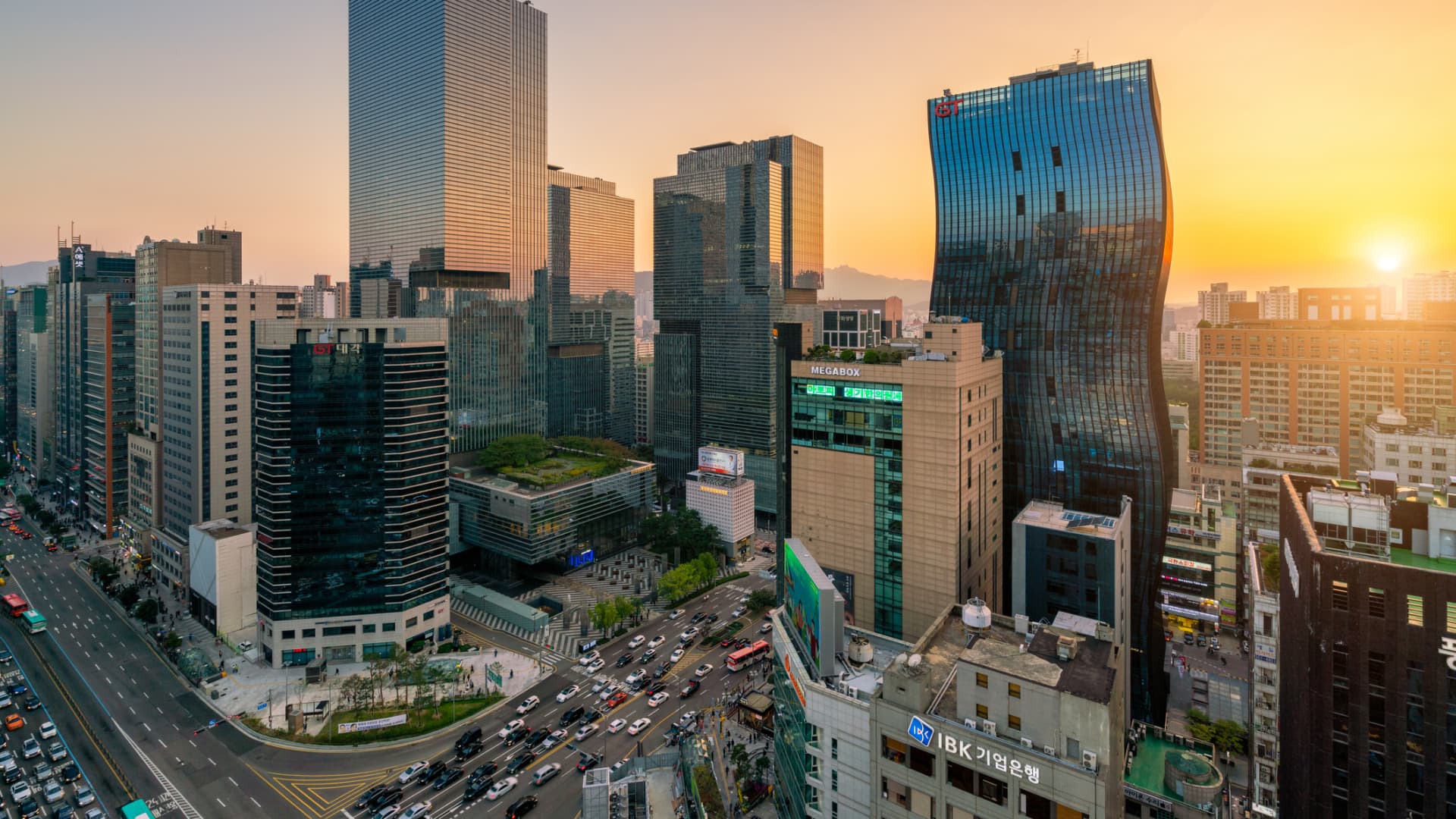

In a bustling intersection of Gangnam, Seoul, traffic flows like light trails against the sunset backdrop, symbolizing the dynamic state of the Asia-Pacific markets. On Monday, these markets showed resilience amid growing tariff uncertainties, following U.S. President Donald Trump’s announcement over the weekend to raise global tariffs from 10% to 15%. This decision arrived shortly after the U.S. Supreme Court struck down significant portions of Trump’s trade policies established under the International Emergency Economic Powers Act of 1977.
While the Supreme Court’s ruling offers some relief to U.S. trading partners, it does not eliminate the overarching tariff framework. Claudio Galimberti, chief economist at Rystad Energy, remarked, “While the Supreme Court’s ruling invalidates a large share of existing tariffs and weakens the ability to target individual countries, it does not dismantle the broader tariff framework.” He cautioned that if the upper tariff limit is reached without exemptions, average rates could surpass those of the dismantled structure.
In this climate, South Korea’s Kospi index continued its upward trajectory, rising 1.7% for a third consecutive session, reaching a new record high. Key contributors to this surge were tech giants SK Hynix and Samsung Electronics, which saw their stock prices jump by over 3% and 2%, respectively. Additionally, South Korea’s small-cap Kosdaq climbed 0.74%. Meanwhile, Australia’s S&P/ASX 200 recorded a modest gain of 0.17%, while Hong Kong’s Hang Seng index experienced a robust rise of over 2%. Trading in China and Japan was halted due to national holidays.
Despite earlier gains, oil prices have recently pulled back. Brent crude futures traded down 0.6% to $71.33 a barrel, and U.S. West Texas Intermediate futures saw a decline of 0.78%, settling at $65.96. Arthur Laffer, Jr., president of Laffer Tengler Investments, described the Supreme Court’s decision as a “setback,” yet emphasized that it does not signify an end to the President’s trade agenda. He suggests that nations like Vietnam and India, which have entered trade agreements with the U.S., should reconsider any hesitation, highlighting that trade remains a foundational element of Trump’s political and economic strategies.
On Friday, the U.S. stock market showed signs of recovery post-Supreme Court ruling, easing concerns for corporations dealing with elevated costs from tariffs and persistent inflation. The S&P 500 index rose 0.69%, closing at 6,909.51, while the Nasdaq Composite gained 0.9% to settle at 22,886.07. The Dow Jones Industrial Average added 230.81 points or 0.47%, recovering from a 200-point loss earlier in the trading session, driven largely by disappointing economic data.
As these developments unfold, the interplay between trade policies, market responses, and global economic dynamics will continue to shape the landscape. Investors and countries alike will be closely monitoring the U.S. administration’s next moves and the potential implications for international trade.
Tags: tariffs, U.S. trade policy, Asia-Pacific markets, stock market performance, economic strategy.
Original Source: https://www.cnbc.com/2026/02/23/asia-pacific-markets-hang-seng-index-nifty-50-kospi-trump-tariffs-15-percent-supreme-court.html
Category :
Tags:
Publish Date: 2026-02-23 09:53:00