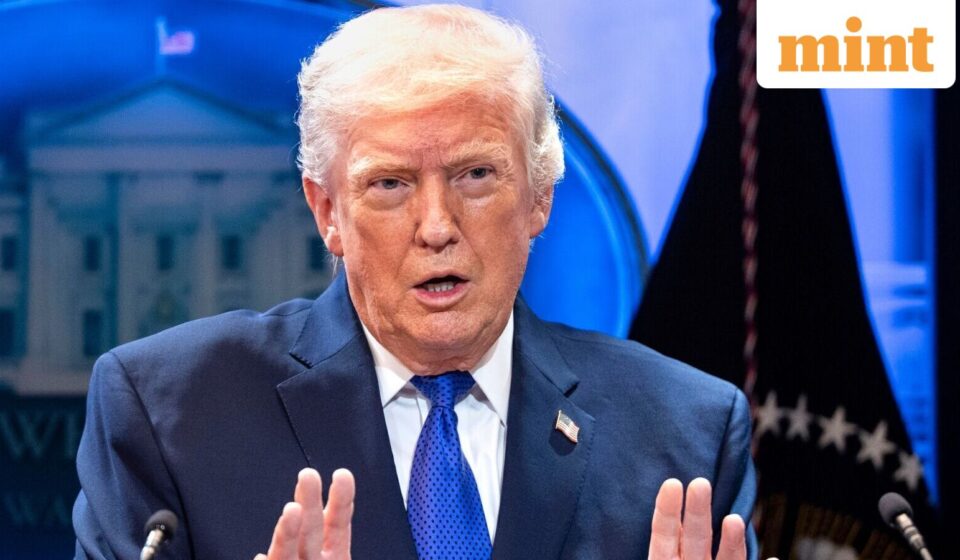
Trump’s Bold Move: 10% Global Tariff Order Signed After Supreme Court Rejection of Emergency Powers!

Following a pivotal Supreme Court decision that struck down his emergency International Emergency Economic Powers Act (IEEPA) tariffs, President Donald Trump announced plans to implement a 10% global tariff under Section 122. This new measure, he stated, will be in addition to existing tariffs already levied. “All existing national security tariffs under Sections 232 and 301 will remain in place,” he emphasized, indicating a commitment to his administration’s robust tariff strategy. Importantly, these fresh tariffs will be temporary, set for a duration of 150 days unless Congress intervenes to extend them.
In the wake of the Supreme Court ruling, Trump clarified that the court’s decision did not eliminate tariffs entirely but merely ruled against a specific application of IEEPA. “Now I’m going to go in a different direction, probably the direction that I should have gone the first time,” he noted, as he seeks to explore alternative legal pathways to impose these tariffs, including those under Section 232, which mandates a Commerce Department inquiry.
The complexities involved in these alternative measures were not lost on the President, who acknowledged that they entail a more cumbersome procedure compared to the immediate effects of the IEEPA tariffs. “Their decision is incorrect. But it doesn’t matter because we have very powerful alternatives,” Trump asserted, describing the new bureaucratic hurdles as a “little bit longer.” He also referenced the Trade Expansion Act and the Tariff Act of 1930 as potential legal frameworks for sustained tariffs, suggesting that the recent ruling may not significantly limit his authority.
In a related statement, Treasury Secretary Scott Bessent confirmed that the administration intends to proceed with alternative legal authorities to replace the IEEPA tariffs effectively. Speaking from Dallas, Bessent remarked, “This Administration will invoke alternative legal authorities to replace the IEEPA tariffs.” He further indicated that the use of Sections 232 and 301 has been validated by numerous legal challenges, offering some assurance amid potential uncertainties.
Moreover, Bessent projected that employing these alternative authorities would lead to “virtually unchanged tariff revenue in 2026,” suggesting that the administration’s fiscal strategy remains intact despite the recent legal setbacks.
As the Trump administration pivots towards these new tariffs, the full implications on both international trade relations and domestic markets remain to be seen. The unfolding situation underscores the complexities and challenges associated with economic policy underpinned by legal frameworks, and the ongoing evolution of U.S. tariff strategy is sure to influence economic discussions in the months to come.
With outspoken support for his tariff agenda, President Trump’s actions reflect a continued belief in the merits of direct economic intervention, even amid legal constraints. As his administration navigates this intricate landscape, stakeholders will be closely monitoring the impact of these developments on the global market and the U.S. economy at large.
Original Source: https://www.livemint.com/news/us-news/trump-to-sign-10-global-tariff-order-following-rejection-of-emergency-powers-by-supreme-court-11771617345587.html
Category :
Tags:
Publish Date: 2026-02-21 01:38:00