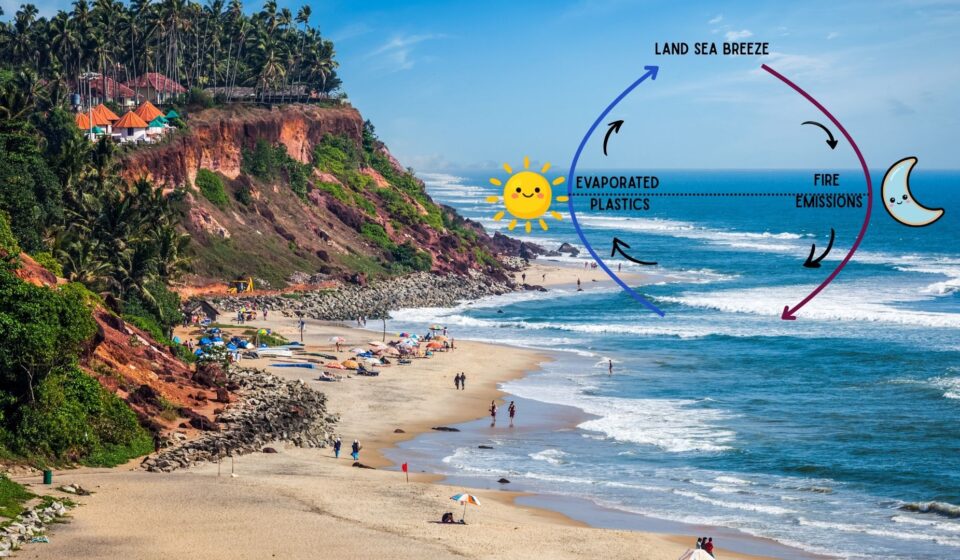

Scientists at the Vikram Sarabhai Space Centre in Thiruvananthapuram report that coastal winds and intense tropical sunlight together shape the chemical makeup of air at India’s southern tip. Sampling during the pre-monsoon season, the team found organic aerosols-tiny liquid or solid particles suspended in air-were about twice as abundant by day as by night. The day–night change is driven by land‑sea breeze cycles, which alternately carry pollutants onshore and offshore.
The researchers collected samples from a rooftop roughly 500 metres from the Arabian Sea using a high‑volume sampler to capture PM10 particles (roughly the size of dust and pollen). Filters were analysed with gas chromatography–mass spectrometry (GC‑MS), a lab technique that identifies molecular markers-chemical signatures that reveal particle sources.
Daytime air was dominated by phthalates, additives used to make plastics flexible. The study says strong tropical sunlight causes phthalates to evaporate from plastic waste on land and at the ocean surface; once airborne, these vapours undergo photochemical reactions with sunlight to form secondary aerosols. The team also recorded primary sugars from pollen and spores during daylight hours.
At night, when the breeze shifts from land to sea, the chemical mix changed: samples showed high levels of terephthalic acid, a compound linked to low‑temperature burning of plastics. That pattern points to nighttime trash fires in nearby urban areas as a significant coastal pollution source. Night samples also contained secondary acids formed by chemical reactions involving man‑made emissions trapped in a lower, more stable boundary layer after sunset.
The scientists note a large fraction of organic material remains unidentified; unknown lipids, proteins and polysaccharides will need targeted study to complete the picture of tropical Indian aerosol chemistry.
The findings highlight how pervasive plastic pollution has become in the atmosphere and how its presence varies daily. These airborne particles may affect cloud formation, rainfall patterns and the health of people and ecosystems. By pinpointing when and how pollutants enter coastal air, the research can inform waste‑management policy and help improve climate and air‑quality models for vulnerable coastal communities.
Original Source: https://researchmatters.in/news/how-tropical-sun-and-breezes-mix-toxic-air-along-indias-southern-coast
Category:
Tags:
Publish Date: 2026-02-21 06:00:00