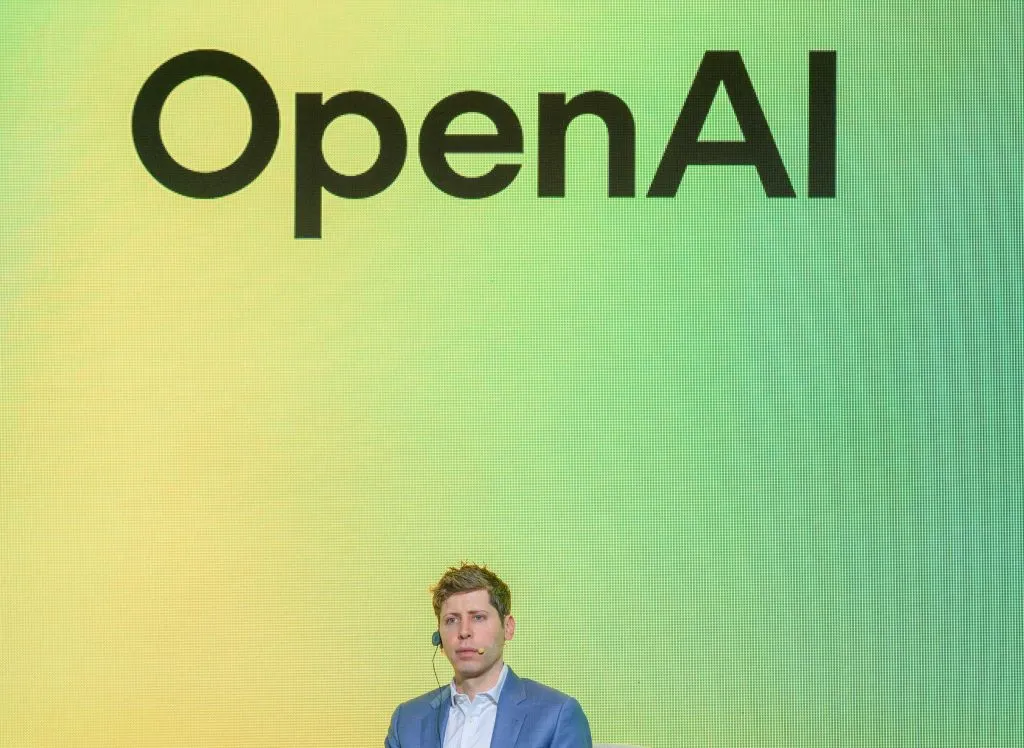

We measure AI progress in models, benchmarks and market caps – but the quieter, more consequential signal is human migration: where the engineers, product leads and researchers move, what they build next, and how capital follows. That talent flow is reshaping not just startups in Silicon Valley, but the architecture choices and governance questions enterprise leaders must face worldwide.
Context
I recently read a roundup highlighting how many former OpenAI employees have gone on to found or join a new wave of AI startups – from agent builders and robotics firms to AI tooling and safety-focused ventures – attracting enormous capital and creating a clustered network of influence. That pattern is creating both rapid innovation and a set of strategic risks for enterprises and ecosystems.
What this really means (from a Chief Architect’s lens)
1. Talent mobility is the new platform
When senior engineers and product leads spin out repeatedly, they carry not only technical know-how but product instincts, operational playbooks and often the same assumptions about scale and data. For enterprises that want to adopt AI, the implication is clear: partnerships and vendor selection are as much about people as technology. Choosing a vendor means buying into their people-paths and their safety philosophy.
2. Valuations ≠ production readiness
Large rounds and lofty valuations are noisy signals. Many startups raise on potential and talent rather than proven, operationally hardened products. Architects should differentiate between “research-first” platforms and “ops-first” platforms. The former push the frontier; the latter actually make systems reliable in production. Design long-term architectures that can plug-in frontier models but rely on battle-tested components for core workflows.
3. The long tail of technical debt
Fast-moving AI teams create models quickly – but without disciplined MLOps, observability, and governance, that velocity becomes long-term debt. Expect sprawl: model versions, undocumented fine-tuning, data drift, and fragile retraining pipelines. Build for auditability from day one: versioned datasets, immutable training metadata, explainability hooks and automated drift detection.
4. Safety and governance are differentiators, not luxuries
With new entrants explicitly focused on safety and others racing for market share, enterprises must demand clear guardrails: red-team results, adversarial testing, privacy-preserving design, and documented failure modes. Zero Trust principles need expansion to data and model layers: treat model outputs as untrusted until validated by downstream business rules.
5. Build vs. Buy becomes a nuanced decision
Not every company should try to re-invent foundational models. But buying means integration risk: proprietary APIs, data egress, vendor lock-in and governance constraints. CTOs must adopt a hybrid stance – standardize on open interfaces, invest in internal MLOps and keep critical data and decision logic within the organization.
Practical steps for CTOs and founders
– Audit model lifecycle risk: instrument training, validation and deployment with the same rigor as core services.
– Prioritize data contracts: clear ownership, quality SLAs, and lineage for every dataset used to train or fine-tune models.
– Demand third-party safety evidence: adversarial tests, red-team reports and incident history before enterprise adoption.
– Architect for portability: containerized inference, standardized prompts, and abstraction layers to switch providers if needed.
– Invest in talent retention with technical career ladders and ownership of production outcomes – keep the builders who understand your domain.
What this implies for India – and Northeast India
This exodus-and-rebirth pattern is global opportunity. India has a deep engineering talent pool and a maturing startup ecosystem; the right policy nudges (talent mobility, research grants, startup-friendly DPI for data exchange) can capture more of these second-wave founders. For regions like the Northeast, where connectivity and last-mile constraints are real, architectural choices such as offline-first models, lightweight on-device inference, and frugal AI become business imperatives – not optional optimizations.
Closing thought
The next decade won’t be decided by a single model or a single company; it will be shaped by networks of people, the ecosystems they form, and the engineering disciplines they carry into production. For architects and leaders, the task is to translate that kinetic energy into resilient, auditable systems that serve real users – reliably and safely.
About the Author Sanjeev Sarma is the Founder Director of Webx Technologies Private Limited, a leading Technology Consulting firm with over two decades of experience. A seasoned technology strategist and Chief Software Architect, he specializes in Enterprise Software Architecture, Cloud-Native Applications, AI-Driven Platforms, and Mobile-First Solutions. Recognized as a “Technology Hero” by Microsoft for his pioneering work in e-Governance, Sanjeev actively advises state and central technology committees, including the Advisory Board for Software Technology Parks of India (STPI) across multiple Northeast Indian states. He is also the Managing Editor for Mahabahu.com, an international journal. Passionate about fostering innovation, he actively mentors aspiring entrepreneurs and leads transformative digital solutions for enterprises and government sectors from his base in Northeast India.