
U.S. President Donald Trump arrived at Palm Beach International Airport on February 13, 2026, amid rising tensions with Iran. The Trump administration has cautioned Tehran that it would be “very wise” to negotiate, as reports circulate regarding the White House contemplating potential military action against the country as early as this weekend. These developments followed Vice President JD Vance’s criticism of Iran’s unmet core U.S. demands during recent nuclear negotiations in Switzerland. While Iran’s foreign minister claimed progress in talks, highlighting an understanding of key principles, the U.S. remains skeptical.
During a Wednesday briefing, White House Press Secretary Karoline Leavitt remarked that there are numerous justifications for a military strike against Iran, emphasizing that both nations are still “very far apart” on critical issues. She referenced a “very successful” operation last June, in which U.S. stealth bombers targeted Iranian nuclear sites under “Operation Midnight Hammer.” Leavitt underscored President Trump’s consistent preference for diplomacy, urging Iran to seize the opportunity for a deal with the U.S. administration.
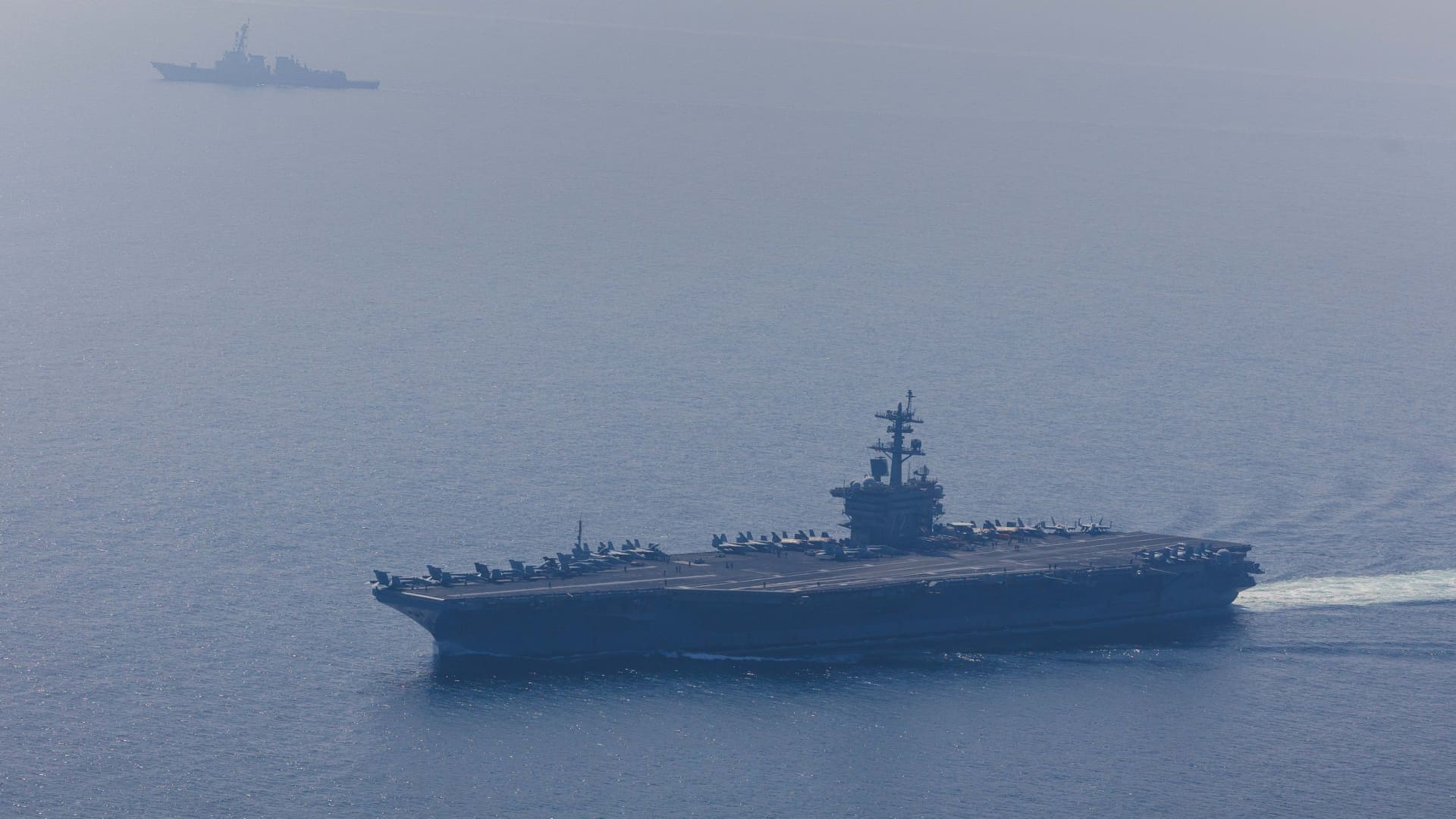
Despite this diplomatic overture, the White House has also signaled readiness for possible military engagement, with reports suggesting a strike could occur imminently. Escalating military activities by both nations in the oil-rich Middle East have heightened concern. The U.S. has reinforced its aerial and naval presence, while Iran has conducted military exercises in the strategic Strait of Hormuz, a crucial maritime route. Additionally, Iran has announced joint naval drills with Russia in the Gulf of Oman, further intensifying tensions in the region.
Laura James, a senior Middle East analyst at Oxford Analytica, described the current atmosphere as “extremely dangerous,” stating that the risk of conflict between the U.S. and Iran is now much closer than it was a week ago. “The rapid reinforcement of U.S. air power can be seen as a signal aimed at achieving a diplomatic resolution,” she noted during an interview with CNBC’s “Access Middle East.” However, she cautioned that the increasing deployment of military assets raises the stakes for potential diplomatic outcomes, emphasizing that Washington’s expectations might exceed what Tehran is willing to concede.
Energy markets are also closely monitoring the unfolding situation. The ongoing U.S.-Iran talks in Geneva have particular implications for the Strait of Hormuz, a vital waterway that Iran temporarily closed for “security precautions” earlier this week. This route accounts for a substantial portion of global oil transport; approximately 13 million barrels per day passed through the Strait in 2025, representing around 31% of international crude flows.
Consequently, oil prices have risen, continuing upward after a notable increase of over 4% the previous session. As of Thursday, international benchmark Brent crude futures rose by 1.5% to $71.41 per barrel, while U.S. West Texas Intermediate futures increased by 1.7% to $66.27. Investors remain vigilant as geopolitical dynamics continue to impact the oil market.
As the situation evolves, both the U.S. and Iran face critical decisions that could alter the regional landscape and global oil supply dynamics.
Original Source: https://www.cnbc.com/2026/02/19/trump-us-iran-nuclear-talks-oil-prices-russia.html
Category :
Tags:
Publish Date: 2026-02-19 23:14:00