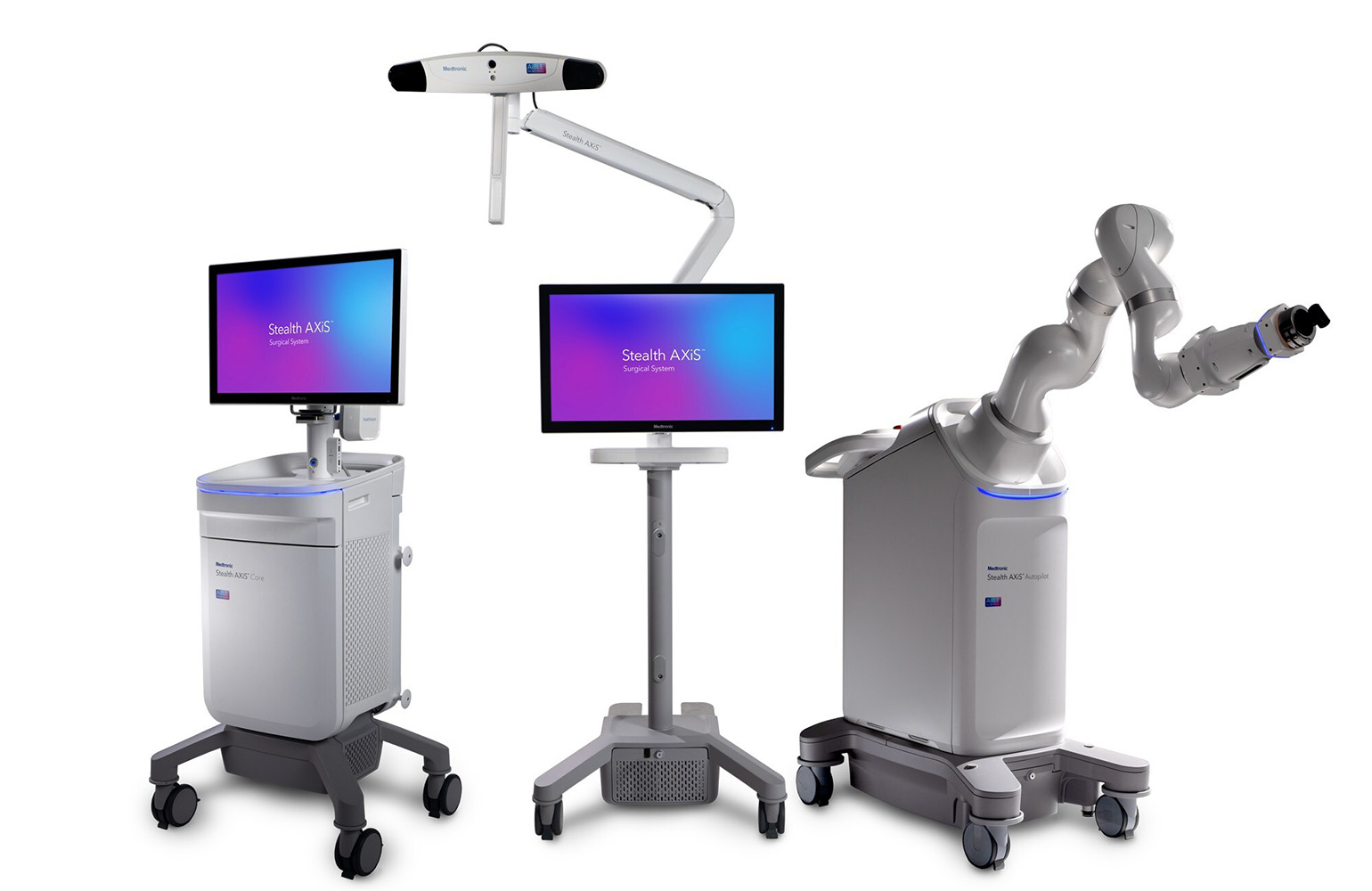

We often celebrate surgical robotics for precision and spectacle – but the harder, more consequential work is aligning those capabilities with clinical workflow, data, and the realities of hospital operations. Medtronic’s recent FDA-cleared Stealth AXiS platform (reported last week) is a useful case study because it deliberately aims to fuse planning, navigation and robotic execution into a single, expandable ecosystem rather than selling discrete boxes for each task.
Context: The announcement highlights two architectural choices that matter beyond the OR. First, integrated planning → navigation → execution reduces hand-offs between devices and teams. Second, modularity with a platform mindset lets hospitals adopt capabilities incrementally while preserving upgrade paths for future applications (cranial/ENT were specifically mentioned as possible extensions).
Why this matters for enterprise architects and technology leaders
1. Integration beats point solutions. Surgical teams are voting for fewer interruptions and more continuous situational awareness. Systems that natively share spatial models, device telemetry and patient alignment reduce the cognitive load on surgeons and lower the friction associated with intra‑operative decision-making. From an enterprise view, that means prioritizing vendors who expose well‑documented APIs, standard data models and clear integration points with hospital systems (PACS, EHR, OR integration middleware).
2. Real‑time edge compute and deterministic latency become infra priorities. Features such as segmental tracking that visualize anatomy motion in real time require low-latency processing close to the source. Hospitals and product teams must plan for on-prem or hybrid edge architectures, predictable networking in the OR, and deterministic failover strategies – not just cloud S3 buckets and ad hoc VPNs.
3. Build vs. buy becomes a layered question. For health systems: is it better to buy a modular platform and integrate it, or assemble point products and build orchestration? The platform approach reduces integration burden but concentrates vendor lock-in risk; the point‑product approach raises integration cost and clinical friction. A practical middle path is to prefer modular vendors that publish standards-based interfaces and contractual rights for data access so your interoperability layer remains yours.
4. Data governance, auditability and regulatory evidence pipelines are now first-class concerns. Surgical platforms feed rich telemetry and imaging that are potentially PHI and subject to medical-device quality systems. Architecture must include secure device identity, immutable audit logs, lifecycle management for models and software, and clear processes for clinical evidence capture to support both regulatory and outcomes research.
5. Human‑in‑the‑loop and change management cannot be an afterthought. Even the most capable system needs training, OR choreography changes, and a governance model to evaluate clinical outcomes. Technical success without adoption is wasted capital.
A practical checklist for CTOs and hospital leaders
– Prioritize vendors with open APIs and standards alignment (DICOM/FHIR for imaging and records, and well-documented device telemetry).
– Build an OR edge stack: local processing, predictable networking, and logging/rollback controls.
– Treat cybersecurity and device identity as part of procurement scoring.
– Design clinical pilots with clear success metrics (time in theatre, radiation exposure, plan execution fidelity).
– Invest in surgeon and support‑staff training, and capture feedback loops for iterative workflow design.
A note for India and similar healthcare ecosystems
In markets where operating room capacity and capital budgets are constrained, the modular platform strategy is attractive: hospitals can adopt navigation first, add robotics later, and extend features without replacing infrastructure. However, interoperability with national digital health initiatives and the need for resilient, offline-capable operations (in regions with intermittent connectivity) should be explicit requirements in procurement and architectural plans. Frugal deployment models, tele-mentoring, and outcomes-sharing consortia can accelerate safe adoption while spreading cost and learning across institutions.
Closing thought
We are moving away from monolithic devices to ecosystems – and the winners will be those who solve the harder systems problem: reliable, secure, integrable platforms that make clinical teams more effective without adding new layers of complexity.
About the Author
Sanjeev Sarma is the Founder Director of Webx Technologies Private Limited, a leading Technology Consulting firm with over two decades of experience. A seasoned technology strategist and Chief Software Architect, he specializes in Enterprise Software Architecture, Cloud-Native Applications, AI-Driven Platforms, and Mobile-First Solutions. Recognized as a “Technology Hero” by Microsoft for his pioneering work in e-Governance, Sanjeev actively advises state and central technology committees, including the Advisory Board for Software Technology Parks of India (STPI) across multiple Northeast Indian states. He is also the Managing Editor for Mahabahu.com, an international journal. Passionate about fostering innovation, he actively mentors aspiring entrepreneurs and leads transformative digital solutions for enterprises and government sectors from his base in Northeast India.