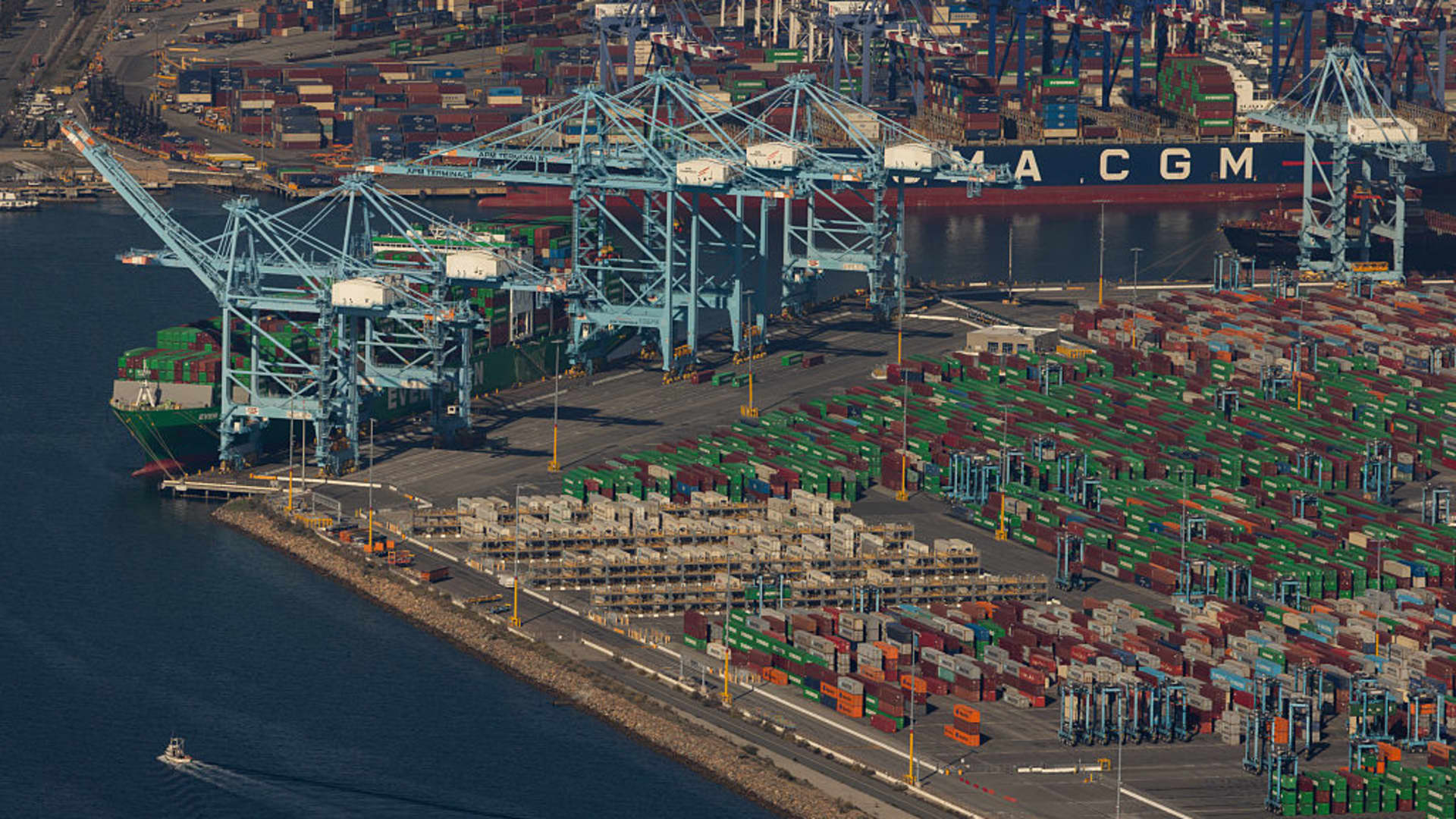

New data from the Port of Los Angeles reveals that commitments made by China to purchase more U.S. agricultural products as part of a trade agreement between President Donald Trump and President Xi Jinping remain unfulfilled. This lack of follow-through has contributed to a significant decline in cargo volumes, bringing them to near a three-year low at the nation’s busiest port. In January, total processed cargo volume at the Port of Los Angeles plummeted by approximately 12% compared to the previous year, with Executive Director Gene Seroka citing the reduction in agricultural exports as a major factor. “Exports to China look dismal,” Seroka stated, highlighting a substantial 26% drop in containerized exports to China last year.
Particularly hard-hit was the export of soybeans, a crucial agricultural commodity. Following an announcement in early 2026 that China was considering buying an additional eight million metric tons of U.S. soybeans-a total of 20 million for the current season-soybean exports from the Port of Los Angeles to China saw an 80% year-over-year decline. Despite initial discussions between the U.S. and China, there was no noticeable improvement in soybean shipments in November and December. Seroka emphasized the importance of these exports, noting that “Argentina and Brazil have picked up a lot of the contracts for China.” He cautioned that any potential increase in U.S. agricultural exports will take time: “These are agreements that span three, six, and twelve months.”
In terms of overall cargo statistics, the Port of Los Angeles processed approximately 812,000 twenty-foot equivalent units (TEUs) in January, which included imports, exports, and empty containers. This marks a decline from around 924,000 TEUs in January 2025, when vendors rushed to bring in freight ahead of President Trump’s second-term tariffs. Breaking this down, January imports totaled 421,000 container units, down 13% from the previous year, while exports were at 104,000 units-an 8% decline year-over-year. The drop in empty containers, a forward-looking indicator of demand from Asia, decreased by 12% to 286,000 TEUs.
Seroka pointed out that elevated import numbers from 2025 will continue to impact comparisons throughout much of 2026. He noted the uncertainty surrounding U.S. trade policy, projecting a decline of less than 10% for first-quarter cargo volumes compared to last year, without expecting a dramatic economic downturn thereafter. “That’s our lowest monthly output in almost three years,” Seroka said, reinforcing the critical nature of consistent trade policy for American farmers and manufacturers.
The decline at U.S. ports has also impacted the ocean shipping market, with falling rates and excess container capacity. According to Peter Sand, chief shipping analyst at Xeneta, rates in the “mid-low market segment” have dropped over 18% in the last month, prompting ocean carriers to consider “aggressive capacity management” strategies, including canceled sailings. Honour Lane Shipping reported that recent freight rates have fallen close to or below break-even levels, indicating potential supply chain disruptions for shippers.
China’s import activity in January remained focused on consumer goods and industrial inputs, with furniture and bedding, plastics, and machinery dominating the volume. However, the decrease in trade with China is partially offset by increased manufacturing in Southeast Asian nations, with notable increases in imports from Vietnam, Thailand, and Indonesia. Seroka pointed out that while the port had roughly 60% of its import business tied to China at the start of the first trade war in 2018, that figure has dropped to 40%. The Port of Long Beach, a key partner with the Port of Los Angeles, reported record container volumes due to similar front-loading activities in 2025, driven by trade out of Southeast Asia.
Original Source: https://www.cnbc.com/2026/02/17/china-freight-container-trade-volume-port-los-angeles.html
Category :
Tags:
Publish Date: 2026-02-18 03:20:00