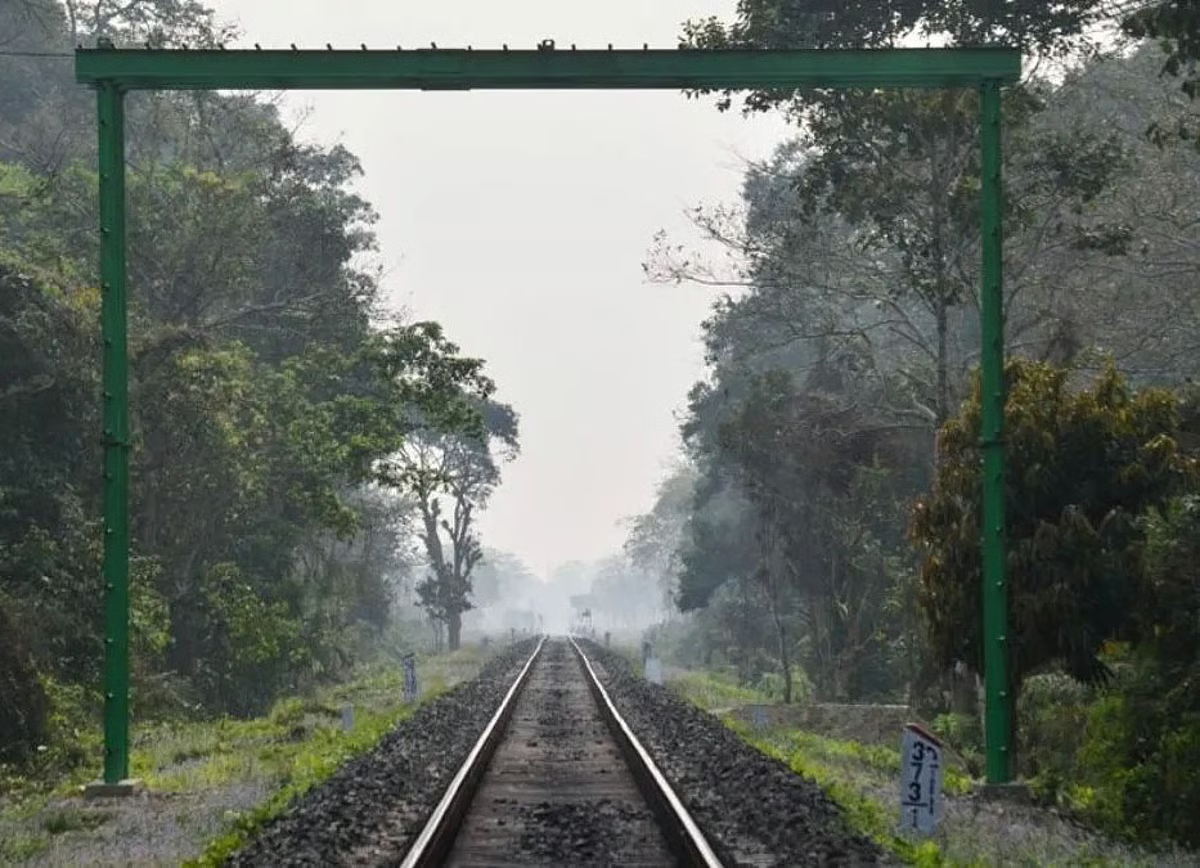

Conservationists, local communities and environmentalists in Assam are urging authorities to relocate a 165-kilometre rail stretch that cuts through forests around Hoollongapar Gibbon Sanctuary to protect the endangered eastern hoolock gibbon. They say the line severs a critical wildlife corridor, exposing the primates to noise, vibration and habitat fragmentation from dozens of trains that pass each day, and are calling for an alternative alignment that restores canopy connectivity while allowing continued transport use.
Hoollongapar is one of India’s key habitats for the eastern hoolock gibbon, a species listed as endangered by the IUCN that depends on tall trees and an unbroken forest canopy to move, feed, mate and rear young. When forest connectivity is compromised, groups become isolated, genetic diversity falls and risks from disease and inbreeding rise-threats conservationists say are already visible as gibbons retreat from areas near the rail line during train movements.
Supporters of relocation argue that moving the track a few kilometres would reconnect the sanctuary’s core habitat without unduly disrupting regional rail services. Their plea frames the proposal not as anti-development but as pro-sustainable development, pointing out that healthy forests also support pollinators, regulate water cycles and underpin livelihoods through fisheries, agriculture and ecotourism.
Critics acknowledge these ecological concerns but note that relocation would be expensive and time-consuming and that rail connections are vital for passenger travel and freight in Assam. Proponents respond that monetary cost alone cannot capture ecological value, cultural identity or long-term sustainability-factors they say must inform any decision about infrastructure in ecologically sensitive zones.
The debate highlights gaps in planning processes, where engineering often leads and ecological inputs follow as an afterthought. Activists and experts urge multidisciplinary decision-making that brings ecologists, economists, sociologists and local stakeholders into project design from the start, backed by robust environmental impact assessments.
India’s legal framework-the Wildlife Protection Act, the Forest Conservation Act and EIA procedures-offers tools to balance development and conservation, but conservationists say stronger political will is needed to apply precautionary principles and implement recommendations. They point to global practices such as wildlife overpasses, underpasses and alternative alignments as feasible models that India can adapt.
Assam’s state and central leadership are called on to take a proactive role. Relocating the rail stretch, advocates argue, would protect a flagship species, secure ecosystem services for local communities and signal that development can be pursued without sacrificing irreplaceable biodiversity.
Original Source: https://www.sentinelassam.com/more-news/editorial/rail-vs-wildlife-rethinking-development-in-assams-hoollongapar-landscape
Category: Editorial
Tags:
Publish Date: 2026-02-18 11:51:00